Japan is slow on 5G adoption because it built excellent 4G, then charged roughly the same for 5G plans with data caps attached, so most customers see no reason to switch. The country rolls out 5G infrastructure quickly but upgrades people slowly, and the gap between the two shows up in every speed test.
That is the short answer, and it is worth repeating because most coverage maps hide the rest. Japan launched 5G ahead of most large economies, built on sub-6 GHz spectrum rather than the millimeter wave used by some US carriers, and reports population coverage above 98%. Measured by how often a phone actually connects to a 5G cell, though, the numbers sit far lower, and that gap is where the slow adoption story lives.
I have watched a lot of connectivity data get summarised badly, and the Japan case is a good example. A headline coverage number and a handset in your hand are two different measurements, and only one of them tells you whether 5G is worth paying for. Below I walk through what the reported figures actually prove, which parts of the market are genuinely moving faster than the reputation suggests, and where the delay comes from.
Table of Contents
- 1Is Japan actually slow at 5G?
- 2Why Japan is slow on 5G adoption compared with other countries
- 3Japan’s mature LTE networks made 4G good enough
- 4Why Japan’s 5G feels slow even where coverage is high
- 55G coverage is strong, but availability is not the same as adoption
- 6The device and pricing barrier
- 7The difference between faster speeds and useful 5G services
- 8Why businesses are not switching as quickly as operators expected
- 9How Japan’s adoption compares with the US and South Korea
- 10Which Japanese carrier performs best depends on where you are
- 11What this means for you in Japan
- 12Frequently Asked Questions
- 13Is 4G or 5G better in Japan?
- 14Why does my phone show 5G but the connection is still slow?
- 15What is the best phone network in Japan?
- 16How fast is 5G mmWave on average?
- 17Which country has the fastest 5G?
- 18Does Japan have a 7G network?
- 19Conclusion
Is Japan actually slow at 5G?
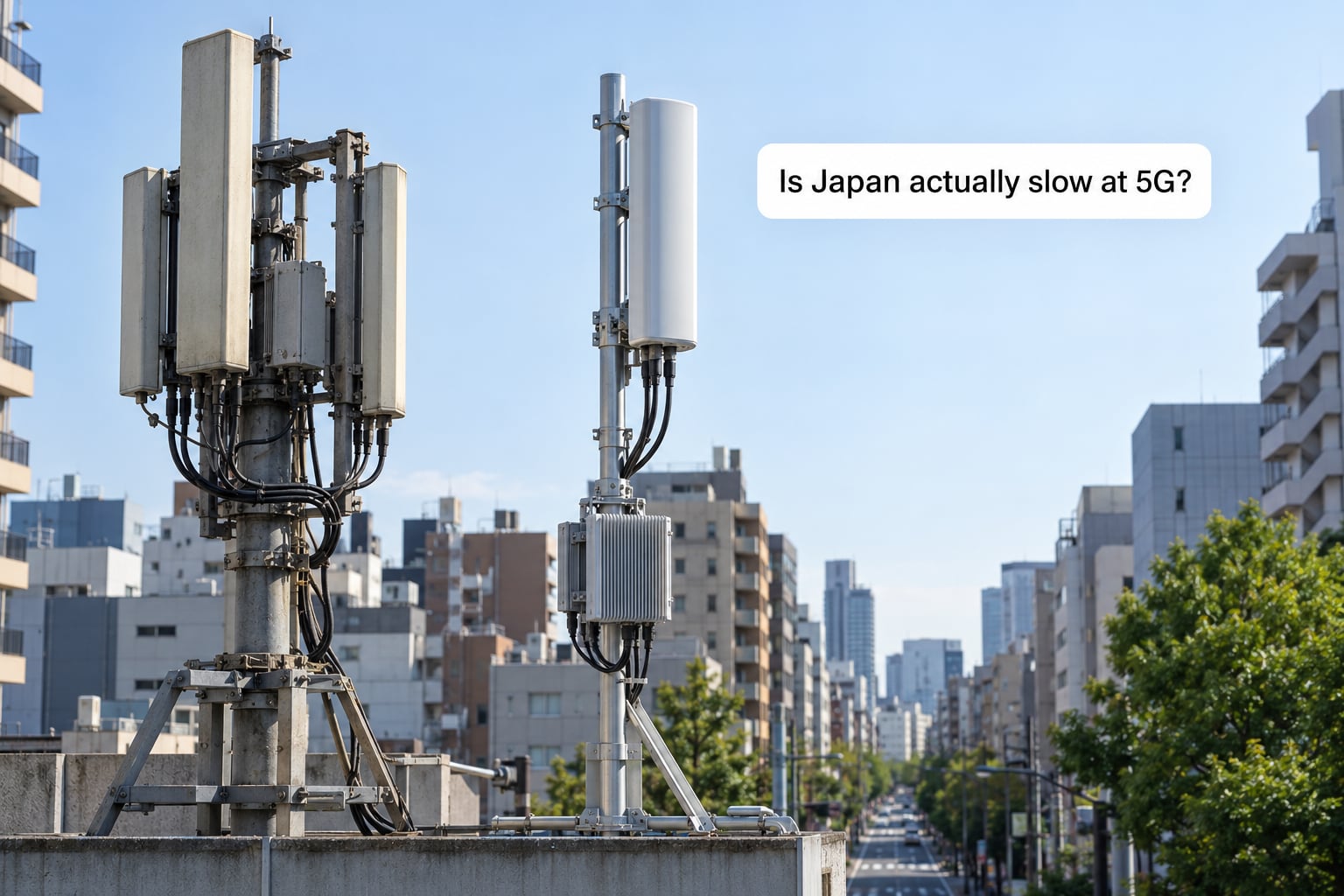
Not on rollout. Japan was an early mover, and the country had 5G coverage well before several markets now cited as faster. What is slow is the second step: getting customers onto 5G plans with 5G-capable handsets, and getting companies to build services that need it.
That distinction matters more than it sounds. A national rollout is a hardware and licensing job that carriers and the Ministry of Internal Affairs and Communications control. Adoption is a behaviour, decided by millions of households and thousands of businesses comparing a new handset and plan against what already works well.
Reported availability figures make the gap concrete. Telecom trade coverage of Ookla Speedtest Intelligence data has put NTT DOCOMO at about 38.4% availability and SoftBank at about 26.5%, while SoftBank posted the fastest median overall speeds in the same reporting at roughly 62 Mbps. Rakuten has been measured around 128 Mbps on 5G connections, which is the kind of figure that gets quoted without much context.
By prefecture the picture splits hard. Osaka came in around 35.2% availability and Tokyo around 33.7%, while Yamagata sat near 13.9% and Yamanashi near 9.1%. Same country, same carriers, same 98%-plus population coverage headline. If 5G were simply built everywhere, those numbers would look much closer together.
Why Japan is slow on 5G adoption compared with other countries
Seven factors explain most of the gap, and they compound rather than compete. Remove any one of them and the pace would look different in each market.
- 4G is already fast enough. Japanese LTE coverage is wide and reliable, so the visible jump that pushes people to upgrade in countries with older networks simply is not there.
- Plans do not reward 5G. 5G tariffs are broadly similar to their 4G equivalents and many plans still carry a data cap, so a faster connection does not mean more data. This is the single most common complaint raised in the long-running r/japan thread on whether 5G in Japan is worth anything at all.
- Coverage is not availability. Population coverage counts whether a licensed network reaches an area. Availability counts whether your phone latches onto 5G there. In Japan the first number is above 98% and the second is often below 40%.
- Spectrum choices limit raw speed. Japanese carriers focused on sub-6 GHz and mid-band spectrum rather than millimeter wave, which favours coverage and indoor reach over headline throughput.
- Handsets are a bigger expense. Replacement cycles run long, and 5G-capable phones sit higher in the range, so the device upgrade is the main cost many households meet first.
- Business demand is still forming. Existing LTE equipment already performs in factories, warehouses and retail, so migration needs a return that operations teams can point at before a budget committee agrees.
- Density is hard in a mountainous country. Adding capacity in Tokyo is a different job from covering valleys in Nagano, and cost per user rises quickly in the second case.
None of these is a failure of technology. They are the ordinary friction points of a rich, well-served market, and they add up to a slower curve.
Japan’s mature LTE networks made 4G good enough
This is the point most coverage commentary misses. Countries that launched 5G from a weak 3G or early 4G base had something visibly broken to fix. Japan fixed it years earlier, which is exactly why the 5G upgrade has less to sell.
Opensignal reporting from the early 5G period already showed NTT DOCOMO users on average download speeds in the mid-50 Mbps range, with SoftBank in the low 40s and Rakuten around 20 Mbps at that time. Those were not slow networks. Streaming, mobile payments and everyday browsing all behaved the same on LTE as they do on 5G today.
When your current connection handles a video call in a lift lobby without buffering, an upgrade has to offer something else to be worth a new contract and a new phone. Latency improvements matter to a small group. Video resolution, for most people, does not visibly change.
That is the economic core of the slow adoption story. A country with an excellent starting network has to make a genuinely better product, not just a faster version of something that already worked.
Why Japan’s 5G feels slow even where coverage is high
The 5G icon on your phone tells you the device is camped on a 5G cell. It does not tell you the cell is uncongested, that your plan allows heavy use, or that the app you are opening is limited by something other than the radio link. Plenty of people in Japan report seeing 5G and getting LTE-like throughput.
Three things usually explain it. The phone may be falling back to LTE after its 5G session ends, or it may not support the bands your carrier runs at that location. The cell may be busy at the time you are testing. And the app may be the bottleneck, in which case no network change helps at all.
5G coverage is strong, but availability is not the same as adoption
This is the distinction the whole SERP is missing, and it is worth sitting with for a minute because most of the confusion about Japan comes from mixing the two.
| Metric | What it counts | What it does not prove |
|---|---|---|
| Population coverage | Whether a licensed network reaches an area | That a phone connects to 5G there |
| 5G availability | Share of device time spent on a 5G cell | That the resulting speed is high |
| Median download speed | Typical throughput measured on the connection | That the peak is good, or that it holds at rush hour |
| Handset compatibility | Whether your model supports the band and mode used locally | That the plan includes enough data to use it |
Japan’s headline figure comes from a regulatory process. Carriers operating under licence have coverage obligations, and the population coverage number reflects whether those obligations are met on paper, measured against where people live rather than where they spend an afternoon.
Availability is measured differently, from real devices in real hands. When the two are compared, the gap is stark, and the difference is largest in prefectures like Yamagata and Yamanashi where population coverage stays high while device-measured availability does not.
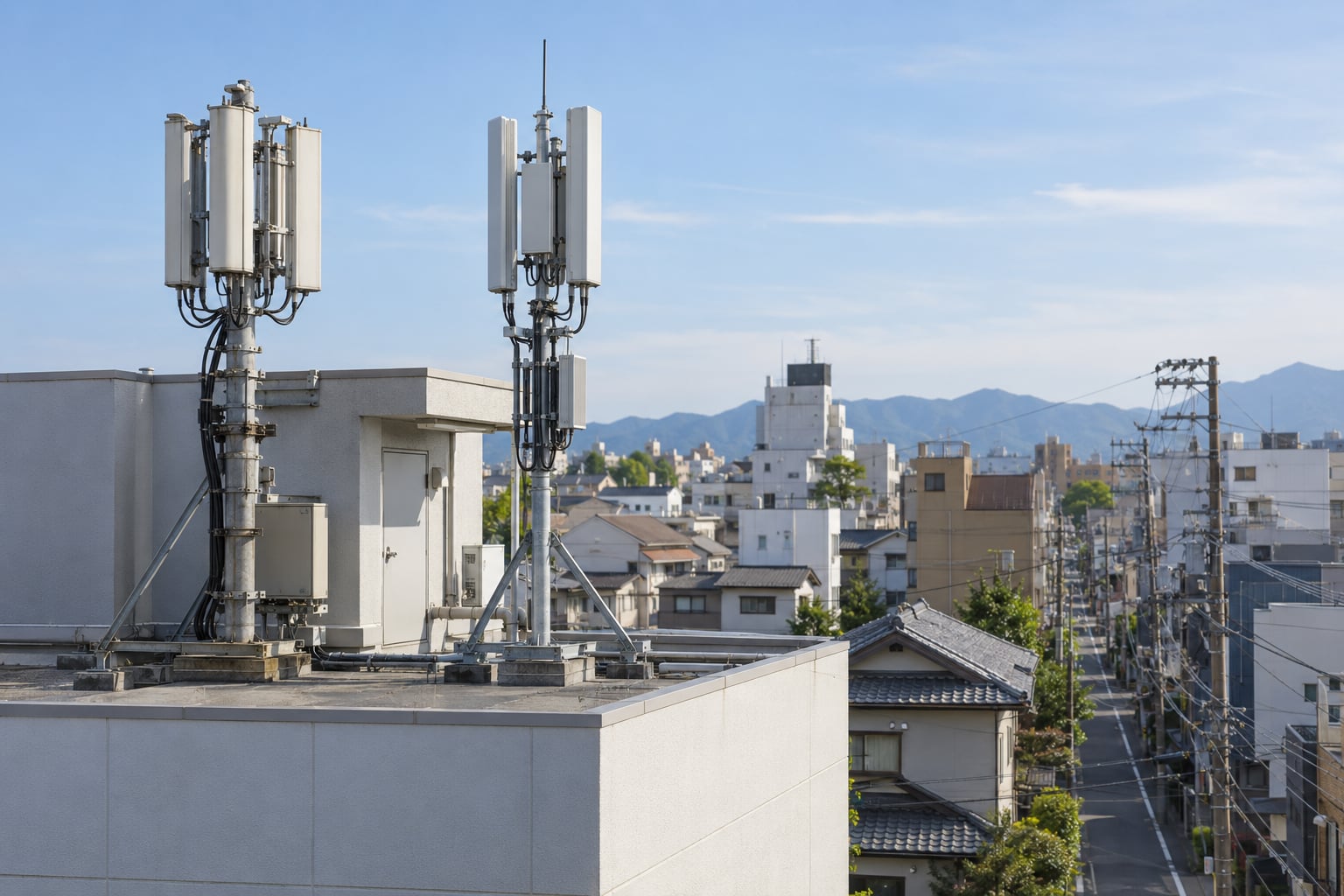
Indoor performance is part of the same story. Japanese operators built on frequencies that propagate well and penetrate buildings reasonably well, which is helpful, but a low-band or mid-band 5G layer can still sit beneath a dense LTE layer that phones prefer. Plenty of 5G coverage in Japan exists outdoors on poles and rooftops, with weaker service inside older concrete buildings.
The device and pricing barrier
A network can be available without every customer owning compatible hardware, and Japan’s handset market makes that gap wider than in many other countries.
Japanese phone buyers traditionally replace devices on long cycles. Contracts run for two years, the market rewards water resistance and camera quality over network generation, and household electronics budgets are conservative. That means a 5G-capable phone only reaches a household when the household decides to replace, not when the network upgrades.
Supply matters too. International handset brands sell into Japan but configure and price for the local market, where 5G-capable models sit higher in the range than their equivalents elsewhere. Domestic brands have a strong local share and strong 5G support, but the entry point for a cheap 5G handset is narrower than in markets with aggressive low-cost competition.
On the plan side, the economics blunt the upgrade. Japanese mobile plans commonly bundle a set amount of data, and 5G tiers are often priced close to their 4G equivalents rather than cheaper per gigabyte. If your data runs out, the connection is throttled or blocked regardless of generation, so a faster network changes how fast a video loads but not how much you can watch.
That is why the r/japan thread that ranks at the top of search results for this query has stayed relevant. Its central argument is not about speed at all. Users pointed out that paying more for faster speeds while your data stays capped is a poor trade, and they asked what they were missing. They were missing a generation with genuinely larger allowances, which Japan has not broadly delivered.
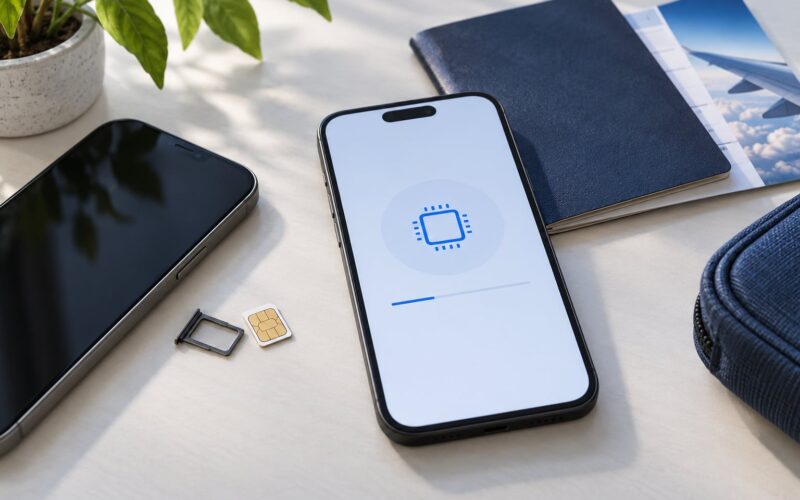
The SIM and contract conditions add friction for anyone not on a domestic plan. A device bought for another market may lack band support or the standalone 5G mode local carriers rely on, and switching to a local contract to fix it adds cost and paperwork. Travellers and long-term residents routinely fall back on travel eSIM data or a pocket WiFi unit instead, which further reduces the number of people directly adopting 5G services.
The difference between faster speeds and useful 5G services
Japan’s networks do deliver. What they do not deliver yet is a service that makes an ordinary customer reorganise their day around it. That is the gap between throughput and demand.
Fixed wireless access is one area where 5G is quietly working in Japan, particularly for homes that would otherwise wait on a fibre appointment. It will not replace fibre nationwide, but it changes the conversation for locations where fibre economics are thin.
Video and cloud gaming benefit on paper, and in congested city centres the difference can be real during evening peaks. In ordinary daytime use on a good LTE layer, most people report little visible change. That is a feature of the baseline network rather than a defect in 5G.
Industrial work is the strongest long-term case. Factories running connected cameras, robotic cells and low-latency control benefit from the capacity and device density that 5G makes possible, and the devices inside a Japanese factory often support 5G even when the consumer product on the same network does not connect to it.
Remote monitoring and disaster response are where the case is strongest for public institutions, which have budgets and coverage obligations rather than individual price sensitivity. Both are growing, and both are easier to justify to a budget committee than a consumer plan discount.
The honest summary is that 5G in Japan is infrastructure first and service second. That ordering is deliberate and broadly sensible, but it means the visible payoff lands with organisations rather than households, which shows up in adoption figures exactly as you would expect.
Why businesses are not switching as quickly as operators expected
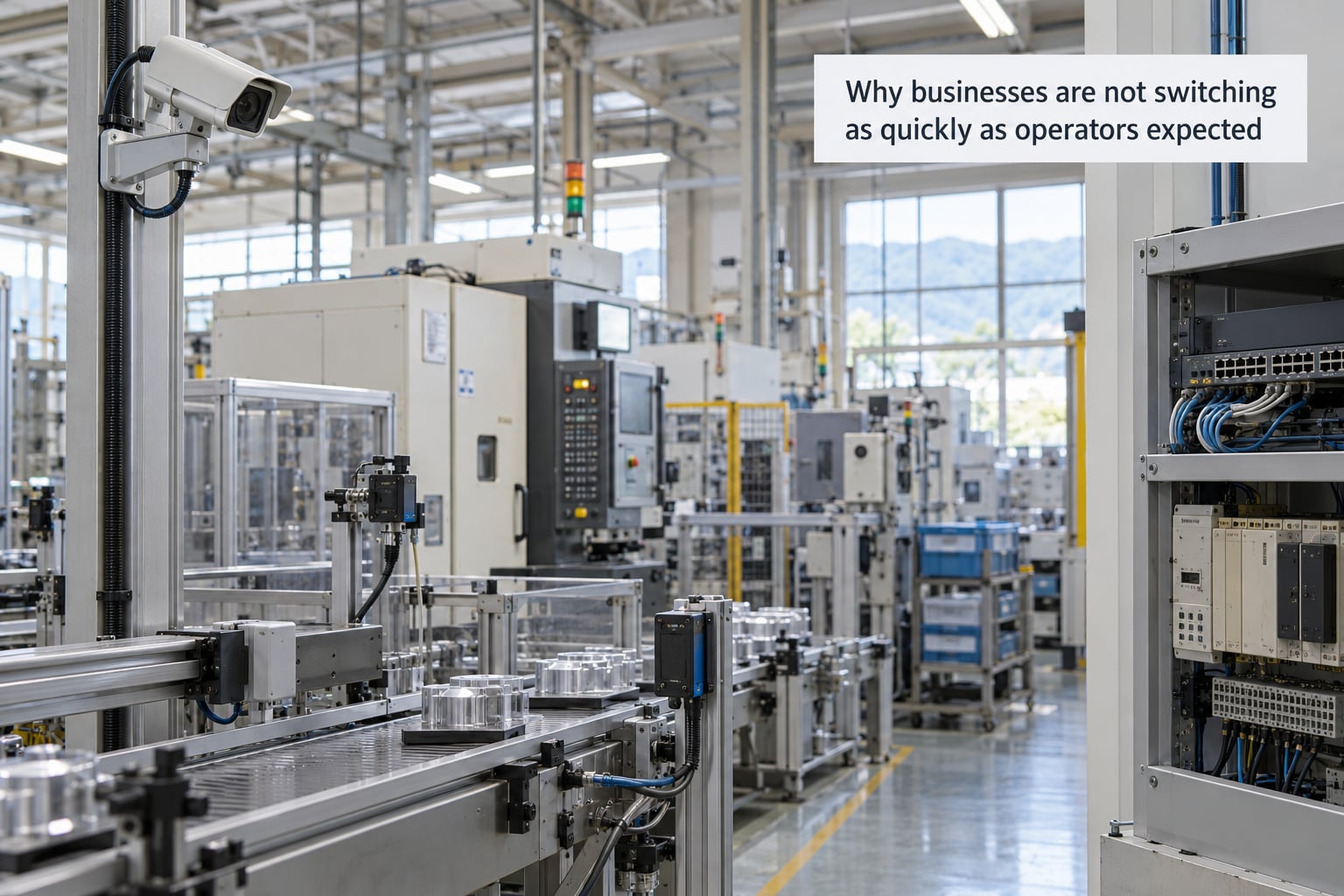
Operators built capacity expecting enterprise demand. Large Japanese organisations had budgets ready, pilots running and targets to hit, and the migration still moved more slowly than the forecasts assumed.
The first reason is that the installed base works. Industrial LTE equipment in a Japanese plant is reliable, well-supported and already integrated with the machinery. Replacing it means new gateways, new coverage design, new security review and a maintenance contract, before anyone sees a return.
The second is cost. A private 5G network is not one box. It is spectrum rights or shared access, base stations, core configuration, device upgrades across the site and the engineering hours to commission it. For a site that already meets its throughput needs on LTE, that spend needs a specific reason to be approved.
The third is deployment time. A consumer connects to a new cell in seconds. A factory migration runs for quarters, often with a parallel legacy network running alongside it, and the return only shows up after the changeover is complete.
The fourth is measurement. Operations teams are asked for numbers. If a move from LTE to 5G improves uptime by a fraction of a point and does not change throughput, it is hard to defend on a capital request, and it gets deferred.
Equipment supply is a background factor worth naming. Ericsson, Nokia and Huawei together hold roughly 80% of the global base station market, while NEC and Fujitsu together hold under 2%, and NEC has pulled back from base station development entirely. A country that started with domestic champions in the equipment space ended up relying on imports, which adds cost and weakens the industrial-policy story even as the networks keep getting faster.
How Japan’s adoption compares with the US and South Korea
Raw adoption percentages mislead across countries because they measure different starting conditions. A country that launched 5G early from an old network can hit high uptake quickly while offering less everyday value than a country that launched late onto excellent LTE.
| Country | Starting conditions | Spectrum emphasis | What shapes the adoption pace |
|---|---|---|---|
| Japan | Very strong LTE before launch | Sub-6 GHz and mid-band, limited mmWave | Capped plans, long handset cycles, cautious enterprise migration |
| South Korea | Earlier, thinner legacy networks | Mid-band with early mmWave deployment | Fast handset replacement and heavy device-maker competition |
| United States | Patchy coverage, varied by carrier | Sub-6 plus mmWave in selected cities | Carrier competition, fragmented spectrum, wide device choice |
| China | State-directed deployment | Mid-band focus at very large scale | Top-down rollout and extremely dense base station counts |
South Korea upgrades faster for reasons that have little to do with network technology. Handset replacement cycles are short, domestic device makers compete hard on price, and the legacy network was less of a reason to hesitate. Japan started from the opposite position.
The United States looks slow on the same coverage statistic but is a different story underneath, because carrier performance varies so widely by state and city. A national average tells you very little about whether a specific address gets a usable 5G cell.
On measured speeds Japan is not near the bottom either. Opensignal reporting has put Brazil’s average 5G download speed around 350 Mbps and ahead of the US, Japan and Taiwan at the time of that report, which is a reminder that speed rankings move with measurement period, device mix and where people happen to be standing.
Which Japanese carrier performs best depends on where you are
There is no single national answer, because availability differs sharply by prefecture and by neighbourhood.
| Carrier | Reported 5G availability | Speed notes | Watch for |
|---|---|---|---|
| NTT DOCOMO | About 38.4% | Strong average download speeds from the early 5G period onward | Availability varies by prefecture |
| SoftBank | About 26.5% | Fastest overall median speeds in the same reporting, around 62 Mbps | Highest congestion in dense city centres |
| Rakuten Mobile | Not directly comparable in the same dataset | 5G connections measured around 128 Mbps | Newer network, coverage still filling in |
| KDDI (au) | Not directly comparable in the same dataset | Comparable urban speeds | Smaller 5G footprint, better rural reach |
These figures come from different measurement sets and are not apples to apples. Treat them as directional and check your own location rather than trusting a national figure for the street you live on.
What this means for you in Japan
For residents, the practical question is rarely whether 5G exists nearby. It is whether your specific building gets a usable cell, and whether your plan gives you enough data to notice any difference. A simple test is to check what your phone is actually connected to at your front door and during evening peak hours, rather than reading a coverage map.
For travellers and long-term stays, the decision is simpler than it looks. Japanese transit, indoor and urban coverage on a 5G-capable handset is good enough that most people never miss anything. A travel eSIM or pocket WiFi unit does the job for a short trip, and a local SIM only becomes worth it if you are staying long enough to care about data cost per gigabyte.
For businesses, the honest starting point is to measure what the existing LTE network actually costs you in downtime and throughput before funding a migration. Several of the use cases are real, but they need a number attached to them.
And for anyone watching the numbers, the ones worth tracking are compatible-device use, whether real services arrive on 5G, and whether anyone upgrades from an already-good LTE connection. Launch dates and population coverage percentages have not described Japan’s adoption pace so far, and they will not start describing it now.
Frequently Asked Questions
Is 4G or 5G better in Japan?
For most people in Japan, 4G is the better value today. Japanese LTE is fast and reliable enough for everyday use, and 5G plans often carry the same data caps at a similar price, so the upgrade changes how fast a page loads rather than how much you can use. 5G makes more sense if your building gets a genuine 5G cell and you transfer large files or hit congestion regularly.
Why does my phone show 5G but the connection is still slow?
The 5G icon means your handset is camped on a 5G cell, not that the connection is uncongested or that your plan allows heavy use. Common causes are the phone falling back to LTE after a session ends, missing band or standalone support for your carrier, congestion at the time you are testing, and the app itself being the bottleneck. Test at different hours before changing anything.
What is the best phone network in Japan?
There is no single best network, because performance is location-dependent. Reported availability figures put NTT DOCOMO at roughly 38.4% and SoftBank at about 26.5%, with SoftBank showing the fastest overall median speeds around 62 Mbps, while KDDI tends to reach further into rural areas. Test each network at your actual address rather than trusting a national figure.
How fast is 5G mmWave on average?
Millimeter wave is fast but short-range, and Japan deployed very little of it. Japanese carriers concentrated on sub-6 GHz and mid-band spectrum, which travels further and penetrates buildings better but delivers lower headline speeds. That choice suits a dense, mountainous country where coverage matters more than peak throughput, and it is part of why availability is modest even where population coverage is high.
Which country has the fastest 5G?
It depends on when you measure and where people are standing. Opensignal reporting put Brazil’s average 5G download speed around 350 Mbps and ahead of the United States, Japan and Taiwan at that time. Rankings shift every reporting period because of device mix, measurement methodology and urban concentration, so a single snapshot tells you less than the trend.
Does Japan have a 7G network?
No, and nothing beyond 5G is commercially deployed anywhere yet. Japan is betting on 6G, with a national Beyond 5G Promotion Strategy coordinating research, and it holds roughly a tenth of global 6G patent filings. Japan has no 7G roadmap, and the near-term focus stays on making 5G convert into services rather than on a generation beyond it.
Conclusion
Japan is slow on 5G adoption because it solved the problem 5G was sold to solve years earlier. Excellent LTE removed the upgrade trigger, capped plans removed the financial reward, long handset cycles slowed the device transition, and enterprises needed measurable returns before replacing gear that already works.
None of that means the rollout failed. Coverage is wide, speeds are solid, and industrial and fixed wireless use is growing. When you read future figures, ignore launch dates and population coverage percentages. Watch how many compatible devices are in use, whether services that need 5G actually arrive, and how many customers upgrade from a network that was never broken.