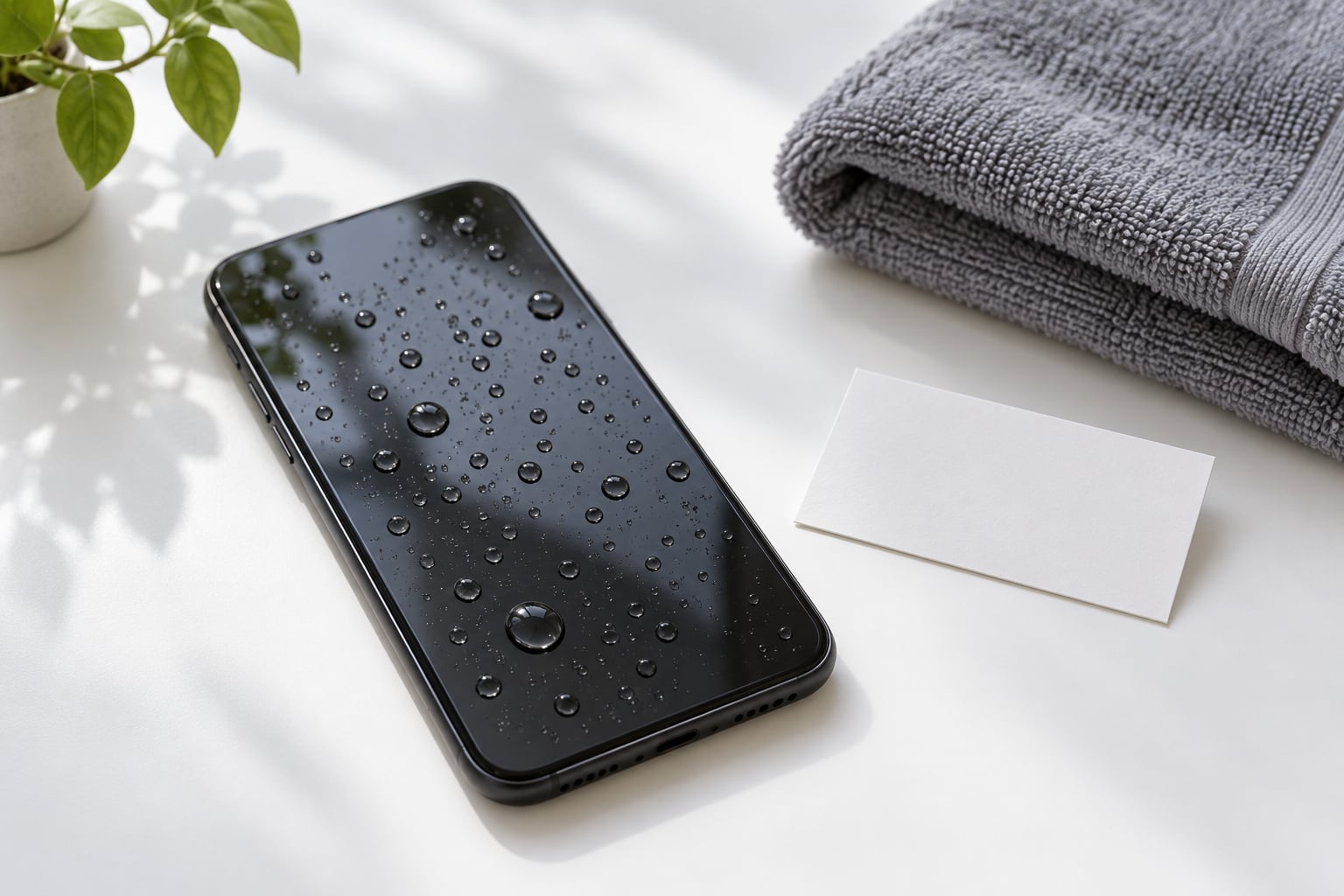
Short answer: most Japanese phones are water-resistant because the market expects them to be. Roughly 90% to 95% of handsets sold in Japan ship with an IPX7 or IPX8 rating, since Japanese users routinely take a phone into the shower or the bath, and docomo, au and SoftBank list waterproofing as a headline spec on nearly every handset. So the question of why japanese phones have waterproof cases starts from a wrong premise. The water resistance is built into the handset, not added by a case.
That distinction matters more than it sounds. If you assume a Japanese phone needs a sealed pouch to survive water, you will overpay for accessories you do not need and still be unsure what your phone can actually handle.
This guide covers the real reasons behind the convention, how IP ratings work, and what to check on any specific model before it goes near water.
Table of Contents
- 1Why Japanese Phones Have Waterproof Cases
- 2Is Waterproofing Standard on Every Japanese Phone?
- 3How Does an IP Water-Resistance Rating Work?
- 4IP Ratings for Phones: What the Numbers Mean
- 5How Japan’s Climate and Daily Life Encourage Water Resistance
- 6Why Japanese Phones Have Waterproof Cases in a Rainy, Humid Country
- 7Why Do Japanese Carriers and Phone Makers Value This Feature?
- 8Do You Still Need a Separate Waterproof Case?
- 9What to Check Before Using a Japanese Phone Near Water
- 10Frequently Asked Questions
- 11Are all phones sold in Japan waterproof?
- 12What does it mean that a Japanese phone has an IP68 rating?
- 13Why do Japanese phones have waterproof cases more often than phones elsewhere?
- 14Can I use a water-resistant phone in the rain or at the pool?
- 15Is built-in water resistance the same as a waterproof phone case?
- 16What should I do if water gets into my phone?
- 17Conclusion
Why Japanese Phones Have Waterproof Cases
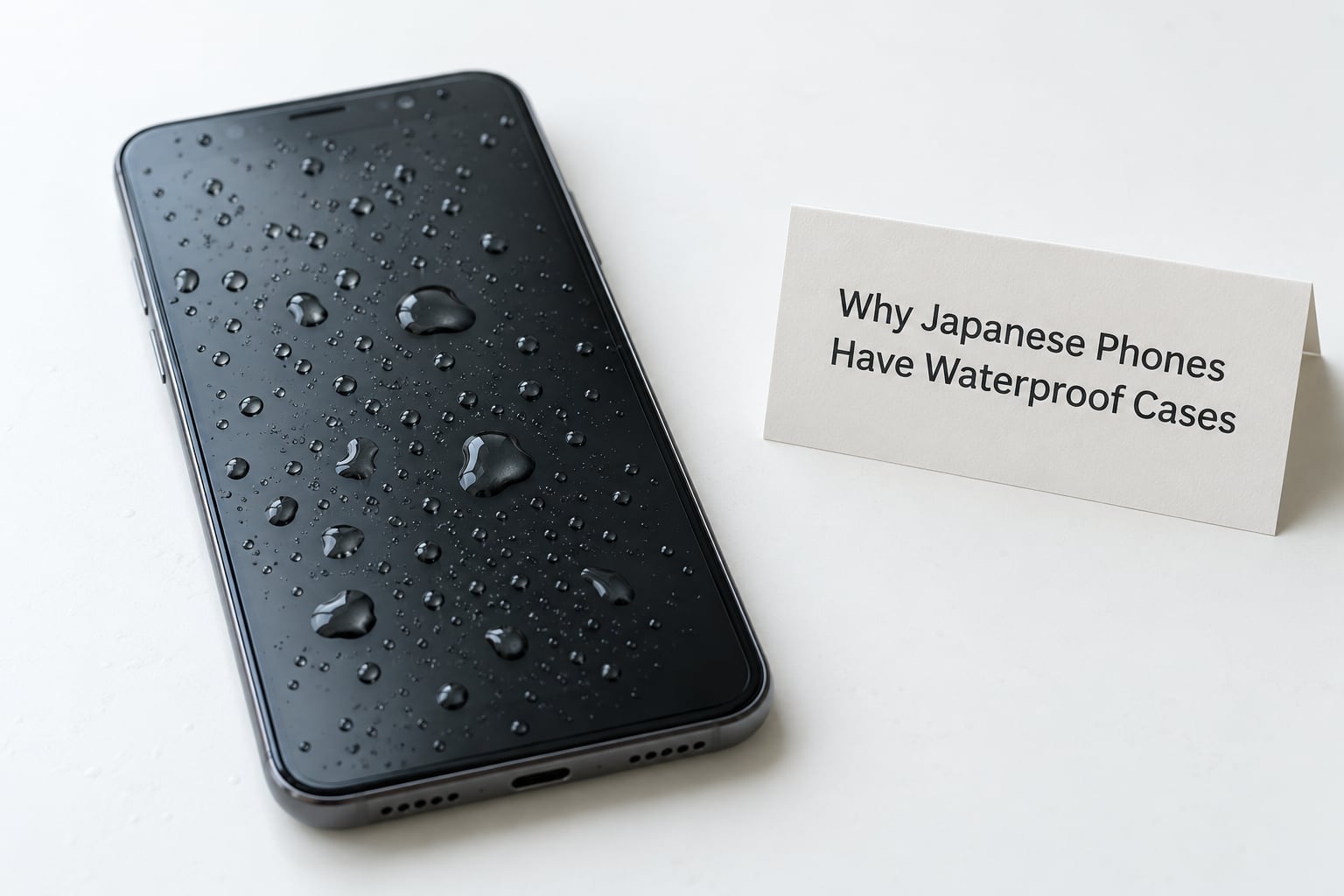
The honest answer is that the phones do not need cases for water at all. They arrive water-resistant from the factory, sealed at the handset level.
GSMArena’s Counterclockwise column in March 2019 described the origin plainly: water-resistant phones became popular first in Japan, because market research showed many Japanese women wanted to use a phone in the bathroom. Manufacturers treated that as a design requirement rather than a novelty.
Five things drive the practice:
- Bathroom use. Japanese bathing is a long, seated activity, so people read messages, watch video or set a timer with the phone sitting on the edge of the tub.
- Small wet rooms. Most Japanese homes have a combined bathroom and toilet, so a phone is in the same room as the shower whether you planned it or not.
- Carrier spec sheets. docomo, au and SoftBank advertise 防水 (waterproofing) on the spec sheet, so shoppers filter for it.
- Domestic manufacturing. Sharp, Sony and the feature-phone makers Toshiba and Panasonic built water-resistant handsets at volume long before the West.
- Climate. Rainy season, typhoons and high humidity put phones near water far more often than in drier markets.
Is Waterproofing Standard on Every Japanese Phone?
No, not every one. The 90% to 95% figure circulating online since 2019 is an estimate, not an official census, and it comes from social media explainers rather than a carrier report. Treat it as a rule of thumb.
Entry-level handsets, some prepaid devices and certain feature phones still ship with no rated protection at all. So do refurbished imports. Check the model rather than assume.
The word waterproof is also marketing copy. Japanese retailers write 防水, which translates literally as water prevention, and the term sits next to 耐水 (water resistant) on spec sheets where the two are not interchangeable. When a spec sheet says 防水, look for the IP number next to it.
How Does an IP Water-Resistance Rating Work?
An Ingress Protection rating comes from the IEC 60529 standard and has two digits. The first measures solid particle protection, from 0 up to 6. The second measures liquid protection.
For phones the second digit is the one that matters: 5 is water jet resistance, 7 is temporary immersion, 8 is continuous immersion beyond the original 2013 standard wording. Anything below 5 means no water protection worth relying on.
IPX7 means immersion in fresh water to one metre for up to 30 minutes in a laboratory. That is a test on a sample handset, not a promise about yours forever. IPX8 tests at a depth and duration each manufacturer chooses and documents, so two IPX8 phones can behave very differently.
What the rating does not cover is just as important. It assumes fresh water at room temperature, so chlorine, salt water and hot soapy shower water sit outside the test. Steam, high-pressure jets above IPX5 level and a device dropped into water with a case that is not rated for it are all outside it too.
IP Ratings for Phones: What the Numbers Mean
| Rating | What is tested | What it does not cover |
|---|---|---|
| IPX5 | Water jets from any direction | Submersion |
| IPX7 | Fresh water to 1 m for 30 minutes | Chlorine, salt water, hot water |
| IPX8 | Manufacturer-defined deeper or longer immersion | Anything outside the maker’s stated conditions |
| IP67 | Dust-tight plus IPX7 immersion | Sand and grit abrasion over time |
| IP68 | Dust-tight plus IPX8 immersion | Drop damage, which is a separate rating |
A rating is not permission to submerge a phone unless the manufacturer explicitly says so. Apple, Sony and Samsung all publish specific conditions, and staying inside them is the whole point.
How Japan’s Climate and Daily Life Encourage Water Resistance
Climate is the background reason, not the root one. Japan gets a wet season in June and a stretch of typhoons from late summer into early autumn, and humidity runs high for much of the year. Phones end up in pockets during downpours and on café tables near condensation. Not one of those situations ruins a phone often, but they add up.
Why Japanese Phones Have Waterproof Cases in a Rainy, Humid Country
Inside the home, water is simply closer than it is in many other countries. The unit bath packs a toilet, sink and bathtub into a space roughly the size of a parking bay, with no separate shower stall. There is nowhere to put the phone that is not inside the room where water is running.
Kitchens add their own exposure. Washing hands at the sink while scrolling, rinsing dishes, steaming from a pot. And the bath itself: soaking in a hot tub for forty minutes with the phone propped on a stool is an ordinary evening, not an unusual one.
None of this requires a case. It requires a sealed handset, which is what you get as standard.
Why Do Japanese Carriers and Phone Makers Value This Feature?
Carriers drove the change by putting water resistance on the spec sheet, where shoppers compare it. docomo, au and SoftBank all list 防水 or 耐水 as a headline attribute, which sets the expectation that a phone without it is incomplete. Once the spec sheet carries it, handset makers treat it as an entry requirement.
The named brands make the pattern easy to see. Sharp’s AQUOS line has been water-resistant for two decades, and the 2017 DIGNO Rafre was marketed as a phone you could wash with hand soap, which the r/gadgets thread picked up as the SoapPhone. Sony Xperia models in Japan carry IP ratings that the same model number sold elsewhere often lacks. Apple sells a distinct Japan SKU of each iPhone. Samsung does the same with its Galaxy variants.
| Japan market | North America | |
|---|---|---|
| Water resistance on most mid-range handsets | Standard | Inconsistent by maker |
| Typical rating | IPX8 or IP68 | IP67 or IP68 on flagships |
| Listed on carrier spec sheet | Yes | Rarely |
| Third-party waterproof case needed | Unusual | Common for wet-weather use |
| Feature phones | Keitai commonly rated | Limited and fading |
It also reduces returns. Liquid damage is the most common warranty claim category on smartphones, so a sealed device is cheaper to support across a multi-year ownership period. The Reddit r/AskALiberal thread on this topic drew well over a hundred comments, mostly from users surprised that water resistance is not universal, which says how little expectation there is outside Japan.
Older feature phones carried the same feature. Keitai-era handsets from Toshiba and Panasonic were sealed against rain and splashes long before smartphones existed here, so for a lot of users water resistance simply reads as normal.
Do You Still Need a Separate Waterproof Case?
Usually no. A sealed pouch case is for phones that are not rated, or for situations where the phone goes underwater where you cannot control it. If your phone carries IP67 or IP68, a sealed case mostly adds bulk and blocks the touchscreen.
Where a case earns its place: swimming, kayaking, boating, beach sand, dusty construction work, and any job where the phone gets washed down. For everyday rain and a normal bath, the built-in rating is the relevant one.
Drop protection is a separate system. MIL-STD-810H tests resistance to shock, vibration and falling, and it has nothing to do with water. A phone can be IP68 and still crack when it lands on tile.
Two failure modes catch people out. Chlorinated and salt water corrode the charging port over time, and the damage may show up months after a pool day, when a r/GooglePixel thread on swimming with a Pixel 3 XL made exactly that point even though the phone itself survived. Many handsets also carry a liquid-damage indicator sticker that turns colour and can void a warranty claim. Manufacturers generally advise rinsing a phone with fresh tap water after salt or chlorine exposure and letting it dry fully.
On the Hacker News discussion of Japanese water-resistant handsets, the summary was blunt: IP68 is waterproof by phone standards. Not by engineering standards.
What to Check Before Using a Japanese Phone Near Water
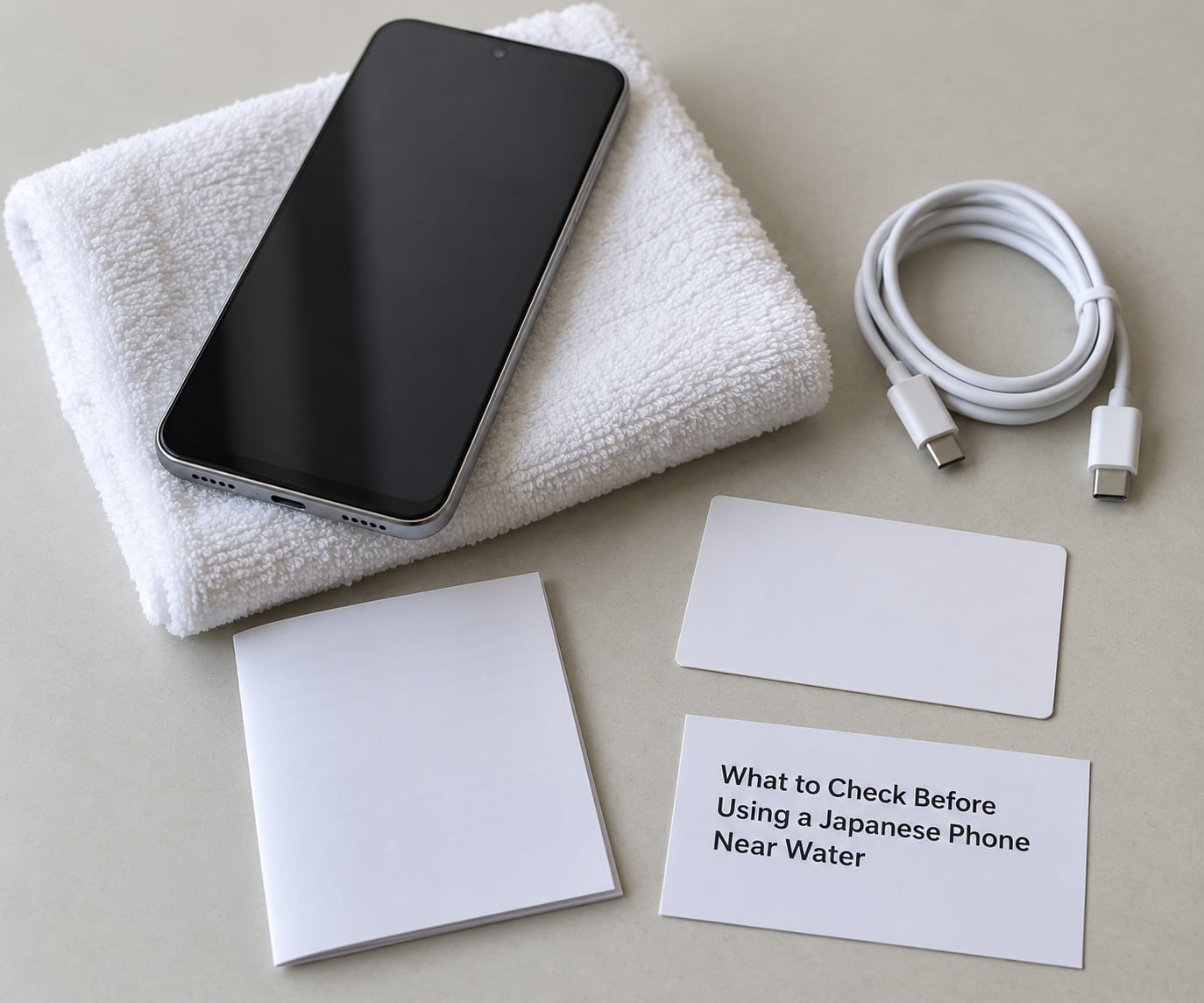
Work through this list before a phone meets a tap.
- Identify the exact model and its market. Model numbers differ by region, and the same phone name can carry a different IP rating in Japan than elsewhere.
- Find the IP rating on the manufacturer’s spec page. The retailer listing is a good place to start; the maker’s own page is the one to trust.
- Read the conditions attached to it. Depth, duration and water type are usually stated in the fine print.
- Check the warranty terms for your region. Buying a Japanese-market handset abroad can change what support covers.
- Keep the case on the phone sealed or off. A fitted case can trap water against the port if it is not rated for immersion.
- Never charge a wet phone. Dry the port fully and wait until it is bone dry before plugging in.
- Stop using it if water gets in. Power it off, leave the port open to drain, and take it to a service point rather than trying to fix it yourself.
For anyone importing a handset, add two more: confirm cellular band compatibility where you live, and check whether the device is carrier locked to a Japanese network.
Frequently Asked Questions
Are all phones sold in Japan waterproof?
No. The often-repeated claim that 90% to 95% of Japanese phones are water-resistant is an estimate that traces back to social media explainers rather than an official survey. Most mid-range and flagship handsets carry an IPX7, IPX8, IP67 or IP68 rating, but entry-level and prepaid devices sometimes ship with no rated protection. Check the model you are buying rather than relying on the market-wide figure.
What does it mean that a Japanese phone has an IP68 rating?
It means the handset is dust-tight and passed a manufacturer-defined water immersion test under the IEC 60529 standard. The test uses fresh water in a lab, and the maker publishes the depth and duration it applies to. It does not cover chlorine, salt water, hot shower steam or drop damage. Treat IP68 as permission for splashes, rain and a normal bath, within the stated limits.
Why do Japanese phones have waterproof cases more often than phones elsewhere?
They mostly do not. Japanese phones are usually sealed at the factory, so an external waterproof case is rarely necessary. The reason water resistance became standard here is cultural and commercial: people take phones into the bath and shower, the compact unit bath leaves nowhere dry to put one, and carriers such as docomo, au and SoftBank list waterproofing as a headline spec on the handset spec sheet.
Can I use a water-resistant phone in the rain or at the pool?
Rain is what an IPX7 or IPX8 rating comfortably covers. A pool is a different matter. Chlorinated water is not part of the standard test and can corrode the charging port over time even if the phone survives the swim. If you do swim with the phone, rinse it with fresh tap water afterwards, let the port dry completely, and keep it away from the charger until it is fully dry.
Is built-in water resistance the same as a waterproof phone case?
No. Built-in resistance comes from seals and coatings inside the handset, certified to an IP rating by the manufacturer. A waterproof case is an external pouch with a physical closure, and many have no published rating at all. On a phone rated IP67 or IP68 the case adds little for everyday use, but it still helps for swimming, boating, dust and drop-prone work, where an IP rating does not apply.
What should I do if water gets into my phone?
Turn it off and do not charge it, even if the screen still works. Water and power is the combination that causes real damage, and many handsets carry a liquid-damage indicator sticker that can void a warranty claim. Stand the phone with the charging port facing down to let it drain, give it time to dry fully, and avoid heat or rice. If it behaves oddly afterwards, have it checked rather than guessing.
Conclusion
Water resistance became standard on Japanese phones because the market asked for it, not because Japanese buyers carry sealed cases. Start by looking up your exact model and its IP rating on the manufacturer’s page, read the conditions attached to that rating, and treat rain and a normal bath as fine while pool water and drop damage stay outside it.