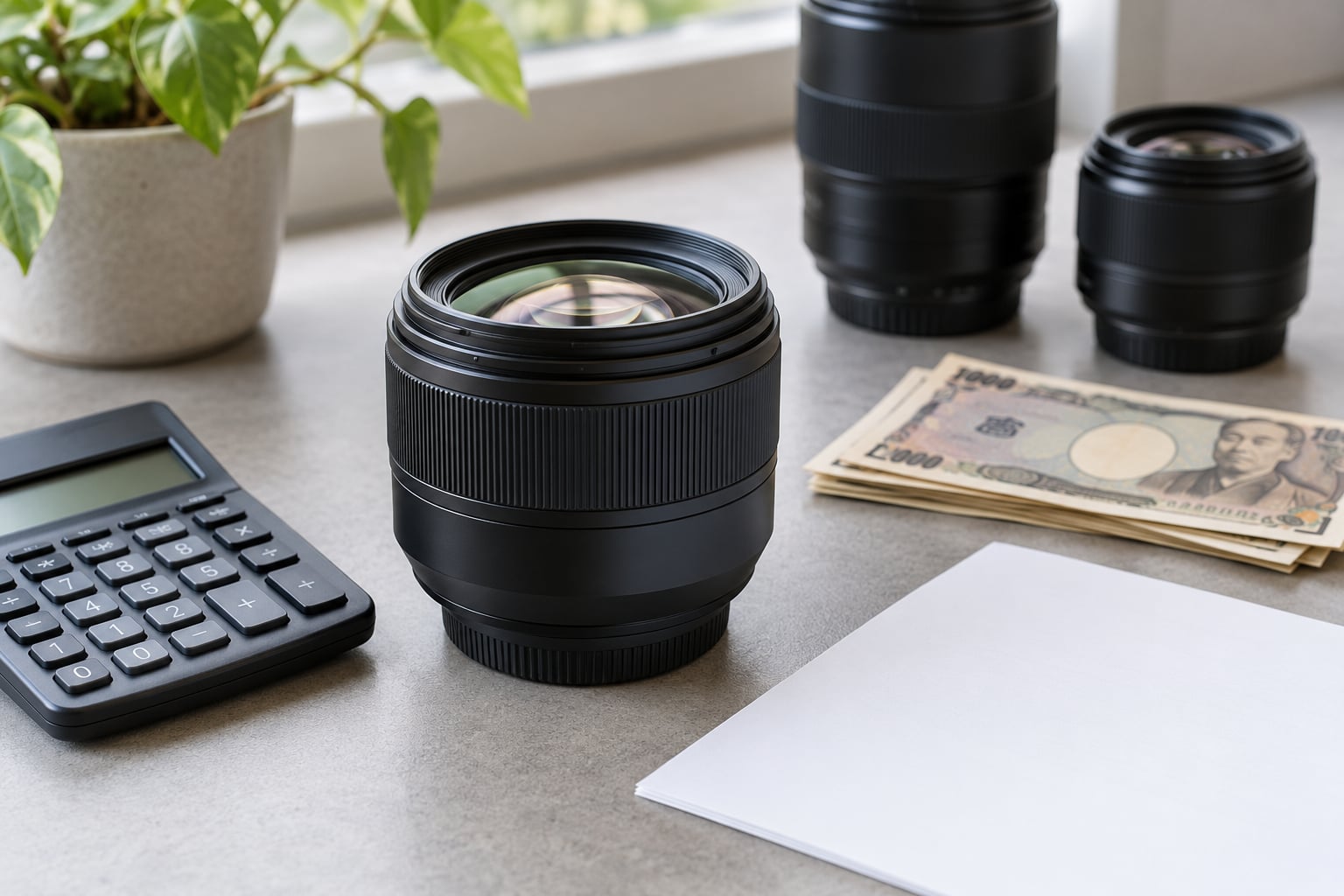
Ask why Japanese lenses cost less in Japan and the honest answer starts with structure, not a tourist perk. The Japanese shelf price sits at the bottom of the global price stack, with no export duty, no international distributor margin and no local VAT layered on top, and visitors can strip the 10% consumption tax off at the register. The saving is not automatic, though — the gap swings with the brand, the lens tier and what the yen was doing that month.
One quick note before we start: this is about interchangeable camera lenses. If you were looking for eyeglass lenses, the tax rules are the same but nothing else here applies.
Table of Contents
- 1What Makes Japanese Lenses Cheaper in Japan?
- 2The five price drivers
- 3How Do Japan’s Retail Prices Affect Camera Lenses?
- 4What Role Do Taxes and Currency Exchange Rates Play?
- 5Why Do Some Imported Japanese Lenses Cost More?
- 6How to Tell Whether a Lower Price Is a Real Deal
- 7Is Buying Camera Lenses in Japan Worth It?
- 8Frequently Asked Questions
- 9Are cameras less expensive in Japan?
- 10How much tax free shopping is there in Japan?
- 11What camera company has the cheapest lenses?
- 12Is shopping in Japan cheap?
- 13Do I pay customs on a camera bought in Japan?
- 14Will a lens bought in Japan work with a camera body bought in the US?
- 15Conclusion
What Makes Japanese Lenses Cheaper in Japan?
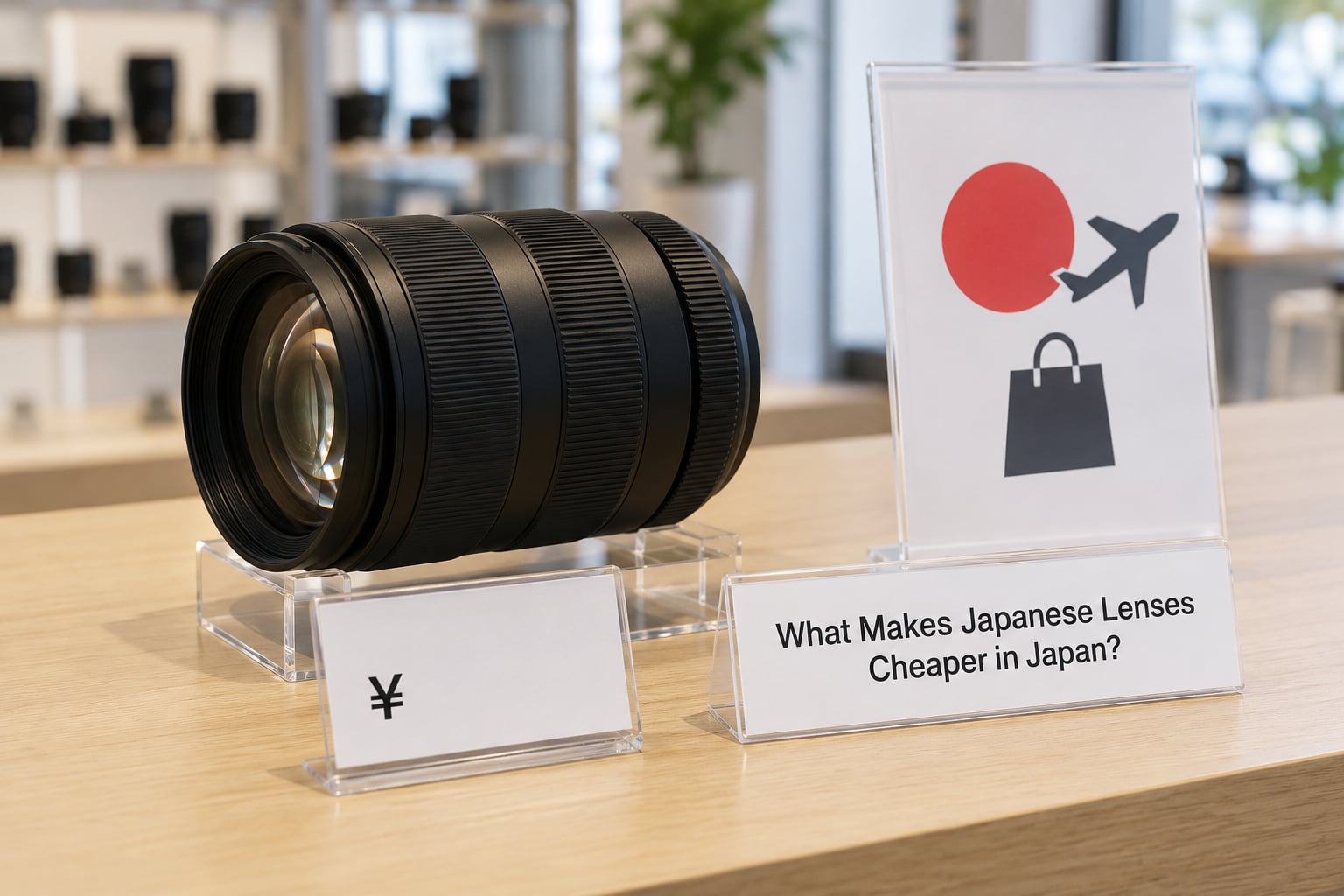
Why Japanese lenses cost less in Japan comes down to five layers of cost that exist in your home market and simply do not exist on a Japanese shelf. The lens itself is manufactured in Japan, sold by a Japanese brand to a Japanese distributor, and priced by a Japanese retail market with a dozen national chains competing for the same shelf.
The five price drivers
- Tax-free shopping. Eligible temporary visitors can have the 10% consumption tax removed in store, which is the single biggest lever most buyers miss.
- No export layers. Nothing is added for shipping abroad, export paperwork or a national distributor’s margin, because nothing leaves the country.
- Domestic competition. Map Camera, Kitamura Camera, Bic Camera and Yodobashi Camera all sell the same glass in the same city and discount each other hard on lenses.
- Exchange rate. Manufacturers set Japanese prices in yen. When the yen is weak, those prices convert into far less abroad.
- Dense used supply. Akihabara and the used shops around Nakano hold enormous inventories of second-hand glass at prices no export market can match.
The fourth driver explains most of the contradiction you will read online. A photographer on FM Forums traced a price gap on a Tamron zoom largely to the dollar-yen rate rather than to any Japanese discount, and that matches what most careful posters report.
How Do Japan’s Retail Prices Affect Camera Lenses?
Domestic manufacturers publish a suggested price for the Japanese market, and that figure is usually the lowest worldwide list price for the same SKU. Because every major maker — Sony, Canon, Nikon, Fujifilm, Tamron, Sigma — treats Japan as its home turf, none of them has a reason to inflate it.
Actual shelf prices then fall below that suggestion, sometimes a long way. Chains run timed promotions, point cards reward repeat purchases, and trade-in bonuses can be worth several percent of the new price. Multiple stores in the same district means a shopper with a phone and an hour can compare four or five listings for the identical lens.
A lower official price still does not mean every lens is cheaper in every store. Regional promotions, stock levels and the popularity of a specific focal length all move the number. Popular short zooms and fast primes sell at thin margins in Japan precisely because that is where the volume is.
Used gear is the sharpest contrast. Condition grading in Japan runs on a five-step scale from A to E, and because local photographers upgrade constantly, a mid-tier lens with real wear can land at a fraction of the new price. Photographers on FM Forums have described buying used glass there for a decade, and the inventory depth is the reason.
What Role Do Taxes and Currency Exchange Rates Play?
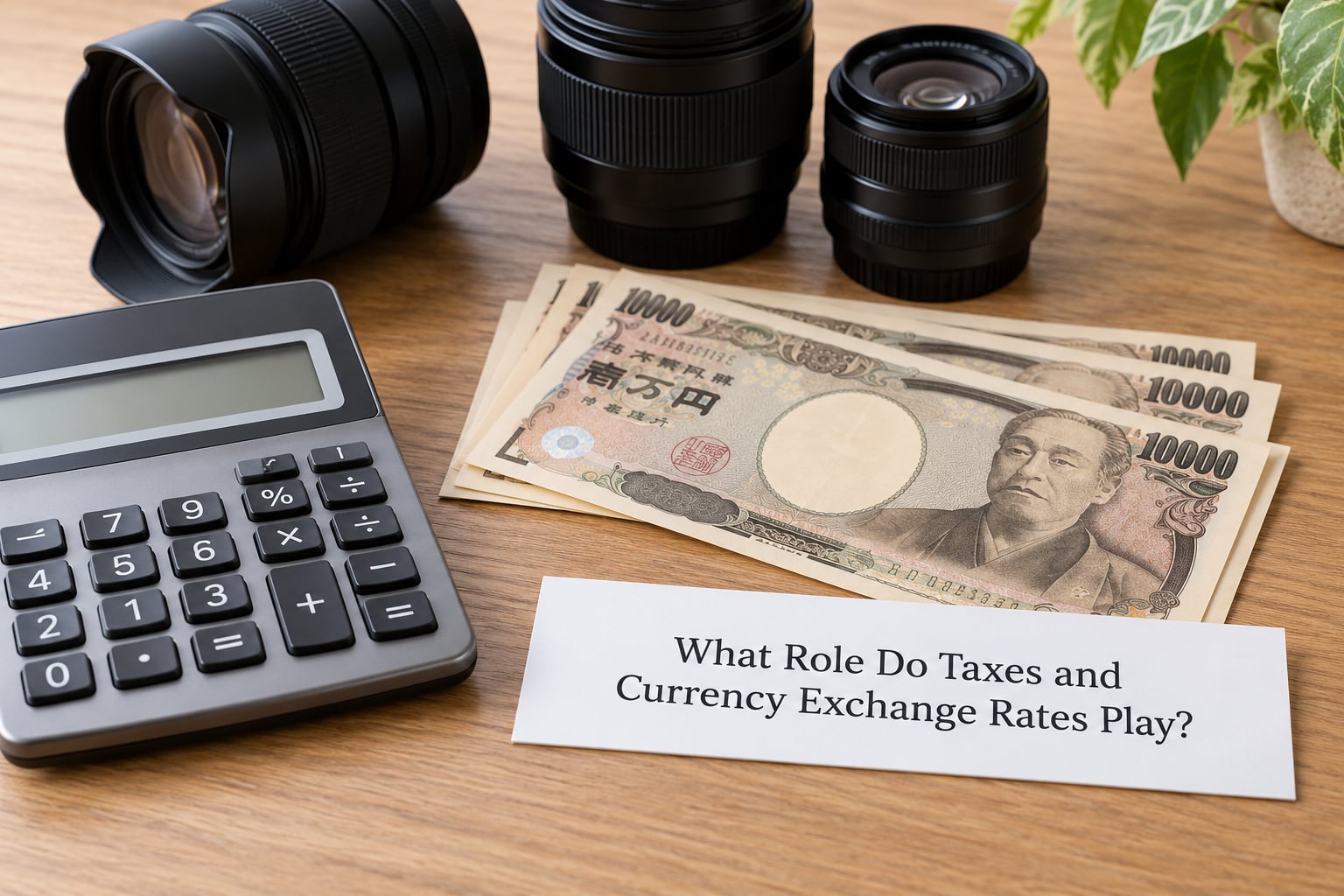
Japan applies a 10% consumption tax to camera gear, and that tax is why the comparison can go two ways. A visitor paying the full amount pays more than a buyer in a country with no VAT. A visitor using tax-free shopping pays less than almost anyone else.
The mechanics are simple enough to learn in five steps. You must be a temporary visitor with a non-Japanese passport, buy above the tax-free threshold at one store, present the passport at the register, receive the tax removed from the shelf price, and take the goods out of Japan sealed. Opening that packaging inside Japan normally means surrendering the discount, so plan what you unpack and when.
Currency does the rest. The yen has spent long stretches trading weaker against the dollar and the euro, which widens the gap automatically without anyone changing a single price. It also means the gap reverses when the yen strengthens. Buyers reporting from 2004, 2019 and 2022 on photography forums describe Japan as the expensive option, and those were stronger-yen periods. Prices and rates move; check both on the day you buy rather than trusting a list posted months ago.
The cost stack below is the part most guides skip. It explains why the same lens costs what it costs on two continents.
| Cost layer | In Japan | On an overseas shelf |
|---|---|---|
| Consumption tax | 10%, refundable for eligible visitors | VAT or GST at retail, not refundable |
| Import duty and freight | None | Applied on arrival, plus insured shipping |
| Distributor margin | Thin, competitive domestic market | National distributor plus regional importer |
| Local support network | Home market, built in | Separate budget per region |
| Your realistic cost | Shelf price, less tax-free discount | Street price, plus duty and freight if imported |
Why Do Some Imported Japanese Lenses Cost More?
Import a lens yourself and every layer the table describes starts stacking on the other side of the Pacific. Insured shipping adds up on a heavy telephoto, import duty applies above your personal allowance, local VAT applies at clearance, and a card conversion fee can add another slice. Plenty of buyers have watched a 25% saving evaporate at the border.
Warranty is the cost people forget to price in. A lens bought through a Japanese domestic channel carries about one year of coverage from the manufacturer in Japan. Compare that with what the regional distributor offers in your own market, and the picture changes fast.
| Region | Typical warranty on a new lens |
|---|---|
| Japan (domestic purchase) | About 1 year from the manufacturer |
| European Union | About 5 years of statutory cover |
| United States distributor | Often 5 to 6 years depending on the maker |
| Canada | Up to 10 years once registered |
That long overseas coverage is a distributor arrangement, not a promise from the manufacturer, and a lens you import yourself falls outside it. Owners report that US distributors decline service on grey-market bodies even when the buyer offers to pay, and repairs usually mean shipping the lens back to Japan yourself.
Grey market simply means a genuine product sold outside its manufacturer’s official channel for that region. Nothing is counterfeit or dangerous — but you have bought outside the support system, and that is the real trade you make.
How to Tell Whether a Lower Price Is a Real Deal
Work through these six checks before you commit anything.
- Convert to your own currency first. A yen figure means nothing until you apply today’s rate.
- Add the tax treatment. If you are tax-free eligible, use the discounted shelf price. If not, add the full tax.
- Price the full landed cost. Shipping, insurance, payment fees and any duty belong in the total, not in a footnote.
- Read the warranty terms for your region. A year of cover versus six changes the value of the glass a lot.
- Check who backs the seller. A national chain with point-card support and a Japanese return counter is a different proposition from an anonymous marketplace seller.
- For used glass, grade it honestly. Check the serial number, look for fungus, haze, oil on the rear element and any stiffness in the focus or zoom ring.
One more practical point: exchanging a Japanese purchase for an optical fault such as decentering is not an automatic right. Owners on FM Forums describe lengthy discussions in Japanese and staff phone calls before a swap happened, so keep the receipt and the sealed packaging.
Is Buying Camera Lenses in Japan Worth It?
It is worth it in a short list of situations. You are already in the country, the lens is high value, you qualify for tax-free shopping, and you can carry it home rather than shipping it. Add a period shopping trip and the maths usually works.
It is not worth it when the saving is thin. Below roughly 15%, the warranty you give up and the import friction you accept eat the margin, and buying through your own distributor becomes the calmer choice. Used and vintage glass is the exception that flips the calculation, because Japan has far more of it than most export markets.
A proxy importer such as ZenMarket or FromJapan sits in between. They buy in Japan, handle tax-free paperwork and forward the lens, then charge a fee on top. That fee and the freight are exactly the layers that erase the discount, so compare the proxy’s all-in figure against your local street price, not against the Japanese shelf price.
Timing helps a little. Year-end and seasonal promotions lower the shelf price, while Golden Week crowds the good shops. If you have no choice of dates, none of that matters much.
Frequently Asked Questions
Are cameras less expensive in Japan?
Cameras and lenses are often cheaper in Japan than in Europe or North America, but not always. The Japanese shelf price carries no export duty, no international distributor margin and no local VAT, and eligible visitors can remove the 10% consumption tax in store. The gap varies by brand and by what the yen is doing that month, so convert to your own currency before deciding.
How much tax free shopping is there in Japan?
Tax-free shopping removes the 10% consumption tax on eligible purchases, which is worth roughly 9% of the shelf price rather than a flat 10%. You need a temporary visitor status and a non-Japanese passport, a single-store purchase above the tax-free threshold, and you present the passport at the register. Goods must leave Japan sealed, and opening the packaging on Japanese soil normally means paying the tax.
What camera company has the cheapest lenses?
No brand is cheapest everywhere, and the gap changes with the exchange rate. Japanese makers such as Sony, Canon and Nikon usually show the largest differences against their overseas list prices, while Fujifilm often shows a narrow gap because of strong domestic positioning. Tamron and Sigma sit in between. The honest answer is to price the exact model in yen on the day, not to trust a brand-level rule.
Is shopping in Japan cheap?
Japan is not a bargain-hunting destination across the board. During weaker-yen stretches, converting a Japanese price into dollars or euros makes gear look cheap. During stronger-yen periods the same maths made Japan the more expensive option, which is exactly what photographers on photography forums reported in 2004, 2019 and 2022. Used cameras, vintage glass and small electronics are the categories where Japan stays competitive year-round.
Do I pay customs on a camera bought in Japan?
It depends where you land and how long you were away. The United States allows a per-person duty-free allowance for goods carried back, but the allowance drops sharply if your trip lasted under 48 hours, and anything above it is dutiable on arrival. You declare at the border and may owe duty plus local VAT, paid immediately. Photographers who budgeted for it are rarely surprised; those who did not are.
Will a lens bought in Japan work with a camera body bought in the US?
Almost always, yes. Interchangeable lenses mount to a physical standard, so a Japanese lens fits a body from another region and the electronics talk to each other normally. The exceptions worth knowing are firmware and video standards on some bodies, and accessories or batteries sold only as Japan-only domestic models. The bigger issue is not compatibility but warranty, since an imported lens sits outside your local distributor’s service network.
Conclusion
Japanese lenses cost less in Japan because the shelf price sits at the bottom of the global cost stack and the tax comes off at the register. Before you act, calculate four things in order: the yen price, whether tax-free shopping applies to you, the exchange rate on the day, and every cost that follows — freight, duty, warranty loss and return friction. That total tells you whether the deal is real.