Preparing for a Japanese tech trade show comes down to four things: know the outcome you want, book early, walk in with a bilingual pitch, and treat the meeting calendar as the real product. Most first-timers spend their energy on the booth graphics and then fly home with a thick stack of business cards and no pipeline.
Japan’s big events run on fixed deadlines. Booth space at Tokyo Game Show, Japan IT Week and CEATEC is allocated months ahead, exhibitor contracts are typically signed in Japanese and paid up front, and the venue manuals set hard limits on booth height, stage placement and wireless demos. Getting those wrong is expensive and cannot be fixed on site.
This guide covers how to prepare for a Japanese tech trade show if you are an international founder, marketer or engineer visiting or exhibiting for the first time. It lays out roughly twelve weeks of real preparation plus show week itself. Most of the work happens before you buy a flight.
Table of Contents
- 1What You Need
- 2Step-by-Step
- 31. Define Your Goals and Target Companies
- 42. Research the Event and Its Exhibitors
- 53. Book Travel, Entry, and Nearby Accommodation
- 64. Prepare Your Pitch and Meeting Materials
- 75. Schedule Meetings Before You Arrive
- 86. Learn the Basics of Japanese Business Etiquette
- 97. Follow Up After the Show
- 10Common Mistakes
- 11Frequently Asked Questions
- 12Can I attend a Japanese tech trade show without exhibiting?
- 13Do I need a visa to attend a Japanese tech trade show?
- 14What are the business etiquette rules for Japanese trade shows?
- 15Should I visit or exhibit at a Japanese tech show?
- 16How soon should I book travel and accommodation?
- 17How do you follow up after a trade show in Japan?
- 18Conclusion
What You Need
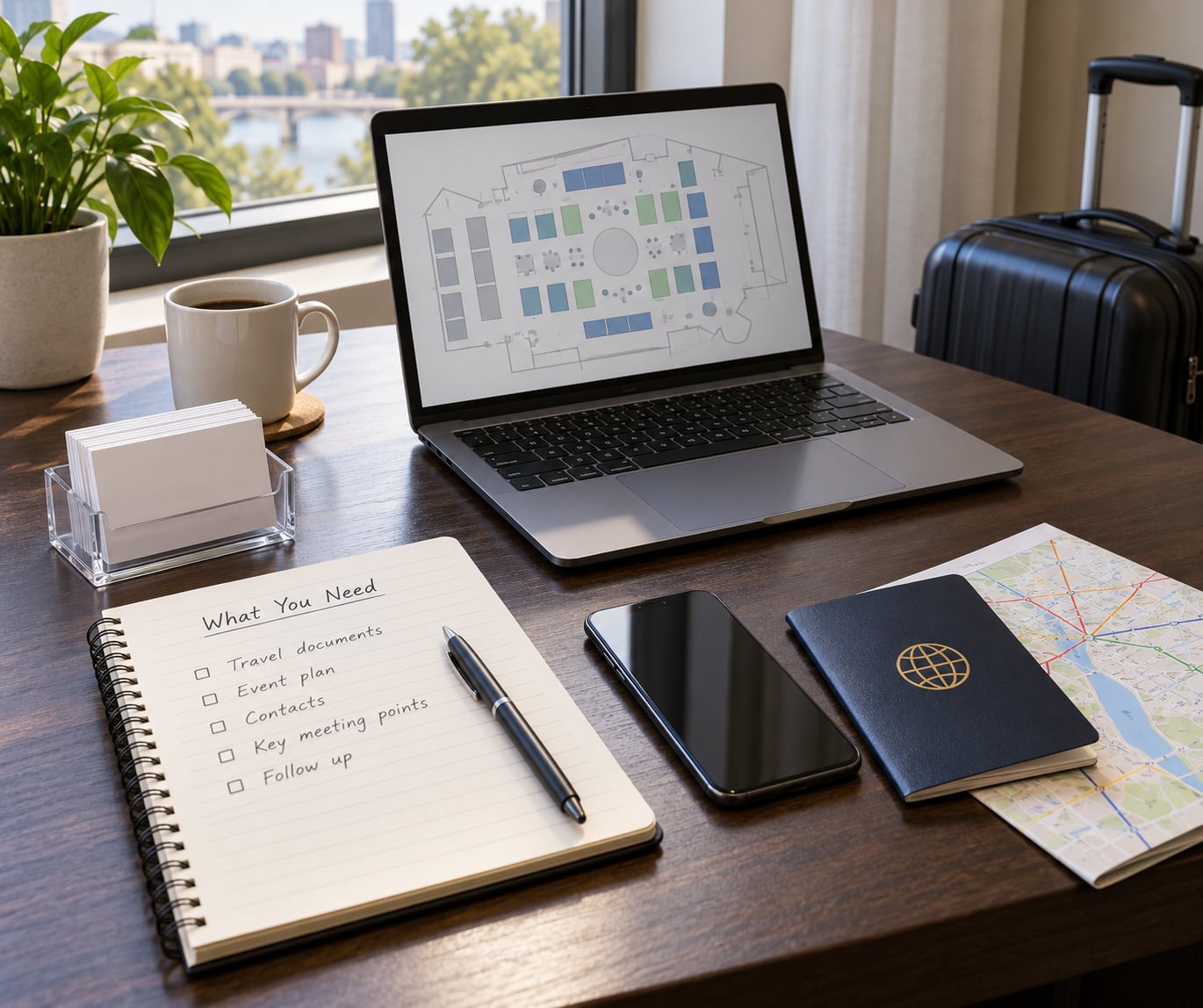
Most of what you need is administrative rather than physical. Get these in place first, because several of them gate the others.
- Event credentials. Visitor or exhibitor registration for every person attending, not just the booth team. Business-day access to consumer shows like Tokyo Game Show is restricted and never automatic.
- Passport with sufficient validity and a visa assessment for your nationality. Check the current requirement well before you book non-refundable travel.
- An invitation letter from the organiser or your host company if your visa or company travel policy requires one. This takes a few days to draft properly.
- Company materials in Japanese. A one-page overview, a short brochure and a product sheet translated by a human, not machine output.
- Business cards with Japanese on one side and your title written accurately. Romanised job titles confuse people more than they help.
- A translation app downloaded in advance plus an offline copy of your pitch, for the conversations that happen away from your booth.
- A schedule you control. A shared document with your team’s local contact, meeting times converted to Japan time, and a written note of what each meeting is meant to achieve.
- Power and connectivity planning. Japan runs on 100V with Type A plugs, and venue halls are saturated with wireless networks. Bring a hotspot if your demo depends on a connection.
Clothing is the item people forget. Business days at Japanese tech shows are conservative. A dark suit or smart jacket and trousers works for every situation; sneakers are fine underneath. Wear shoes you can stand in for six hours, because you will be standing far more than you expect.
Step-by-Step
1. Define Your Goals and Target Companies
Decide what a good show looks like before you look at any exhibitor list. “Meet potential partners” is not a goal. Twenty qualified distributor conversations, five inbound demos requested, or three pilot projects scoped are goals you can measure.
Then build a ranked target list of twenty to thirty companies, ordered by how much a single conversation would be worth to you. Note who you want to meet, what you can offer them and what you are asking for. You are finished with this step when every name on the list has a reason attached and you know which three meetings would make the trip a success even if nothing else happens.
2. Research the Event and Its Exhibitors
Use the official exhibitor directory, the floor plan, the conference agenda and the speaker list. The floor plan tells you which halls hold your target companies and whether they sit near the entrance or in the far corner of Hall 5, which changes your traffic plan entirely.
Check whether the show splits its days. Large Japanese tech events commonly run B2B business days and B2C public days, and professional visitors on public days may find access restricted and the professional halls quiet. Professionals report real credential friction trying to attend business days without the right registration, so confirm your access type before you fly.
Archived announcements and the previous edition’s exhibitor list tell you how quickly a show fills. You are finished when you know your hall, your arrival gate, your meeting rooms and which of your targets are actually there.
3. Book Travel, Entry, and Nearby Accommodation
Book flights once your exhibitor or visitor registration is confirmed. Leave a buffer of at least a day between landing and your first meeting. International arrivals, customs and domestic transfers eat time, and a delayed flight should not cost you a booked slot.
Where you stay matters more than it sounds. Tokyo Big Sight sits on the far side of the bay from central Tokyo, Makuhari Messe sits in a broad business district with a long walk to the halls, and hall-to-hall distances inside the larger venues are genuinely long. Staying locally trades a better room for two extra hours a day. Decide based on your meeting schedule, not on the nightly rate.
Plan for contingency time. A typhoon in the autumn season or a rail disruption can move a meeting by hours, and Japanese business culture treats a late arrival to a scheduled meeting as a poor start. Check passport validity and visa rules now rather than after you have booked anything non-refundable.
4. Prepare Your Pitch and Meeting Materials
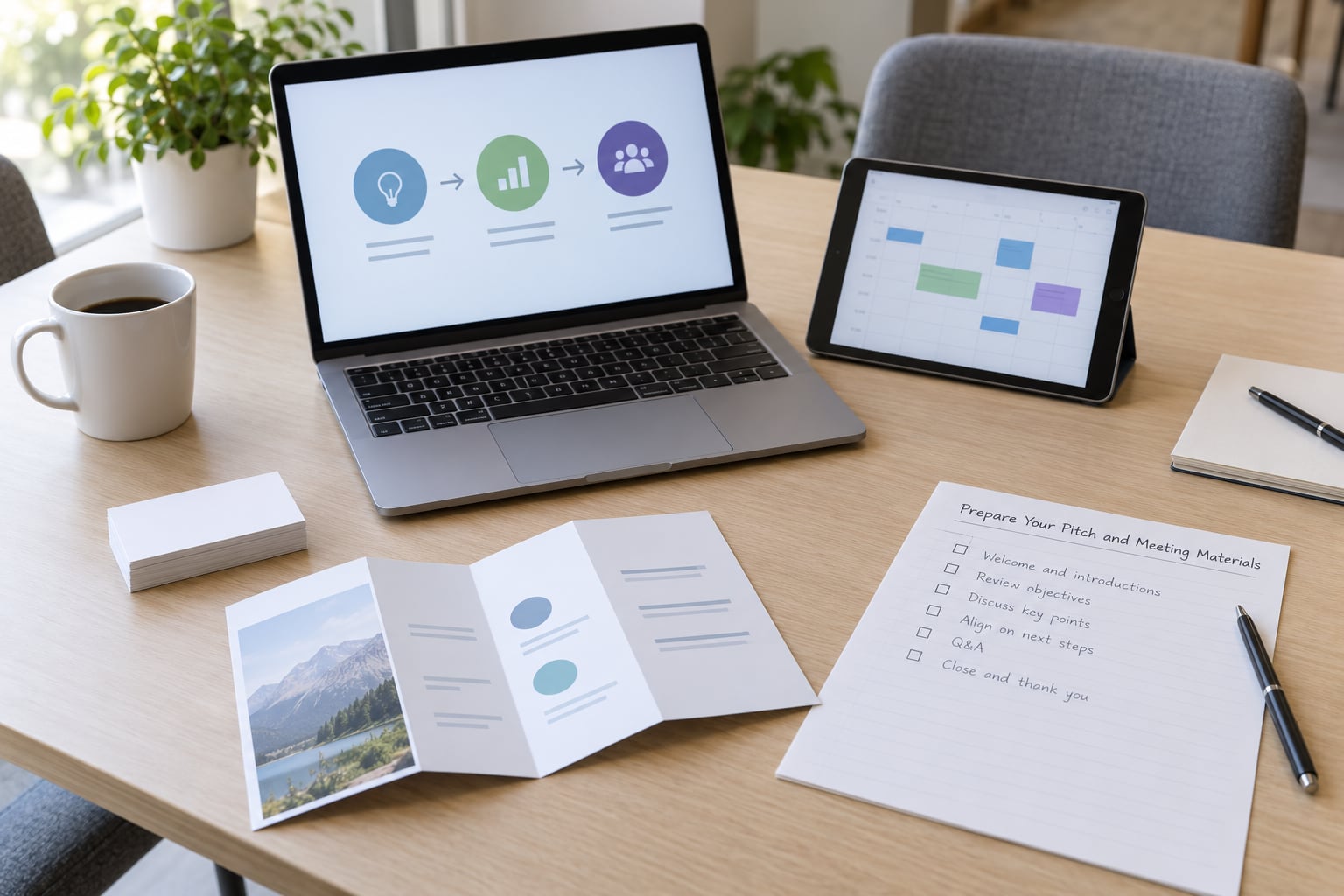
Write two pitches, not one. The booth version runs about thirty seconds and answers what you do, who uses it and why your last three customers bought it. The meeting version runs three to five minutes and leaves room for questions. Practise the short one until it sounds conversational rather than recited.
Your one-page overview should fit on a single side of A4 with room to write notes in the margin. Include the problem you solve, the product, proof it works, and a specific next step. Japanese readers tend to scan for concrete facts: specifications, delivery capability, service coverage in Japan, and who supports the customer after purchase.
Translate the material a human, then have a native speaker check it. Machine translation of technical terms reads as careless, and the person who notices is often the engineer you wanted to meet.
5. Schedule Meetings Before You Arrive
Request appointments in writing, two to four weeks out, through the host company’s email or its contact page. Ask for a named person, their title, a time slot and a location inside the venue. Many companies confirm through a messaging app, which is normal here.
Send a short agenda with the request: three bullet points and a proposed duration. It sets expectations and it makes a yes easier, because the other side knows exactly what they are agreeing to.
Leave gaps in your calendar. Ten tightly packed consecutive meetings with no buffer means you will run late all day and lose the unscheduled conversations that often matter most. Then confirm everything again in the week before departure, in writing, with room numbers and names.
6. Learn the Basics of Japanese Business Etiquette
Japanese business culture runs on consensus and relationship-building, and meeting culture is more formal than most visitors expect. What follows is practical convention rather than a set of rules to perform correctly.
- Arrival. Aim to be in the meeting room ten minutes early. Being slightly early is normal and welcome.
- Greetings. A bow, or a handshake combined with a slight bow, is the standard opener. Keep it brief and let your host lead.
- Business cards. Cards are exchanged with both hands, and you read the card you receive. Take a moment to look at it. Sitting down with a pile of cards and nobody’s name attached is a poor impression.
- Titles. Use surname plus title, and let your host correct you once. Titles matter more here than in many markets, and getting them right is noticed.
- Pacing. Expect several meetings about context and general direction before any specific proposal. Decisions are often built through pre-meeting consensus rather than inside the meeting itself.
- Silence. A pause after a question is thinking time, not a prompt to fill. Keep the pitch structured so a long answer has somewhere to go.
None of this is a test you can fail by being yourself. The safest approach is to watch how your host handles the first ten minutes and match it. If they hand out cards one-handed at a busy booth, you are in an informal setting; if they seat you at a table, behave formally.
One piece of language is worth having ready: chotto matte kudasai, meaning “please wait a moment.” Use it whenever you need a beat to think, look something up or end a conversation politely.
7. Follow Up After the Show
The part of how to prepare for a Japanese tech trade show that most people skip is also the part that decides the outcome. The show ends when you land, not when the hall closes. Block ninety minutes that evening to sort everything before you get too tired to do it well.
Write down what each person said, what they asked for and what you promised. Scan your cards the same day and attach a short note to each one while you still remember the conversation. People who report hundreds of cards and no pipeline are usually describing a show with no qualification step.
Send personalised messages within 72 hours of the show closing, in Japanese with an English version below it. Reference the specific conversation, restate the next step you agreed and attach the material they asked for. Then set a second touchpoint four to six weeks out.
Be honest about timelines. A Japanese distributor discussing your product at a September show may take months of internal review before an RFQ, and a twelve to eighteen month path from conversation to formal quotation is normal in several categories. Companies that promise orders within weeks lose trust in the follow-up calls.
Common Mistakes
Arriving with no research. People who walk the floor cold collect cards from whoever is nearest and hope for the best. Fix: research the exhibitor list and floor map in advance, route your day around your target halls, and visit booths when the aisle traffic is heaviest rather than at opening.
Treating it as a business trip only. Events like Tokyo Game Show draw large crowds on public days, and some of the best conversations happen away from your stand. Fix: give yourself one evening to attend as an ordinary visitor. Attendees report evening visits bring shorter lines, smaller crowds and a completely different atmosphere.
Overbooking consecutive meetings. Back-to-back slots with no travel margin guarantee you are late, and lateness reads as disrespect. Fix: leave thirty minutes between meetings in different halls, and keep two open slots a day for people you could not book in advance.
Relying on an English-only pitch. Exhibitors without an interpreter on the floor consistently lose conversations to the booth next door. Fix: budget for a booth interpreter or hire a professional interpreter for scheduled meetings, and prepare a Japanese summary card even if you speak well.
Confusing booth chat with a real meeting. A friendly five-minute conversation on the aisle produces goodwill and almost nothing else. Fix: treat every booth conversation as step one. Ask what they are trying to solve, what they have already tried and who else they are talking to.
Skipping follow-up. This is the most expensive mistake on the list. Fix: assign one named person to own the follow-up list before you leave the venue, and give it a deadline.
Two smaller things catch people out. Japan runs on 100V with Type A plugs, so bring an adapter or a Japanese power strip. And check the exhibitor manual early for limits on booth height, suspended structures, stage setback, sound output and radio demonstrations; wireless congestion in a crowded hall can break a live demo that worked perfectly at the office.
Frequently Asked Questions
Can I attend a Japanese tech trade show without exhibiting?
Yes. Most major Japanese tech shows sell visitor passes separately from exhibitor space, and plenty of first-time visitors come purely to meet people. Confirm that you are registering for the right access type, since consumer events often split business days from public days and professionals may be restricted on public days. Book meetings in advance either way; a visitor without a booked schedule mostly collects cards. A visitor badge is worth the trip when you already know who you want to meet.
Do I need a visa to attend a Japanese tech trade show?
It depends on your nationality and the length of your stay. Many travellers enter Japan visa-free for short business visits, but the rules change and passport validity requirements are strict. Check the current requirement on an official government source before booking, and confirm your passport is valid for the whole visit with a margin to spare. If your employer needs an invitation letter, request it from your Japanese host early, since drafting and translation take several days.
What are the business etiquette rules for Japanese trade shows?
Arrive ten minutes early, exchange business cards with both hands and read the card you receive, address people by surname and title, and let your host lead the pace. Expect early meetings about general direction before anyone discusses a specific proposal, because decisions are often shaped before the meeting rather than inside it. Silence after a question is thinking time, so do not rush to fill it. On a busy booth floor, match the formality your host sets in the first two minutes.
Should I visit or exhibit at a Japanese tech show?
Visit first if you are testing whether the market is worth your investment, or if your goal is research and a handful of conversations. Exhibit if you need inbound credibility, a physical product to demonstrate or a reason for buyers to take you seriously as a supplier. Exhibiting costs far more and locks you into a contract months ahead. First-time exhibitors who intend to return often get more from visiting and booking targeted meetings than from a small booth in the wrong hall.
How soon should I book travel and accommodation?
Book once your registration is confirmed, not before. Booth space is often assigned six to twelve months ahead, so that decision comes first and it dictates your show dates. Flights and accommodation go next, and accommodation around big events goes quickly once the booth is secured. Leave at least a day between landing and your first booked meeting so a delayed flight does not cost you the day. If your company needs a visa or invitation letter, allow extra weeks.
How do you follow up after a trade show in Japan?
Send personalised messages within 72 hours of the show closing, written in Japanese with an English version underneath. Reference the specific conversation rather than sending a generic note, restate the next step you both agreed on, and attach only what that person asked for. Scan your business cards the same evening and record what each person wanted, while you still remember. Then set a second contact at four to six weeks and expect a longer path to a formal quotation.
Conclusion
If you take one thing from how to prepare for a Japanese tech trade show, make it this: start with the outcome. Pick one measurable target, build a ranked list of companies that can deliver it, and confirm which event puts those companies in the same building.
Then book in the right order: space first, then flights and accommodation near the venue, then visas and invitation letters, then a bilingual pitch and translated material. Book meetings before you fly and leave gaps in the day.
Finally, set up follow-up while you are still on the floor, so the contact list has notes attached before you land back home. That last habit separates the people who come home with a pipeline from the people who come home with a stack of cards.