Japanese video sharing culture is the set of habits, platforms and unwritten rules that grew up around online video in Japan — a comment-first, remix-heavy scene built on anonymous message boards long before it was built on subscriber counts. To understand how Japanese video sharing culture developed, you have to start in the early 2000s with live commentary and image boards, then watch it fuse with video hosting in 2006, and then follow it into live streaming and avatars.
Most English-language explainers start at Nico Nico Douga and treat everything before it as background noise. That skips the interesting part, because the traits people now call “Japanese” about video culture — anonymous posting, remixing other people’s footage, obsessive tagging, community policing, live commentary — all existed years before anyone could upload a file to a public site.
This is a history of platforms and behaviours, not a ranking of them. It is also current as of 2026: the platforms discussed below are still operating, and some of them are harder to reach from outside Japan than they were a few years ago.
Table of Contents
- 1What Is Japanese Video Sharing Culture?
- 2How Did Early Japanese Video-Sharing Platforms Emerge?
- 3Video circulated as files, not as streams
- 4The anti-ripping norm did a lot of quiet work
- 5How Japanese Video Sharing Culture Developed Through Key Eras
- 6Why Did Nico Nico Douga Change Video Sharing?
- 7The mechanic: danmaku, or scrolling comments
- 8The mechanic underneath: a BBS in disguise
- 9Curation, ranking and rules
- 10The 2007 block and what it forced
- 11How Did YouTube Affect Japan’s Video Scene?
- 12How Did Smartphones and Mobile Video Change the Culture?
- 13How Did Anime, Music, and Gaming Shape Video Communities?
- 14Anime, gaming and music built the comment cultures first
- 15The MAD video and the remix rule
- 16Live streaming and the VTuber era
- 17What Made Japanese Video Culture Different?
- 18How Japanese Video Sharing Culture Developed These Five Patterns
- 19What Can New Creators Learn from Japan’s Video History?
- 20Watching Japanese video platforms from outside Japan
- 21Frequently Asked Questions
- 22When did video sharing become popular in Japan?
- 23Why was Nico Nico Douga important to Japanese internet culture?
- 24How did Japanese video sharing differ from YouTube?
- 25What role did anime and gaming communities play?
- 26How did smartphones change Japanese video consumption?
- 27Can international creators participate in Japanese video communities?
- 28Conclusion
What Is Japanese Video Sharing Culture?
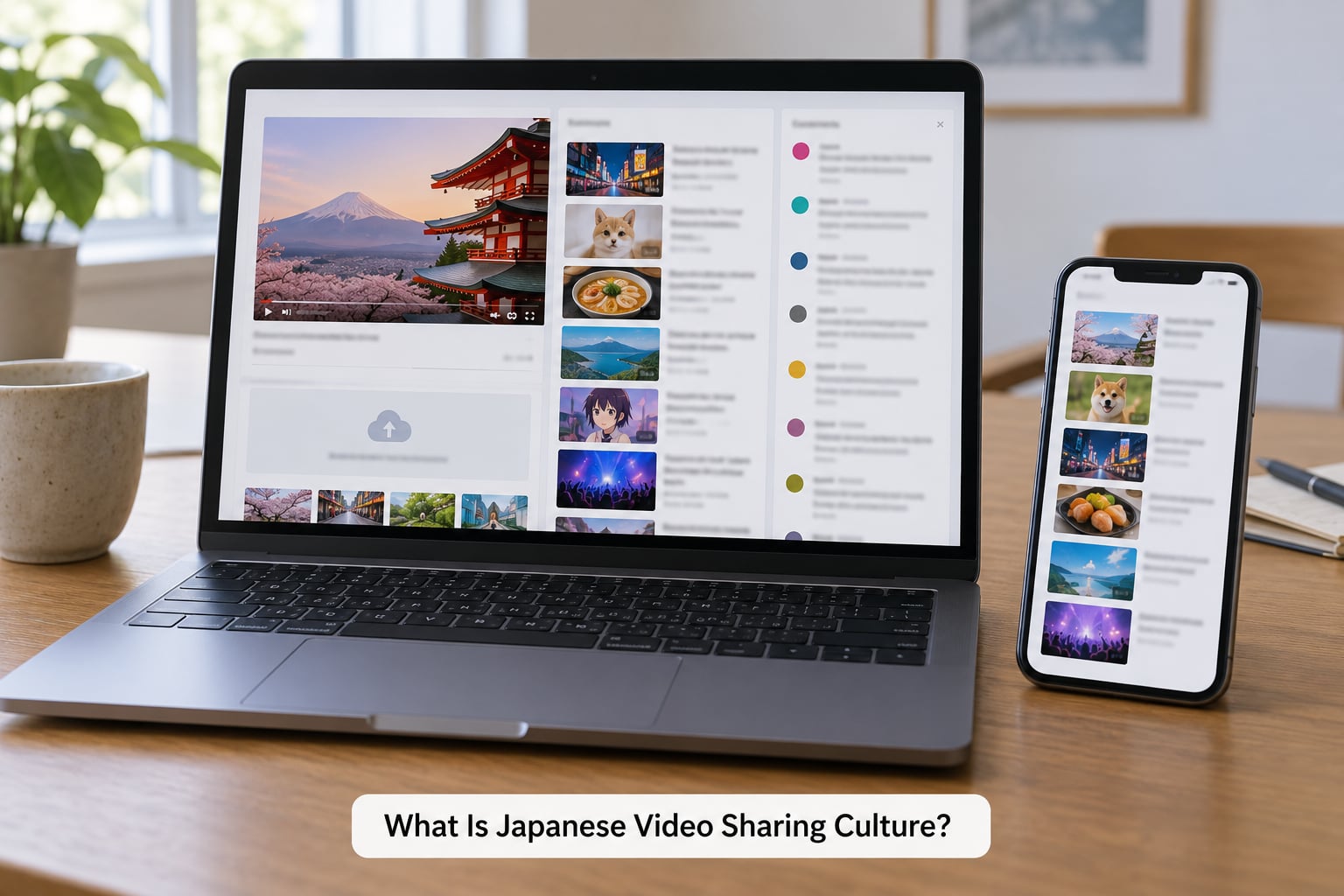
Japanese video sharing culture is the practice of watching, posting, remixing and discussing video online as a communal act rather than a private one. The difference from ordinary video hosting is not the technology — it is what the technology is for.
On most platforms, video is content and comments are a side channel. In Japan, video is the excuse and the comment layer is the point. The platform where this showed up first, Nico Nico Douga, let viewers throw short text across the screen of a playing video, each comment pinned to the exact second it reacts to. Thousands of strangers reacting to the same punchline at the same moment reads as a crowd in a room, not as clutter on a screen.
It also has its own subject matter, and that subject matter drives the habits. Anime and game fans arrived first, then Vocaloid and music medleys, then comedy, then study-with-me uploads and cooking streams. Each group developed its own vocabulary, its own events, its own inside jokes and its own rules about what you are allowed to repost.
Three things separate it from the default Western model, and they show up again and again below. Comments are part of the content rather than metadata. Identity is frequently withheld — anonymous handles, avatars, and performers known only as 中の人 (nakanohito, “the person inside”). And formats get remixed: a MAD video, which takes existing broadcast or game footage and re-cuts it into something new, was a normal thing to make, not a copyright violation.
One forum poster put it more plainly than any textbook: newcomers call the scrolling comments “distractive,” as though the overlay were a defect. That reaction is the whole story in miniature. What looks like interference to one audience looks like a seated, noisy, friendly room to another.
How Did Early Japanese Video-Sharing Platforms Emerge?
The pre-video answer matters. Japanese viewers were already watching things together, reacting in real time and reposting each other’s clips, on infrastructure that could not carry a video file at all.
実況 (jikkyou) literally means live play-by-play commentary, and by the early 2000s it had stopped being a word for sportscasts. It was what you did to anime episodes, to game tournaments, to eroge releases and to late-night variety shows — sometimes alone in a chat window, sometimes in a numbered thread on 2channel (the anonymous text board that functioned as Japan’s de facto forum for decades), sometimes just by picking up the phone and calling your friends while a show aired.
2channel and its image-board cousins gave viewers the thing that video platforms later monetised: a place to react in public, at speed, with almost no personal identity attached. Threads ran live. A new episode would generate thousands of posts in an hour, and the fastest, funniest reaction became the thing everyone repeated at school the next morning.
Video circulated as files, not as streams
Before there was a video site, there were personal homepages and encoded files shared over dial-up and early broadband. Encoding a clip took real time on the machines of the era, so uploading was an act of commitment and re-uploading someone else’s clip was close to a favour. Majikome (majikome, “magic mirror”) flash-mob performance videos spread this way — low-resolution recordings of choreographed public routines passed hand to hand, often re-encoded and re-uploaded by whoever got hold of them.
Flash and free hosting services in the mid-2000s lowered the cost of publishing. A dorm room with a broadband connection and Ustream or Justin.tv could broadcast continuously to strangers, which is where a lot of the live-stream habit got its first real workout — nobody had invented the concept, but Japan had a large population already practised at reacting out loud.
The anti-ripping norm did a lot of quiet work
Japan’s copyright environment made re-uploading somebody else’s video socially unacceptable in a way it was not treated in several Western scenes at the time. Rights management organisations such as JASRAC collected performance and broadcast royalties, and unlicensed copies were treated as theft rather than as fan service.
The result was a remix culture that looked nothing like Western remix culture. A Western meme often literally reuses a video file, because reuse is the point. In Japan, a MAD video normally re-cuts the source so heavily that the result is a new work — and long before Nico Nico Douga launched, there was already a term (k二次創作, “secondary creation”) for that act of transformative re-editing, and an understood expectation that the original creator would be credited.
This is a big part of how the culture developed: Japanese video culture had already spent a decade practising the three things that would define it — reacting in public anonymously, re-cutting other people’s material, and policing itself through community rules rather than through platform takedowns.
How Japanese Video Sharing Culture Developed Through Key Eras
The clearest way to see the development is to date it. Each era added one layer, and the layers never got removed.
| Era | Platforms and technology | What the culture gained |
|---|---|---|
| Pre-2005 | 2channel image boards, personal homepages, dial-up and early broadband, re-encoded files | Anonymous public reaction, 実況 commentary as a verb, majikome performance clips |
| 2005-2006 | Flash and free hosting, early video upload services, Ustream and Justin.tv broadcasts from dorm rooms | Practised live streaming, norm against ripping, “secondary creation” understood as transformative re-editing |
| 2006-2007 | Nico Nico Douga launches (December 12, 2006), built by Niwango under Dwango; YouTube bandwidth block in 2007 pushes the video onto Nico’s own servers | Time-synced scrolling comments (danmaku), mylist curation, hourly rankings, the comment-as-conversation habit |
| 2008-2012 | MAD video culture, Vocaloid and Hatsune Miku blow-ups, Niconico Live, SOLiVE24 24-hour broadcasts | Remixing as a mainstream creative form, tag locking, Niconicopedia, comment etiquette, first large fan-livestream scenes |
| 2013-2016 | Live2D and VRM avatar tools, weather avatar streams, Kizuna AI in 2016, agency auditions | Virtual YouTubers (VTubers), idol-agency model, kayfabe identity split, permanent live-chat economy |
| 2017-2021 | Hololive Production and Nijisanji scale, smartphone-first vertical video, short-form apps | Corporate and government mascot campaigns, always-on mobile viewing, professionalised stream production |
| 2022-present | Ransomware attack on the parent group’s systems in 2024, tightened overseas access and terms changes, Niconico Live as a mainstream format | A maturing scene: fewer surprises, more stable live community, harder access from outside Japan |
Two dates carry most of the weight. December 12, 2006 is when Nico Nico Douga opened, and 2007 is when YouTube stopped serving the video and Nico moved to hosting it itself — an inconvenience that turned into the platform’s defining technical characteristic.
Ownership followed later. Dwango, the internet company behind Niwango, eventually came under Kadokawa, the media and publishing group, which tied video hosting to a company whose business was books, magazines and games. That corporate shape still shows up in how the platform behaves.
Why Did Nico Nico Douga Change Video Sharing?
Nico Nico Douga changed video sharing because it stopped treating the comment box as a side channel. It took a video player, glued a fast multi-user message board onto it, and made the message board the reason to watch.
The mechanic: danmaku, or scrolling comments
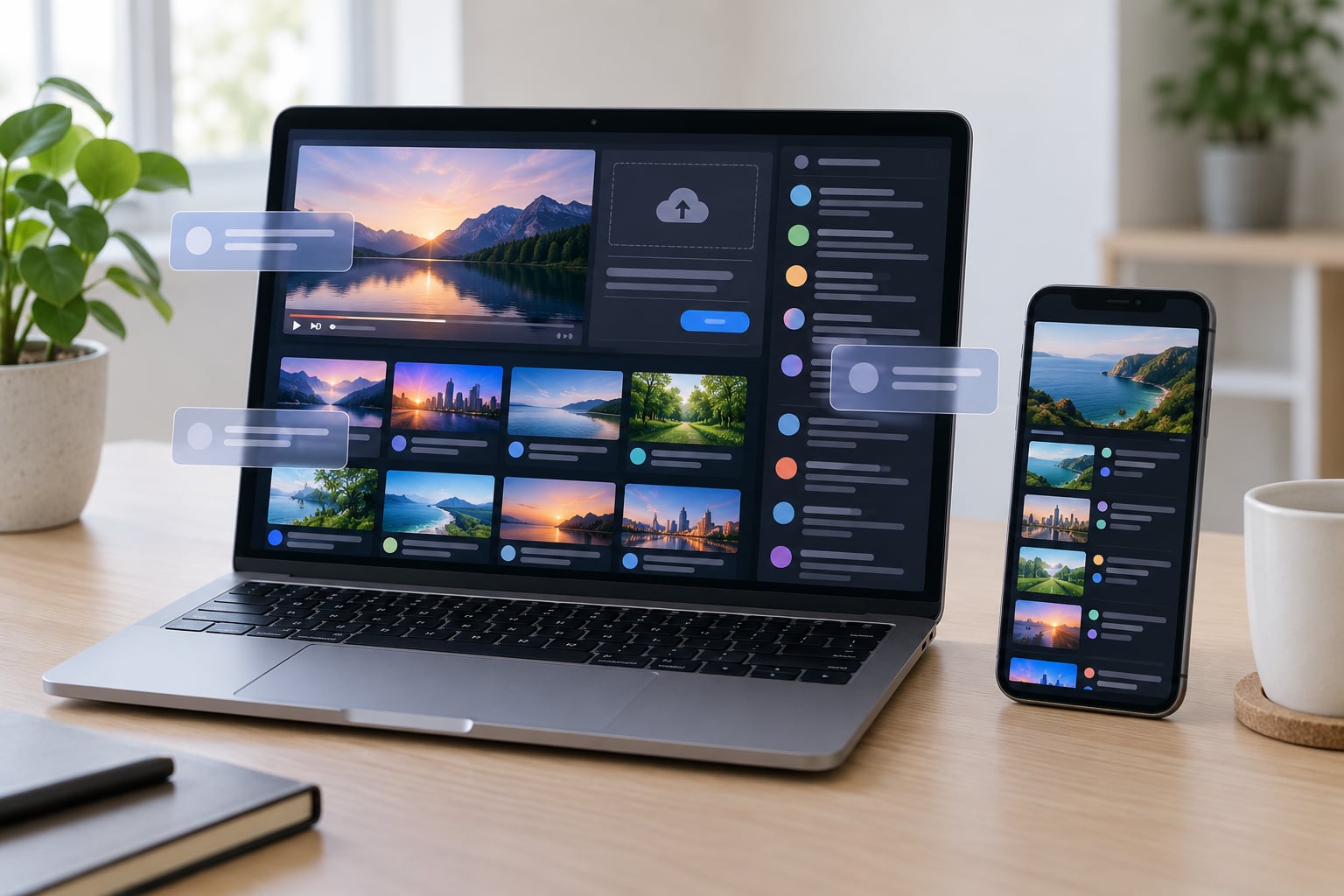
The signature feature is the time-synced scrolling comment overlay — 弾幕 (danmaku), literally “bullet curtain” — which English-language viewers usually call bullet comments. You type a short line, hit a key, and it flies across the picture from right to left, appearing at the moment in the timeline where you typed it.
Because the timing is exact, the screen fills with a synchronised record of everyone else’s reaction. When a joke lands, you see a wall of identical responses arrive at the same second. When a reveal happens, you see hundreds of people gasp simultaneously. One viewer reacting alone is just a person typing; ten thousand viewers reacting in the same frame is a crowd.
It also has a spatial grammar. Longer comments occupy more screen and cover more of the picture, so people learned to write terse ones, to place small comments out of the way of the centre, and — this is the part outsiders miss — to treat the placement as an art form. Comment art is a craft with etiquette: an elaborate piece of comment ASCII dropped across the middle of a busy scene is treated the way a loud heckle is treated in a theatre, as a disruption rather than as participation.
The mechanic underneath: a BBS in disguise
A 2011 ethnography of Nico’s early years argued that the scrolling comments were not the real innovation — the BBS-style conversation structure was. That reading holds up. Nico was full of anonymous handles, replies in threads, and posts that continued for pages, functioning exactly like a text board that happened to have a video attached.
Readers of that ethnography noted something else worth repeating for any newcomer: plenty of regular viewers watch with the on-screen comments switched off entirely and read the side list of timestamped replies instead. The appeal was never the visual noise. It was the feeling that a conversation about this exact second was happening and you could join it.
Curation, ranking and rules
Three supporting systems made the comment layer sustainable:
- Mylist — user-built folders that turn watching into organising. A mylist of MAD videos is how people discovered each other’s work for a decade before any recommendation algorithm did it.
- Hourly rankings — a chart that reset on the hour and became a communal ritual. Check what climbed, watch the entries, argue in the thread. One long-running commenter described the rankings as the site’s news hub.
- Nicoscript — an optional command overlay that uploader-commentary or flash graphics would run with the video, so a creator could annotate their own clip in the comment layer itself.
The community also policed itself through tags. Tags could be locked or protected, an encyclopedic Niconicopedia (ニコニコ大百科) entry could be written about a creator or a series, and a creator who felt misrepresented could correct the record through that page rather than through a complaint. It is a slow, imperfect, very Japanese form of self-governance.
The 2007 block and what it forced
When Nico initially hosted user video on YouTube, the arrangement did not last. YouTube restricted the bandwidth used by embedding its player, Nico lost access to the video stream, and in 2007 the service had to move hosting onto its own infrastructure.
For users this was mostly invisible. For the platform it was decisive: Nico ended up owning its own video pipeline, its own comment system and its own recommendation surfaces, rather than borrowing someone else’s. Every distinctive feature people discuss about it — the hourly rankings, the mylist-first discovery, the fact that the comment layer is the product — followed from owning that stack.
How Did YouTube Affect Japan’s Video Scene?
YouTube’s effect on Japan’s video scene was mostly additive. YouTube won on reach, on recommendation and on money, and Japanese platforms kept the formats YouTube handled badly.
The complementary argument comes from Japanese commenters rather than analysts. A reader writing on that 2011 ethnography argued that YouTube’s higher video quality and far bigger global audience were precisely why Nico could thrive — YouTube supplied the audience, Nico supplied the community. Foreign fans who wanted to trace a clip back to where it started were regularly sent to Nico by people on r/anime and r/HelpMeFind, which tells you how the two divided the work.
What YouTube gave Japanese creators that Nico could not:
- A global audience that arrived on its own through search and recommendation, without a community having to be built first.
- Stable, well-understood monetisation that made a career legible to advertisers and sponsors.
- Format freedom that did not require an audience to already exist — upload a video, and the algorithm finds somebody.
What Nico kept: live streaming as the centre of gravity rather than the side project, comment density as the main event, anonymity as a normal way to participate, and formats built on re-cutting other people’s material. A VTuber stream with a scrolling chat is a live video with a 2007 comment mechanic welded to the front of it.
The export path is worth noting too. Danmaku did not stay home — Bilibili adopted the scrolling-comment model for its anime and gaming audience, which is the clearest single example of Japanese video culture being exported rather than merely imitated.
How Did Smartphones and Mobile Video Change the Culture?
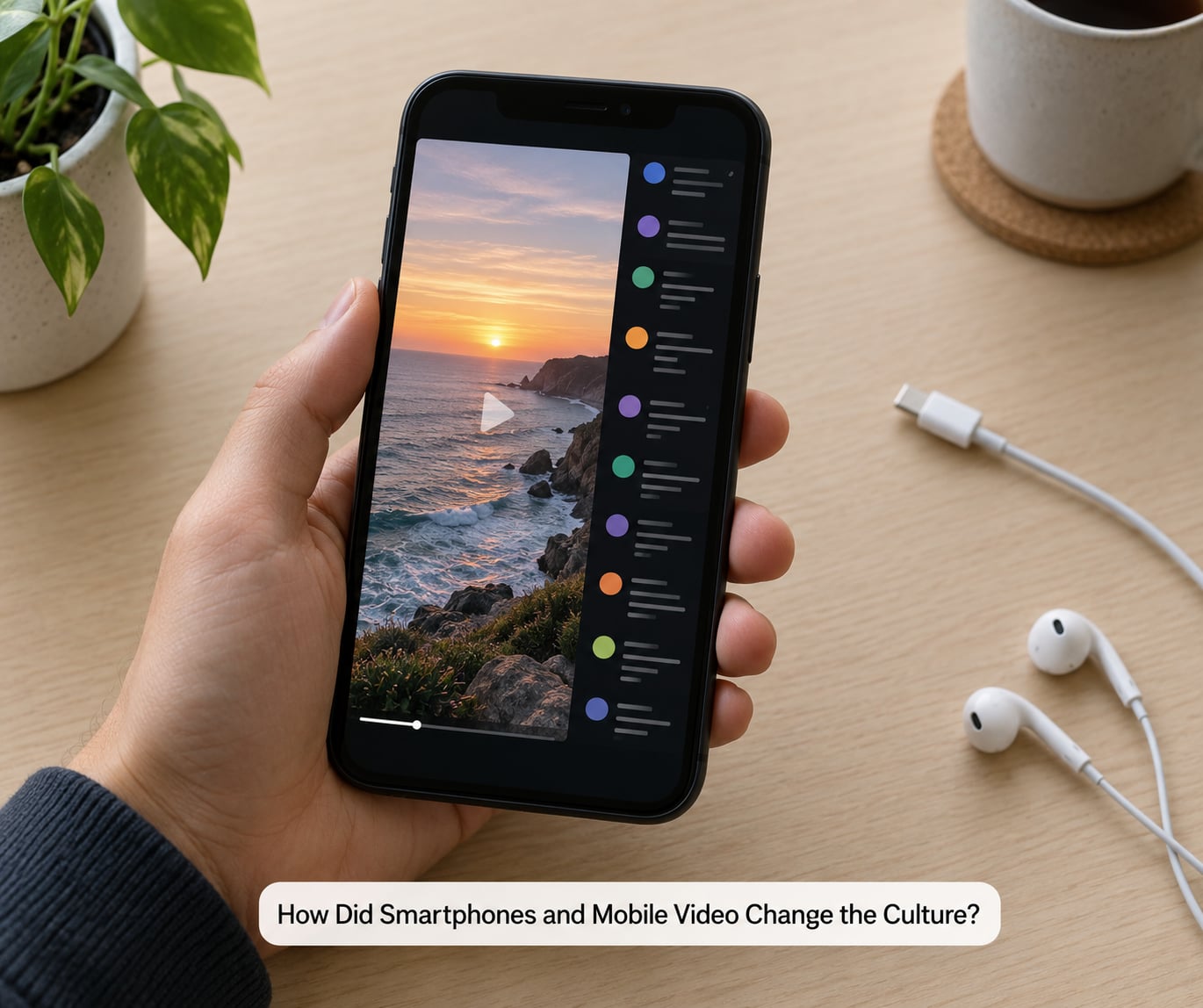
Smartphones changed the culture in one specific way: watching stopped being something you scheduled. On a laptop, a Nico upload was an event — you checked the hourly rankings, then went and watched. On a phone, the platform is simply open in your pocket, and viewing runs all day in the background of everything else you do.
Three effects followed. Uploading stopped being a technical project — a phone camera plus mobile upload turned a commute into a recording session. Vertical and short-form video arrived with a phone-shaped screen rather than arriving on desktop and rotating. And creator output went from scheduled to continuous, because a channel that posts daily clips competes with an app feed rather than with other uploads of the same length.
Streaming gained too. A phone plus a mobile game plus a data connection is everything a 2010-era live stream needed, which is part of why VTubers and game streamers became a default rather than a niche. The audience-side habit followed the creator-side habit: notifications, back-to-back streams, and a chat you scroll while the video runs.
The trade is density over depth. Live coverage of a debut or a concert announcement now competes with a live reaction to the same thing within minutes, and that pressure shaped how events get handled.
How Did Anime, Music, and Gaming Shape Video Communities?
Anime, music and gaming did not just supply content to Japanese video culture. They supplied the communities that taught it how to behave.
Anime, gaming and music built the comment cultures first
Anime reaction streams were the natural first application: you watch an episode, you post exactly when a character does something outrageous, and thousands of other viewers do the same. Because the source material is episode-length and released on a schedule, a predictable weekly moment formed — an unofficial screening with an audience.
The same pacing shaped gaming. Play-by-play commentary migrated from phone-in-hand chat rooms to live video, and the vocabulary of jikkyou was already there to describe it. Uploads of reaction, commentary and highlight clips formed the bridge between the text-board era and the platform era.
Music ran through it in a different form. Vocaloid had a Japanese-developed engine, and Hatsune Miku’s rise was driven as much by user-made songs and art posted to Nico as by any label decision. Sound MAD — medleys where dozens of short clips are cut into one continuous audio-visual sequence — is a format that only makes sense in a culture where re-cutting other people’s material is a normal creative act.
The MAD video and the remix rule
MAD video is the clearest single artefact of how Japanese video sharing culture developed. It re-edits anime, games, TV or other people’s footage into something with its own structure — a story, a joke, a music video, a series of episode recaps. Multiple uploader comments over the top, with commentary written into the video’s own timeline, are a standard technique.
What makes it culturally important is that MAD was accepted as creative work rather than tolerated as theft, because re-cutting was expected to be transformative and credited. The norm shaped what creators attempted: instead of lifting a clip to get reach, the incentive was to build something that could not exist without the transformation.
Memes came out of the same pipeline and outlived it. A misheard lyric rendered as phonetic Japanese characters spread across the whole internet, and 2channel-era characters crossed over into wider use with no site attached to them. The old pattern of a clip with an unreachable origin is why so many people still ask what the source video was.
Live streaming and the VTuber era
Every element of modern VTuber culture has a Japanese video-platform ancestor: avatars trace back to Live2D and VRM models used in weather broadcasts and hobby streams on Nico long before Kizuna AI arrived in 2016; the always-on chat traces back to SOLiVE24’s 24-hour unofficial weather broadcast; the business model copies Japanese idol agencies, with auditions, character ownership by the company, and graduation when a performer leaves.
Hololive Production, run by Cover, and Nijisanji, run by AnyColor, both built on open auditions and on the assumption that the audience relationship belongs to the character. When hundreds of apparent performers were technically anonymous, the nakanohito question became a legal problem too: a Tokyo District Court ruling in 2022 addressed when an avatar’s operator can be identified in defamation disputes, which is a surprisingly large deal for a culture that started by hiding behind handles.
Active VTuber counts moved fast once the agencies scaled — from a couple of thousand in mid-2018 to many times that by 2020 — and the format went global from a Japanese base rather than the other way round.
What Made Japanese Video Culture Different?
Pulling the threads together, five patterns do most of the explaining.
How Japanese Video Sharing Culture Developed These Five Patterns
- Comment is the content, not the metadata. The overlay and the thread under it are why anyone watches, which inverts the usual hierarchy where video carries the value.
- Anonymity is normal, not exceptional. Anonymous handles lower the cost of reacting, and they let people participate in a fandom without a face attached to it.
- Remixing is a legitimate creative act. Re-cutting other people’s material under a “secondary creation” norm gave MAD videos, medleys and reaction edits somewhere to go that piracy would otherwise have filled.
- Community-specific formats are allowed to stay niche. A platform organised around one interest can support tens of thousands of viewers inside a single tag, rather than flattening everything into a global trending chart.
- Live participation is the destination. The scene keeps ending up in continuous live video with a chat running over it, because that is where the comment culture reaches its highest density.
None of this is uniquely Japanese, and it is worth being careful about that. Bilibili built danmaku on its own terms, and the parse-together viewing party is not an invention of Japan’s. What is locally specific is the combination — anonymous boards supplying the reaction habit, a remix norm supplying the content, and a platform making the two meet on top of a video.
What Can New Creators Learn from Japan’s Video History?
The history gives a fairly short list of transferable lessons, none of which require being Japanese to use.
Design for the comment layer early. If your audience has somewhere to talk, they show up in the same frame as you. That is why a live chat changes a stream’s texture, and why a comment section treated as a feature gets a different audience than one treated as a queue to be cleared.
Give people a way to curate. Mylist predates every recommendation feed and still works, because organising other people’s videos is participation. A collection a viewer builds is also a reason to come back.
Let formats stay specific. The scenes that lasted in Japan were hyper-specific — anime reaction, Vocaloid covers, game commentary — and got large by serving a real taste rather than by being general-purpose.
Expect the platform to change and own your stack where you can. The 2007 bandwidth block took Nico’s video off a third-party host and forced it onto its own servers, and every distinctive feature that followed came from that decision. Depending on someone else’s player is cheap until the day it is not.
Understand copyright before you build a remix culture. Japan’s pre-2006 norm against re-uploading is a reminder that a creator economy needs a clear rule about what transformation means.
Watching Japanese video platforms from outside Japan
One practical note, because it comes up constantly: access has tightened. Nico’s English and Chinese interface options were deprecated in 2023 and community services tied to them ended earlier, in 2018. The parent group’s systems were hit by a ransomware attack in 2024, and terms changes alongside it made some overseas use harder. That has not ended the scene, but it has ended the era of casual browsing from abroad.
The old workaround of tracing a clip back to its Nico origin still has an ordinary answer: search the distinctive phrase from the clip rather than the file, since titles get re-uploaded but text is indexed reliably. And for anyone trying to read the comment overlay for the first time, the honest advice from longtime viewers is to watch with it on for five minutes, then off — most people flip between both, and both are normal ways to watch.
Frequently Asked Questions
When did video sharing become popular in Japan?
Popularity arrived in stages rather than at one launch. Live commentary and anonymous reaction on boards like 2channel were widespread by the early 2000s, re-encoded clips and Flash hosting followed, and the moment most people mean is December 12, 2006, when Nico Nico Douga opened and turned watching video into a public conversation. That is the date the culture changed shape.
Why was Nico Nico Douga important to Japanese internet culture?
It fused a video player with a fast anonymous message board, letting short comments fly across the picture at the exact second they react to. That combination made remote viewing feel like sitting in a crowd, gave creators a way to build audiences without showing their faces, and produced the MAD video, Vocaloid and VTuber scenes that followed. It also came with curation tools like mylist and a habit of community rules that most platforms lack.
How did Japanese video sharing differ from YouTube?
YouTube is personality-first and subscription-first: the creator is the product and comments sit beside the video. Japanese platforms tend to be comment-first, anonymous-first and remix-friendly, with formats built around re-cutting other people’s material. Live streaming carries far more weight in Japan, where a scrolling live chat is the core format rather than a secondary feature. Both platforms ended up coexisting, with YouTube supplying reach and the Japanese platforms supplying community.
What role did anime and gaming communities play?
They were the first and largest communities on these platforms, and they set the rules. Episode-length anime on a fixed schedule produced a reliable weekly collective viewing moment, and game play-by-play commentary moved naturally from text boards into live video. Those groups established the dense timestamped comment habit, the vocabulary of live commentary, and the norm that re-editing someone else’s footage into something transformative is legitimate creative work.
How did smartphones change Japanese video consumption?
They turned scheduled watching into continuous background viewing. Mobile upload removed the technical barrier that once made posting an event, and a phone plus a data connection made live streaming something anyone could do. Vertical and short-form video arrived on a phone-shaped screen rather than being adapted to it, and creators moved from posting on a schedule to posting continuously. That same always-on pressure is what drove live events and reaction coverage to get faster.
Can international creators participate in Japanese video communities?
Partly. Overseas access has tightened: the English and Chinese interface options were deprecated in 2023, community services tied to them ended in 2018, and 2024 terms changes plus a ransomware incident on the parent group’s systems made some use harder. Foreign-language subtitles and comments still get posted and read, and Bilibili offers a more accessible route to the same danmaku viewing habits. Barriers are mostly technical and linguistic rather than open rejection.
Conclusion
The arc is short enough to hold in your head. Anonymous reaction on 2channel, live commentary as a social habit, and a strict norm against re-uploading other people’s video. Then Nico Nico Douga in December 2006, which put a message board on top of a video player and made the comment layer the reason to watch. Then YouTube alongside it, smartphones making viewing continuous, and VTubers fusing the comment overlay with 24/7 live streaming.
That combination is what other cultures picked up. Gen Z’s appetite for Japanese media has a technical explanation, not only a fashion one — the comment overlay, the mylist, the remix norm and the live chat all came from here, and Bilibili is proof of that.
If you want in, the first step is small: pick one community rather than one platform. Follow a single anime tag, a Vocaloid tag or a gaming stream for a week and watch what the comment layer is doing, because that layer is where the culture actually lives. Judge it by participation, not by global reach, and by 2026 you will understand more about Japanese video than most explainers tell you.