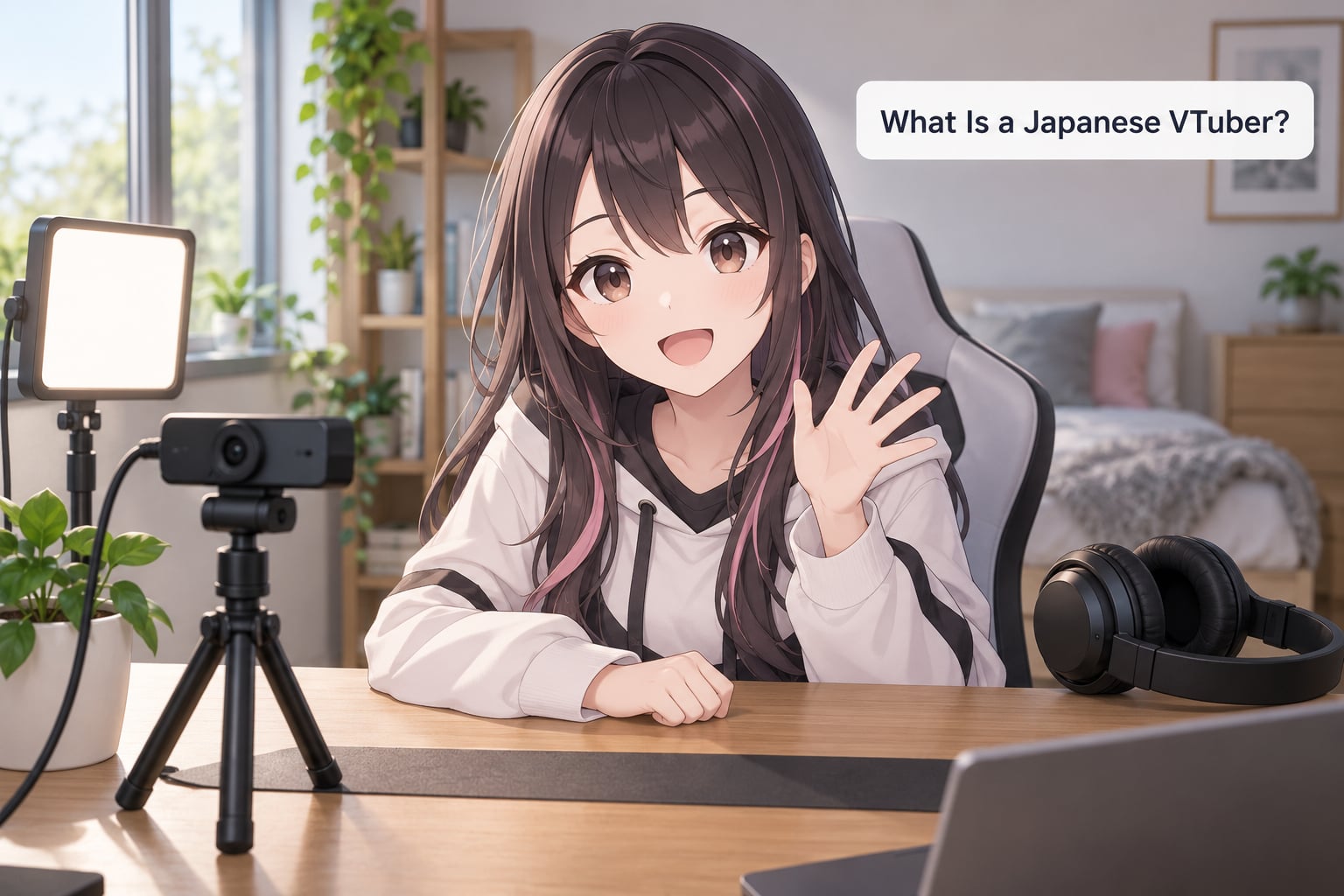
A Japanese VTuber is a real person who performs live on YouTube or Twitch through an animated, anime-style avatar that reacts to their face and voice. The character is a costume, the performer is the talent, and the channel is usually run by a Japanese company called an agency. That is the whole idea in one paragraph.
If you landed here from a clip or a meme, that is the normal route in. Almost nobody searches for VTubers on purpose. The hard part for a newcomer is not the definition, it is the volume: hundreds of talents, several competing agencies, and a live chat that scrolls faster than you can read. This guide is japanese vtubers explained for beginners, built around getting you from confusion to one channel you actually enjoy.
Table of Contents
- 1What Is a Japanese VTuber?
- 2How Do Japanese VTubers Make Their Avatars?
- 3How Does the Japanese VTuber Industry Work?
- 4Which VTuber Platforms Should Beginners Use?
- 5What Are the Main Types of Japanese VTubers?
- 6Gaming-Focused Japanese VTubers
- 7Talk and Variety Japanese VTubers
- 8Japanese VTubers Explained for Beginners: Where Do Popular Groups Fit?
- 9Who Are the Most Recognizable Japanese VTubers?
- 10What Is the Japanese VTuber Guro?
- 11Why Are Japanese VTubers Popular?
- 12Why Are Most VTubers Women?
- 13How Can Beginners Watch Japanese VTubers Responsibly?
- 14Japanese VTubers explained for beginners: your first-stream checklist
- 15How Can You Follow a Japanese VTuber?
- 16Frequently Asked Questions
- 17Are Japanese VTubers real people?
- 18Do Japanese VTubers use AI to create their avatars?
- 19Can English-speaking beginners watch Japanese VTubers?
- 20How do Japanese VTubers make money?
- 21How can beginners tell whether a VTuber channel is official?
- 22Conclusion
What Is a Japanese VTuber?
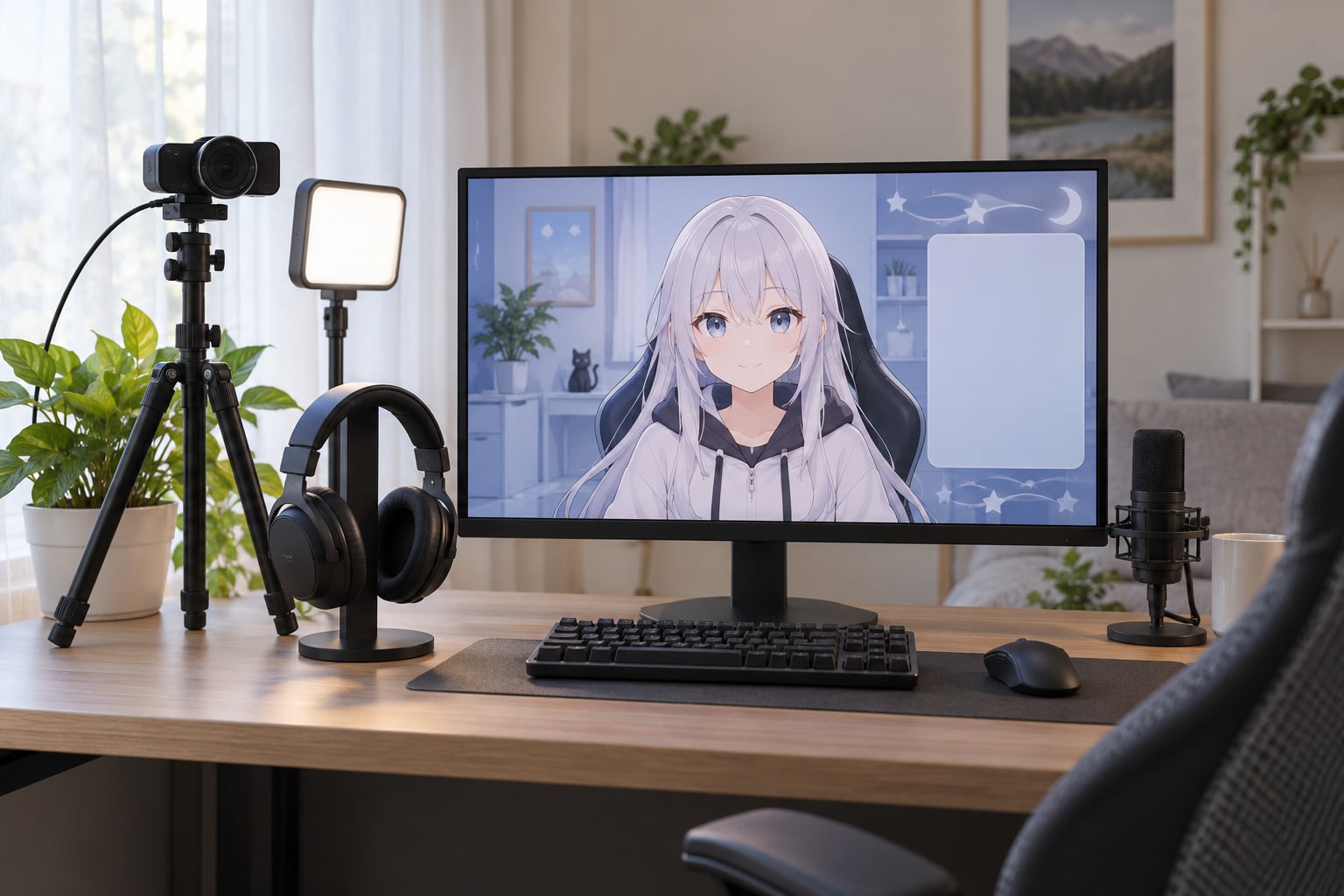
VTuber is short for virtual YouTuber. The performer is a person with a real voice and a real face, but they appear on camera as a drawn or modelled character. Facial tracking software copies their expressions onto that character in real time, so the avatar blinks, smiles and turns when they do.
Four things beginners constantly mix up. A VTuber is not an animated character with an actor behind it, because the performer is not acting a scripted role. They are not a voice actor either, since voice work is a finished studio product while a VTuber is live and unrepeatable. They are not virtual influencers, which are usually a company-owned account with no consistent human performer behind it. And they are not ordinary facecam streamers, because the avatar is doing real work on screen.
The format also has clear Japanese roots. Kizuna Ai debuted in 2016 and is widely credited as the first widely recognised VTuber, following earlier virtual idols such as Hatsune Miku, and the word VTuber itself is a Japanese-English mashup.
What that buys the performer is distance. A VTuber with an expressive 2D model can shout, wave a giant prop and change pose without breaking character the way a facecam streamer cannot. The loudness is part of the costume, which is why viewers who expected a quiet stream often end up staying for the shouting.
How Do Japanese VTubers Make Their Avatars?
Every channel starts with a character design. An illustrator draws the character, and a separate rigger or modeller prepares it for movement. After that the performer shows up, the avatar reacts, and the stream happens.
| Part | What it does | Who normally handles it |
|---|---|---|
| 2D Live2D model | A flat illustration rigged so eyes, mouth, hair and limbs move independently | Illustrator plus a rigger, animated in software such as Live2D Cubism |
| 3D model | A full 3D character that turns and shows any angle, built in VRoid Studio or similar | 3D modeller, then a rig for the face and body |
| Tracking | Maps real movement onto the model: webcam or iPhone face tracking, a head mount, hand or full-body trackers | The performer sets this up themselves |
| Rendering | Draws the avatar on screen at smooth frame rates while the performer speaks | Streaming software such as VTube Studio |
| Moderation | Filters chat so the stream and the performer stay safe during long live sessions | Agency staff plus volunteer moderators |
The practical result is that the avatar and the performer are separate parts of the experience. The model carries the personality that survives a bad day; the voice carries the personality that survives a bad stream. You will hear people say a model has gone through a re-rig or a costume upgrade, which means the drawing changed while the performer did not.
How Does the Japanese VTuber Industry Work?
A VTuber rarely works alone. The talent is the visible part of a chain of specialists, and understanding that chain explains why an agency debut looks so polished.
| Role | Essential? | What they actually do |
|---|---|---|
| Performer | Essential | Speaks, stays in character, runs the stream, sets the schedule |
| Illustrator | Essential at the start | Designs the avatar and every new costume or seasonal model |
| Modeler or rigger | Essential at the start | Prepares the 2D rig or 3D model so the avatar can move |
| Agency and manager | Essential for agency talent | Holds the contract, handles promotion, schedules events, supports the talent |
| Animator | Optional | Produces shorts, music videos and channel bumpers |
| Voice studio | Optional | Records songs, voice samples and commercial work |
| Platform operator | Essential infrastructure | YouTube, Twitch and Niconico supply the servers, payouts and moderation tools |
| Moderators | Practically essential | Keep chat civil and enforce the channel rules during live hours |
| Sponsors and partners | Optional | Fund channels and place campaigns, sometimes for whole groups |
Two Japanese technology companies sit at the centre of this. Cover Corp runs Hololive, and ANYCOLOR runs Nijisanji. Both are listed technology businesses, not fan clubs, which is why their channels have production teams behind them.
Which VTuber Platforms Should Beginners Use?
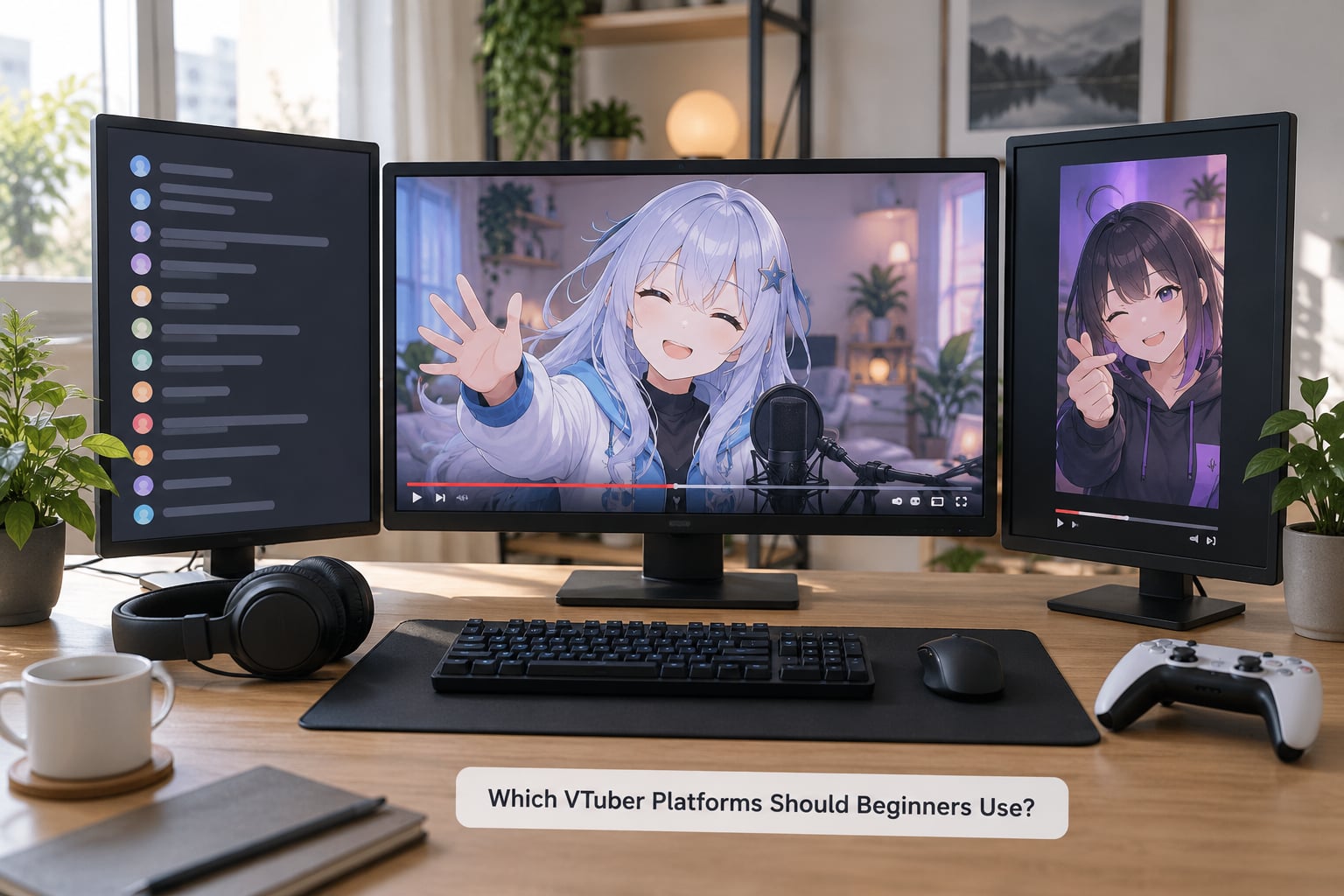
Most Japanese VTubers stream on YouTube. Twitch exists but sits at the margins of the Japanese scene. Niconico is home to a large amount of Japanese clip culture and community discussion. Availability, language support and interface features vary by country and change over time, so treat anything here as a starting point rather than a rule.
| Platform | Format | Best for | Watch-outs |
|---|---|---|---|
| YouTube | Live streams, full archives of past broadcasts, clips | Nearly every Japanese VTuber worth starting with | Chat scrolls fast; many streams run during JST evening hours |
| Twitch | Live streams with slower chat, smaller archives | Viewers who want a calmer chat and play in English | Very few Japanese agency talents stream here regularly |
| Niconico | Video hosting plus a dense comment culture | Following Japanese fan conversation and clips | Japanese-language interface by default |
| Agency channels | Official group roster, event streams, auditions | Finding new talent and seeing who is currently active | Rosters change often; always check the official listing |
Timezone is the underrated problem. A Tokyo evening stream lands in the middle of your afternoon in Europe and before breakfast on the US West Coast. Live chat is also where a lot of the personality lives, and archive viewing is where you lose it. My advice is to start with archives and accept that catching a live stream is a bonus rather than homework.
What Are the Main Types of Japanese VTubers?
Talent is not interchangeable, so it helps to know what format you actually enjoy before you pick a name. The categories below describe content, not quality.
Gaming-Focused Japanese VTubers
This is the classic format. A VTuber plays a game, reacts to chat, and streams for several hours while talking about almost nothing else. It suits viewers who want a familiar stream structure with a memorable character on top, and it is where the clip culture is most productive because chat and gameplay constantly collide.
Talk and Variety Japanese VTubers
These channels run on conversation. Expect karaoke, cooking, reaction streams, quizzes, collabs with other talent and long casual chats. They are usually easier for beginners because the jokes are loud, the pace is slow, and nothing is lost if you miss part of a game you do not follow.
Beyond those two, you will meet talent who focus on music, on informational or educational formats, or who stream independently without an agency. Some independents are the most interesting watch in the whole scene right now, because nobody is scripting the format for them.
Japanese VTubers Explained for Beginners: Where Do Popular Groups Fit?
An agency group is a roster of talent run under one brand with shared production, events and promotion. Hololive and NIJISANJI are the two large Japanese groups, VSPO! covers gaming-focused talent, and VShojo built its roster around performers with established non-VTuber audiences. Beyond them, thousands of independents stream on their own.
What a group gives a talent is a model, an illustrator, a manager, event slots and a bigger audience on day one. What a group gives you as a viewer is a reliable place to find new talent, since the roster page is public and the channels are usually verified and linked from it.
Rosters change. People graduate or go on indefinite breaks, and a channel that stops updating is usually a hiatus rather than a scandal. This is the detail beginners get wrong most often: a debut stream says nothing about how long that talent will keep streaming. Current lineups and activity should always be checked on official channels rather than on a list someone posted last year.
Who Are the Most Recognizable Japanese VTubers?
Nobody can hand you a popularity ranking that stays true for long, so treat this as a starting set chosen for how established and how easy they are to find. Check each channel yourself, because formats and languages change.
| Talent | Group | Known for | Language notes |
|---|---|---|---|
| Kizuna Ai | Independent, formerly Activ8 | The 2016 debut that made the format mainstream; voice-actor-led performances | Japanese, English versions existed |
| Houshou Marine | Hololive | High-energy comedy and variety streams | Japanese, frequent English segments |
| Hoshimachi Suisei | Hololive | Singer-songwriter talent alongside gaming and variety | Japanese, occasional English streams |
| Shirakami Fubuki | Hololive | Wolf-themed persona and variety-first content | Japanese with frequent English talk |
| Ouro Kronii | Hololive | English-speaking streams, witch character, talk format | English-forward |
| Usada Pekora | Hololive | Loud comedy, costume-heavy variety content | Japanese, English on occasion |
| Inugami Korone | Hololive | Gaming focus and a distinctive dog persona; a well-known early entry point | Japanese, English segments |
| Gawr Gura | Hololive | The debut that drew a huge wave of English-speaking viewers | English-speaking streams |
| Ami Yamato | Hololive | Singer-songwriter output and calm talk streams | Japanese |
| Nijisanji talents | NIJISANJI | A very large and varied roster covering music, gaming and art | Mostly Japanese; several English-capable members |
The useful point is the shape of the list, not the ranking. One or two names per group, spread across formats, tells you more about the medium than any single chart would.
What Is the Japanese VTuber Guro?
Guro is fans’ shorthand for the industry jargon around the VTuber business, and the word comes from ぐるー, a Tokyo advertising agency that has handled several well-known talents. The terms below travel far past that original context, and translations differ between communities, so read chat in context rather than word by word.
| Term | What it means |
|---|---|
| debut | The first live stream, and the first time viewers meet the character |
| graduation | A talent leaving their group or the format, announced by the agency |
| oshi | The talent or group you consider your favourite, from the idol-fan word oshi; oshii is a common romanisation slip |
| oshicon | 推しコン, the fan-run ranking chart where oshi are placed by vote |
| kawaii | Cute; the core aesthetic most Japanese VTuber designs trade on |
| yoroshiku | From yoroshiku onegaishimasu, roughly please treat me well, used as a greeting |
| stream | The live broadcast itself |
| clip | A short edited highlight, and by extension the video-sharing culture around talent |
| raid | Sending your viewers to another channel at the end of a stream |
| super chat | A paid highlighted message in YouTube live chat, with colours and a pinned display |
| lore | The backstory of a character, including running jokes the performer keeps alive |
| collab | A stream with another talent, usually from a different group |
| fan meeting | alan event, a live event where fans meet the talent in person |
Chat shorthand like 777, pog and gg comes from gaming culture rather than VTubing specifically, and it usually means laughter or approval. Watching with the chat panel closed is a perfectly normal way to start, and plenty of long-time viewers did exactly that.
Why Are Japanese VTubers Popular?
The appeal is partly structural. A VTuber can be extreme on camera without it being about their face, which lets performers who would never do that in a facecam stream be loud, silly and openly emotional. The character also accumulates history: a running joke from two years ago can still land because the same audience was there.
Live chat is the other half of why people stay. It moves fast, it is full of inside jokes, and it makes a stream feel like a room rather than a video.
Why Are Most VTubers Women?
The audience skews heavily female, the agencies recruit for that audience, and character design culture in Japan leans toward cute female personas, so the format self-reinforces. It is also not a rule. Male and non-binary VTubers exist, many with large audiences, and the mix is slowly widening as the scene matures.
There are real downsides to the popularity. Schedules are brutal, chat moderation is a daily firefight, audiences can develop intense one-sided relationships with a character that the performer never signed up for, and the whole ecosystem sits on unpaid overnight labour. VTubers are ordinary workers with day jobs until they are not.
How Can Beginners Watch Japanese VTubers Responsibly?
Japanese VTubers explained for beginners: your first-stream checklist
Start from the agency’s official roster page and follow links out from there, never from an aggregator or a fan account. Confirm the channel has the platform’s verification badge, and check whether the talent streams in Japanese only, has subtitles, or holds periodic English streams. Schedules shift, so the channel’s own posts beat any third-party calendar.
Donation expectations trip up newcomers more than anything else. Super Chats are optional and nobody expects a new viewer to send one. Read chat before writing in it, and never assume the person behind the avatar wants a personal relationship.
Use subtitles honestly: auto-captions on Japanese streams catch the words but lose the tone and the shouting. If you are watching for language learning, live Japanese is genuinely useful material, and choosing a talk stream over a fast game is the single change that helps most.
Skip anything promising giveaways through unofficial DMs, gift codes or off-platform payment links. That scam pattern is old and it still runs. And if a stream goes somewhere you did not expect, close the tab; the age rules differ by platform and by country, and nobody needs your personal details either way.
How Can You Follow a Japanese VTuber?
Pick the format first, then the person. If you like games, start with a gaming channel; if you like conversation, start with a talk channel. That single filter removes most of the overwhelm, and it is the fastest answer to the question beginners actually came here with.
The whole japanese vtubers explained for beginners question comes down to that one filter: does this format hold your attention for forty minutes.
Watch one recent archive rather than scrolling a highlight reel. It tells you the pace and the language load in about forty minutes. Add the channel’s clips later if the archive held your attention, and join a community space or follow a clip account only when you actually want notifications. One good channel is plenty for the first month.
Frequently Asked Questions
Are Japanese VTubers real people?
Yes. The performer is a real person with a real voice, working from a real home or studio setup. The avatar is a drawn or modelled character that covers their face on camera. Most agency talents are contracted to a company such as Cover Corp or ANYCOLOR and stream as part of a job, though many still hold day jobs on the side.
Do Japanese VTubers use AI to create their avatars?
Mostly not for the avatars themselves. A character is drawn by an illustrator, then rigged by a modeller so software like Live2D Cubism or VTube Studio can move it. Tracking is real-time, not generative. AI tools sometimes appear in stream editing, thumbnails, subtitles or translation, and some agencies require disclosure for that use, but the model on screen is hand-made.
Can English-speaking beginners watch Japanese VTubers?
Yes, and you can start without any Japanese at all. Several talents stream primarily in English, including English-forward channels at Hololive and members of the NIJISANJI roster. Auto-captions on YouTube handle most speech, and even reading chat in Japanese gets easier fast because the vocabulary is tiny and repetitive.
How do Japanese VTubers make money?
Through platform ad revenue, paid Super Chats, channel memberships, merchandise, album and single sales, live event tickets, brand sponsorships and collab work. For an agency talent the group handles contracts and takes a cut. Roughly speaking, a small channel needs hundreds of paying supporters to replace a salary, and the top agencies are proper media businesses with staff and studio space.
How can beginners tell whether a VTuber channel is official?
Start at the agency’s official site or roster page and click through from there, or look for the platform’s verification badge on the channel. Fan accounts, clip channels and aggregator sites are useful but they are never the official feed. If a channel claims to be official but is not linked from the group’s own channels, treat it as a copy.
Conclusion
The mental model to keep is simple: a Japanese VTuber is a person performing live through a designed character, usually employed by a Japanese company that built the avatar for them. Everything else, the agencies, the clip culture, the chat shorthand, follows from that.
So do one thing this week. Pick the format you actually like, find the official channel of one talent in it, watch one full archive from the past month, and see whether the language and the pace work for you. That is japanese vtubers explained for beginners in one action. Everything else, clip channels, raid culture, guro, can wait until you have decided you like the medium.