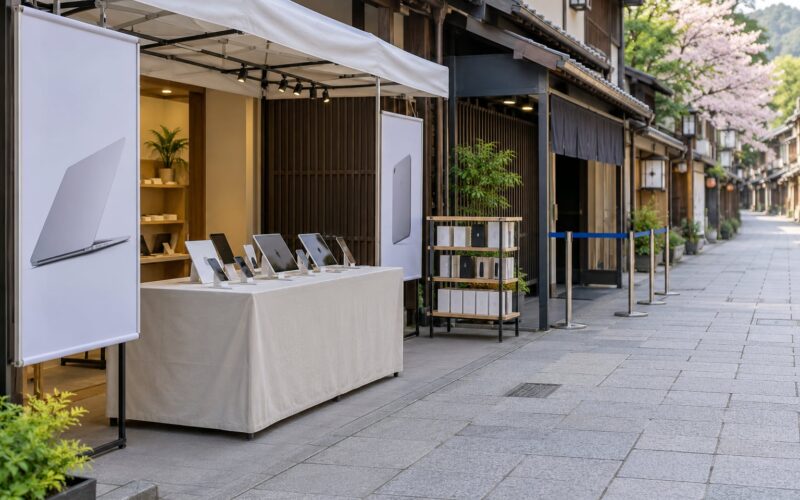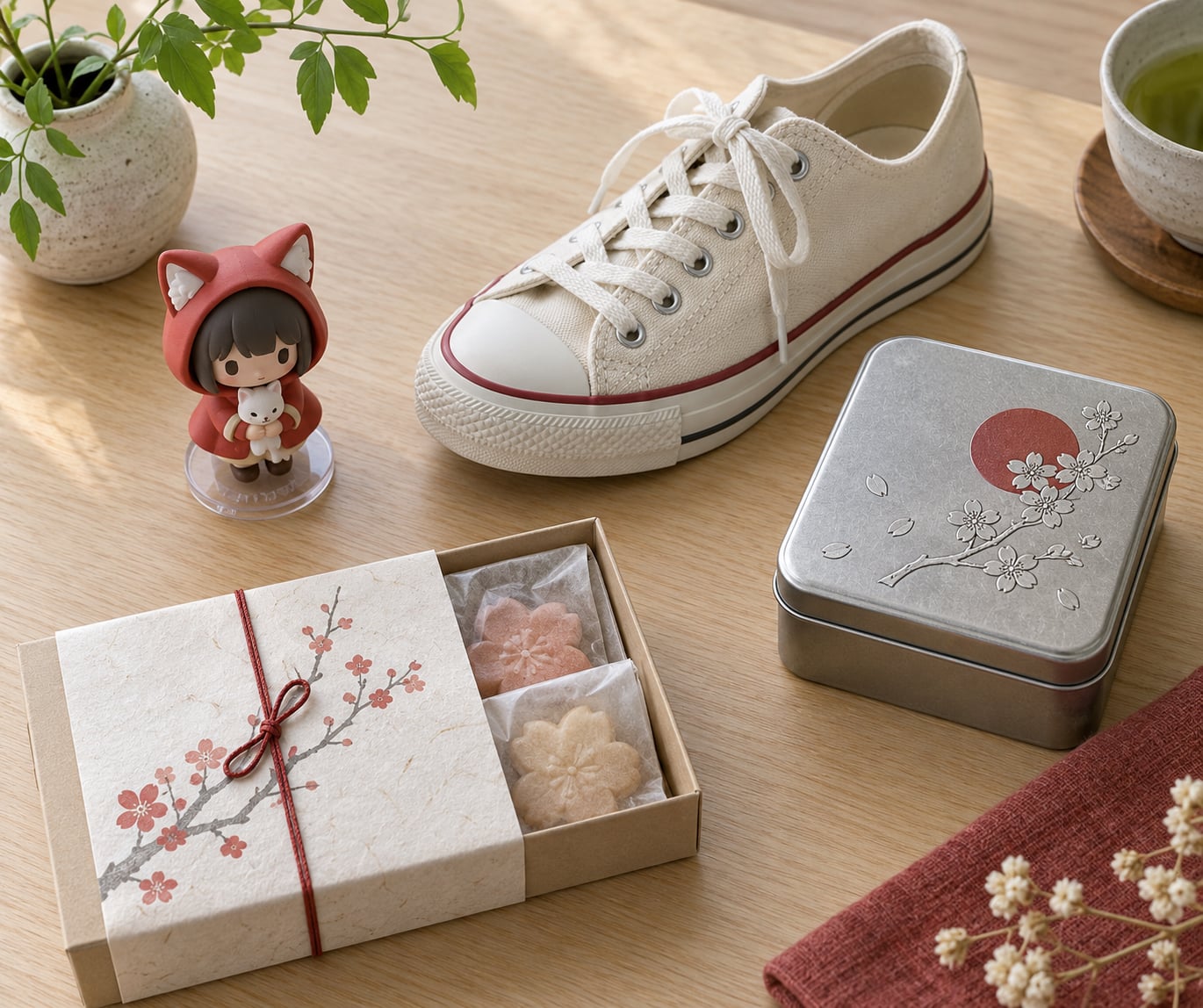
Japanese limited editions drive demand by pairing a real, documented supply limit with design and craftsmanship that buyers already value, then layering on anticipation: a dated reveal, a lottery or a queue, an exclusive colorway, and a fandom ready to share every detail. The scarcity is only half of it. The other half is that Japan carries a reputation for careful manufacturing, and a limited run turns that reputation into a signal you can hold.
Here is the part most explanations get wrong. Scarcity on its own is a blunt instrument. What Japanese brands do well is combine it with cultural specificity, so that missing one release means missing a piece of something bigger, not just a product.
Below is how the mechanics work, what each one actually does to buyer behavior, and where the approach breaks down.
Table of Contents
- 1Why Do Japanese Limited Editions Create Such Strong Demand?
- 2How Japanese Limited Editions Create Perceived Scarcity
- 3How Limited Availability Changes Buyer Behavior
- 4The 7 Main Demand-Driving Strategies
- 51. Controlled Production and Genuine Scarcity
- 62. Exclusive Colorways and Design Variants
- 73. Cultural and Collaborator Storytelling
- 84. Numbered or Small-Batch Releases
- 95. Controlled Distribution and Retail Exclusivity
- 106. Preview Drops and Reveal Campaigns
- 117. Community Participation and Collectible Hype
- 12A note on the feedback loop
- 13How Demand-Driving Strategies Work in Different Product Categories
- 14What Makes a Japanese Limited Edition Worth Buying?
- 15Can Scarcity and Hype Damage a Brand?
- 16Frequently Asked Questions
- 17Why are Japanese limited editions so popular?
- 18Are Japanese limited editions always more valuable than regular versions?
- 19How can I tell whether a limited edition is genuinely rare?
- 20Should I buy a Japanese limited edition for its resale value?
- 21What makes a limited-edition release more than a marketing tactic?
- 22Conclusion: Start with Credible Scarcity
Why Do Japanese Limited Editions Create Such Strong Demand?
Five forces do the work, and they feed each other. Controlled supply sets a deadline, cultural design gives the object a reason to matter beyond function, a collaborator or a character borrows an audience, collectability creates a reason to own two, and a slow reveal builds anticipation before anything is even announced properly.
The reputation layer matters as much as the scarcity layer. Japanese manufacturing is often discussed through monozukuri, the idea of craft as something you can feel in the finished object, and kaizen, continuous improvement as a habit rather than a slogan. Neither term was invented for marketing, and buyers do not consciously calculate it at checkout. They do, however, absorb it as a reason to believe a smaller run is worth chasing rather than a reason to walk away.
Retail service does the rest. Omotenashi, anticipatory hospitality, describes the practice of anticipating what a guest needs before they ask. On a drop day it shows up as staff handing out numbered tickets, clear signage about purchase limits, and a checkout counter that cracks down on bulk orders. Buyers notice, and they post about it.
Add kidulting — adults collecting what were once childhood categories — and you have the buyer set most limited editions are engineered for. These are not impulse purchases by collectors in the traditional sense. They are adults with disposable income, buying a small object that carries a character, a memory and a story they can post about.
None of this is exotic. Brands worldwide use timed drops and pre-orders. What Japan does is pair those with a level of design specificity and after-service care that makes the limited object worth keeping, and a community layer that documents every release in public.
How Japanese Limited Editions Create Perceived Scarcity
Perceived scarcity is built out of concrete, checkable constraints. The strongest ones state a batch size, state where the release runs, state the date and time, and state how many a person may take.
A production cap does most of the psychological work. Once a maker says a run is 3,000 pieces, the number stops being abstract and becomes the denominator every buyer divides against. The same applies to a regional restriction: a Japan-exclusive colorway gives overseas buyers an extra reason to try, and gives domestic buyers a reason to buy now rather than later.
Timed releases compress decision time. A drop that opens at a stated hour on a stated date removes the option to think, and thinking time is where hesitation lives.
Allocation method shapes the mood more than most brands expect. A raffle says equal chances. A physical queue says endurance. Queues running from early morning are normal for major releases, and the queue itself becomes evidence: strangers filming a line is free social proof that outsiders cannot manufacture with a press release.
Purchase limits do the defensive work. One or two per person protects the release from being emptied by buyers with the intent to resell, which protects the fandom’s willingness to try next time.
Disclosure is what separates a credible limit from a claim. When a brand publishes a batch figure and keeps it, the next limit gets believed. When a figure disappears quietly, buyers assume it was never real.
How Limited Availability Changes Buyer Behavior
Limited availability changes three things: how long someone deliberates, what proof they seek before buying, and how much they are willing to pay.
Deliberation collapses. People who would spend an evening comparing options spend twenty minutes instead, because the window closes first.
Proof-seeking shifts from reviews to logistics. Buyers stop asking whether the shoe is comfortable and start asking when the site opens, whether there is a lottery, how many people are in the queue. Forum threads fill with practical detail — people comparing whether a lottery allocation is fairer than a first-come queue for an item that will sell out in minutes either way.
Spending becomes more impulsive, and this is where regret shows up. Buyers describe the odd experience of pre-ordering days ahead, receiving goods early, and still feeling they got lucky rather than careful.
Social proof compounds. An unboxing video, a sold-out notice, a reseller’s listing with a clean photo — each one makes the next purchase feel like a decision other people already made. For brands, that layer is unpaid marketing with a longer half-life than a campaign.
The 7 Main Demand-Driving Strategies
1. Controlled Production and Genuine Scarcity
Credible scarcity comes from a constraint the maker actually has. A small mold, a short print run, a hand-finishing step that takes two days per piece — these limits are believable because a buyer can picture the factory.
Manufactured scarcity looks different. The same edition returns in a different colorway every season, or a long-standing product suddenly acquires a countdown timer. Buyers learn to discount claims like these within a cycle or two, and once they discount them, genuine limits stop working too.
2. Exclusive Colorways and Design Variants
A Japan-exclusive color gives buyers a reason to prefer one version over another. It also creates a comparison point: the same silhouette in two colorways lets collectors argue about which is better, which keeps both alive.
Materials and packaging work the same way. A different textile weight, a wood box, printed inserts or a slipcover — small changes that are obvious on a shelf and meaningless in a spec sheet. Related Japanese terms worth knowing: gachapon are capsule toys sold from machines, and kibukagata is the idea of limited-quantity production.
3. Cultural and Collaborator Storytelling
A collaboration with an anime, a manga artist, a film festival or a regional institution attaches an existing audience to a product. The maker does not have to explain why the object is worth having, because the collaborator already did.
Regional heritage adds weight that a marketing team cannot manufacture quickly. A maker tied to a specific prefecture or craft tradition can point at something older than the brand itself, which makes a limited run feel like an access window rather than a discount tactic.
4. Numbered or Small-Batch Releases
Serializing a run turns it into a traceable object. A stamped plate, an embossed number, a card listing the batch size — these details let a collector verify a claim years later, and they make provenance part of the appeal.
Small batches work the same way for makers. A run of a few hundred lets the studio absorb the risk of a design that has not been proven at scale, and lets the buyer feel they are close to the source.
5. Controlled Distribution and Retail Exclusivity
Choosing a handful of physical stockists concentrates attention. When forty stores carry a release, no store is an event. When four do, each one becomes a destination and queues form outside the door.
Staggering regions keeps a release alive over months instead of hours, which spreads word of mouth and gives the secondary market time to develop. Event-only sales do something different again: they convert a purchase into attendance.
6. Preview Drops and Reveal Campaigns
Teasers, prototypes, calendars and staged reveals turn a purchase into a story with a beginning. Buyers who follow a reveal for four weeks arrive at the drop already invested.
A published calendar is the simplest version and the most useful. Announce the date, the time, the method and the limit, and buyers can plan instead of panic. Buyers regularly report that the releases they trust most are the ones that told them exactly what to expect, including which days they will not be open.
7. Community Participation and Collectible Hype
Fan communities do the amplification. Unboxings, customization photos, group orders, resale listings and long-running forum threads keep a small object visible long after the release window closes.
Group purchase traditions are a good example. When individual postage on small items would be unreasonable, a community pools orders from a retailer and takes one delivery, which lowers the cost per unit and keeps the drop accessible to fans rather than only to aggregators.
A note on the feedback loop
The seven strategies reinforce each other in a loop. Scarcity pushes urgency, urgency creates queues, queues create social proof, social proof lifts perceived value, and perceived value justifies a resale premium that makes the next release feel worth queuing for. Brands that understand the loop can see where it is breaking, which is usually at the trust step.
How Demand-Driving Strategies Work in Different Product Categories
The format that works depends on how the product is bought and how often it is replaced. Food works on volume and timing. Electronics work on disclosure and queue fairness. Toys work on randomness and community.
| Category | What the limited edition is | Main demand driver | What breaks it |
|---|---|---|---|
| Convenience-store food | Seasonal or regional flavor tied to a moment | A short, visible window and word of mouth | Overproduction, which turns a seasonal item into ordinary shelf fare |
| Sneakers and apparel | Japan-exclusive colorway or collaborator drop | Exclusivity plus a physical queue | Restocks and scalpers crowding out fans |
| Consumer electronics and gadgets | Japan-only color, storage configuration or bundle | Disclosed batch size and a fair allocation method | Quota-driven regional limits that read as arbitrary |
| Trading cards | Sealed random product with rare pulls | Randomness plus trading community analysis | Puzzle-box patterns that buyers read as manipulation |
| Capsule toys and blind boxes | Random item from a themed series | Collecting habit and unboxing content | Rarity rates so skewed the chase feels hopeless |
| Gaming merchandise | Numbered collector edition tied to a title | Fandom reach and pre-order commitment | Pre-order friction and unclear delivery windows |
One honest note on random formats. Buyers who enjoy randomness treat it as a hobby. Buyers who paid for a specific object treat randomness as a gamble they did not consent to, and they are the ones who post about it. The difference between those two reactions is usually whether the odds are published before purchase.
What Makes a Japanese Limited Edition Worth Buying?
Start with the object, not the label. A limited version of a mediocre product is still mediocre.
Design quality. Compare materials and finishing against the standard version. Weight, texture and packaging are where limited editions usually prove themselves, or quietly match the regular product at a higher price.
Cultural meaning. Ask whether the collaboration, region or craft reference is explained or merely printed on the box. A design that borrows a tradition without any connection to it tends to age badly, for buyers and for collectors.
Documentation. Look for a batch number, a card stating the run size, or a dated receipt. Collectors need something to verify later, and its absence is a signal in itself.
Condition and completeness. For anything produced in a run, the box, inserts and outer sleeve often matter more to the object’s long-term interest than the item itself. Keep the packaging dry and flat.
Access. Check whether the release was open to everyone or gated by geography, an app or a membership. Gated releases carry risk, because if the gate changes, the audience changes with it.
The resale premium. Treat any markup as an outcome, not a plan. Resale values depend on the character staying in demand, the release staying rare, and the market staying liquid. Three conditions, none of them guaranteed, and buyers who plan around a premium rather than a possibility are the ones who regret it.
Can Scarcity and Hype Damage a Brand?
Yes, and it usually happens through four predictable failures.
Broken queues. Buyers report entering a queue early and still failing to buy. That is the single most damaging outcome, because the drop becomes proof that the brand does not care who ends up with the product.
Limits that move. A published cap that quietly increases, or a second run of the same edition under a new name, teaches buyers that every future cap is negotiable.
Scalper capture. When resellers take most of the allocation, genuine buyers give up. Forum complaints about purchase limits usually come down to this: a limit of two that does nothing against a buyer placing orders from several accounts is worse than no limit at all, because it advertises the problem.
Quality slippage. A rushed limited run with thin finishing damages the reputation more efficiently than any bad marketing week.
The protective pattern is consistent across the releases buyers trust: a stated run size that holds, a lottery where the item will sell out in minutes regardless of arrival order, limits that are enforced at checkout, and clear notice of date, time and method. Transparent constraints cost nothing to state, and they are the cheapest trust available to a brand.
There is also a demand-side lesson. A release that feels unfair generates conversation, but not the kind that sells the next one. Bad news travels through the same communities as good news, usually faster.
Frequently Asked Questions
Why are Japanese limited editions so popular?
Japanese limited editions are popular because supply is genuinely constrained and the country carries a reputation for careful manufacturing, so a small run reads as a quality signal rather than a sales trick. Add a Japan-exclusive colorway or a well-known collaborator and the object gains cultural meaning too. Buyers then treat the release as an access window with a deadline, which is why these items often move quickly and attract queues, lotteries and heavy social sharing.
Are Japanese limited editions always more valuable than regular versions?
No. Value depends on whether the limited edition changed the object, whether the run was small enough to matter, and whether the theme still has an audience years later. A respray with a new label and a large run is worth very little. The same design in a small batch, with documentation, can hold interest. Check the batch number and packaging before deciding, and treat any resale quote as an outcome rather than a fact.
How can I tell whether a limited edition is genuinely rare?
Look for a published batch size that has not changed between announcements, a number stamped on the item or its box, and a retail history showing the same edition running once. Genuinely rare releases keep the same details across listings years later. Claims that drift, editions that quietly return under new names, and scarcity language with no figures attached usually signal marketing rather than supply. Reputable secondary-market listings tend to describe the same production facts consistently.
Should I buy a Japanese limited edition for its resale value?
Buying purely for resale usually ends badly, because the premium depends on three things you cannot control: whether the theme stays in demand, whether the release stays genuinely rare, and whether buyers keep paying. The storage and shipping costs eat into the margin more than people expect, and a market with few buyers means you wait. Buy because you want the object, and treat any markup as a pleasant surprise rather than the reason for the transaction.
What makes a limited-edition release more than a marketing tactic?
A limit the maker could not have avoided. Real constraints come from a short print run, a slow finishing step, a fixed collaboration window, or a distribution agreement that ends on a date. Those limits have a cause a buyer can picture. Manufactured scarcity has a countdown but no reason, repeats across seasons, and tends to disappear the moment a shopper looks for the previous run. Credible limits survive scrutiny; fake ones do not.
Conclusion: Start with Credible Scarcity
If you are studying this as a buyer, the first thing to do is find the real constraint. Ask what physically limits the run, whether the maker has published a number, and whether that number has held. If you are running a release, the same three questions apply in reverse, and they should be answerable before a single preview goes out.
Everything else follows from there. A limit a buyer can picture, a design detail worth pointing at, and an audience that already cares will do the work on their own. Take those away and no amount of countdown messaging brings it back.