Japanese electronics stores are huge because the country has very little buildable land, dense cities, and shoppers who still expect to touch products, ask a member of staff, and get repairs and warranty help on the same visit. That combination turns a single branch into a ten-floor building rather than a shop with a stockroom.
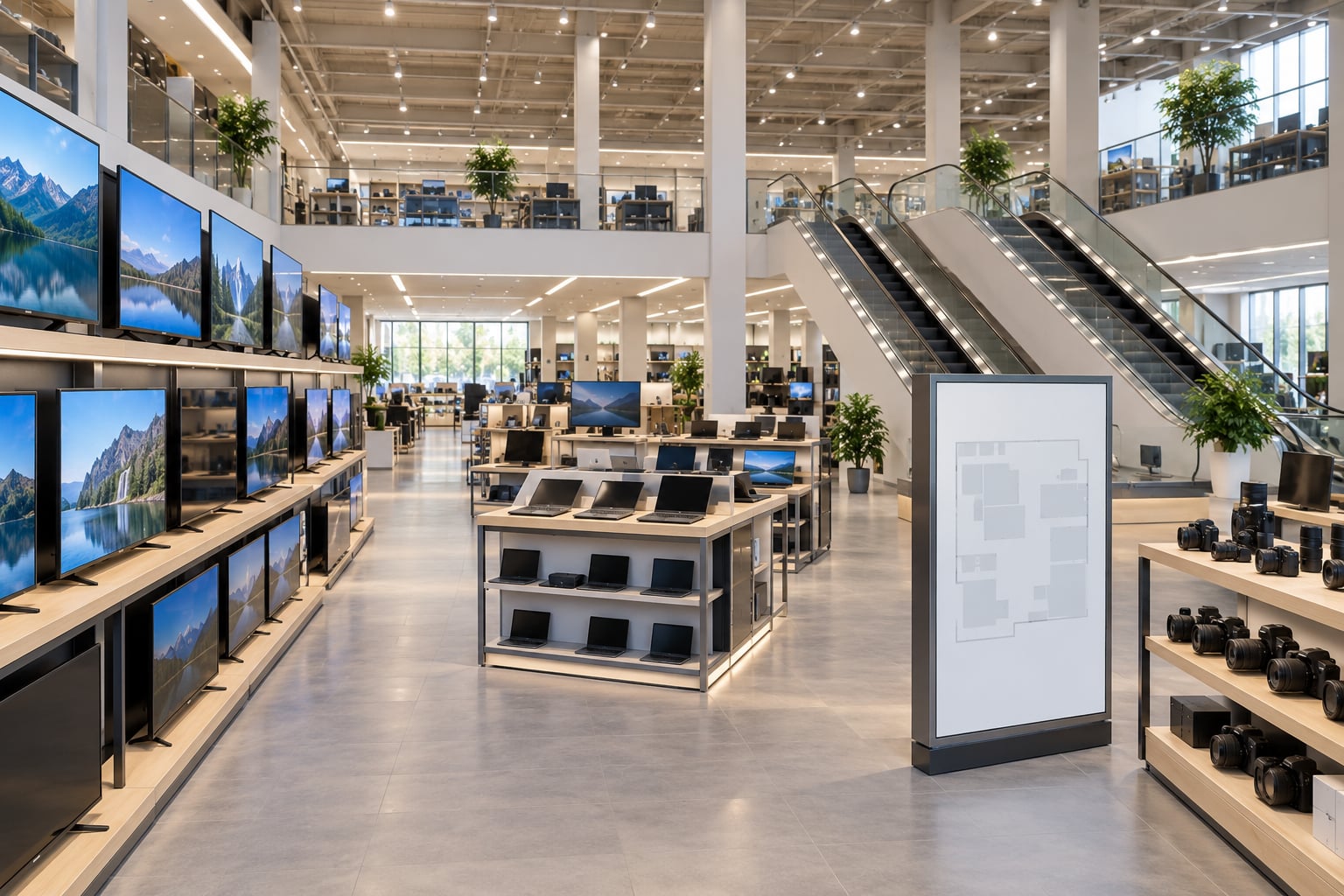
Walk into a flagship branch of a chain like Yodobashi Camera or Bic Camera and the scale is the first thing that hits you. Categories get whole floors, comparison units line the walls, and the service counters sit at the top like an airport check-in desk. Almost nobody explains why the format works, so people tend to assume it is just density or showmanship.
It is neither. The floor area is a business decision, and it follows from how Japanese cities, shopping habits and product ranges are built. Here is what the space actually does.
Table of Contents
- 1Why Do Japanese Electronics Stores Take Up So Much Space?
- 2How Does Japan’s Store Layout Make Products Easy to Find?
- 3Why Japanese Electronics Stores Are Huge Inside
- 4What Encourages Customers to Buy In Store?
- 5How Do Service, Warranties, and Tax-Free Shopping Work?
- 6Why Are Major Electronics Stores Concentrated in Cities?
- 7Are Japanese Electronics Stores Mainly About Expensive Products?
- 8How Do These Stores Reflect Japan’s Tech Industry?
- 9What Should Visitors Notice on Their First Visit?
- 10Frequently Asked Questions
- 11Are electronics stores in Japan cheaper than online shops?
- 12Can English-speaking visitors buy electronics without speaking Japanese?
- 13Do large Japanese electronics stores really provide repair and installation services?
- 14Why do product model numbers look so complicated?
- 15Should tourists visit a general electronics superstore or an Akihabara specialist shop?
- 16Conclusion
Why Do Japanese Electronics Stores Take Up So Much Space?
Two different things get called “huge” here, and they are worth separating. One is the physical footprint of the building. The other is the size of the range on offer, which is enormous even in stores that only take up a single level.
Japanese electronics stores are large in physical terms because every category has far more variants than an online catalogue would bother to list, and because a surprising share of what a chain sells cannot be delivered digitally at all. Repairs, installation, consultations, trade-ins and tax-free paperwork are all floor-consuming services, not clicks.
Different formats solve different problems, so the footprint varies a lot:
| Store format | Typical scale | What it is built for |
|---|---|---|
| Destination flagship | Multi-floor, anchored to a major station or shopping district | Full category coverage, staffed service desks, event spaces and the widest range in the chain |
| Neighborhood branch | One or two floors, often inside or beside a station building | Convenient purchases close to home: phones, small appliances, accessories, everyday servicing |
| Specialist retailer | Small floor area, very deep in one category | Enthusiast knowledge, used and refurbished goods, parts, and advice in a niche such as cameras or PC components |
The destination flagship is the one that makes headlines, and it is built to make a single trip worth the journey. Everything a shopper might decide on that day sits under one roof, with the demonstration units, the accessories and the service desk a lift ride away.
How Does Japan’s Store Layout Make Products Easy to Find?
Layout is the quiet reason these buildings feel navigable even at that size. Categories are stacked rather than scattered, signage is consistent from floor to floor, and comparison zones sit next to the products they compare.
Think of the store as a vertical department store built around a shopping decision rather than around a product type. You arrive with a question, and each floor narrows the answer.
| Store zone | What lives there | Decision it helps with |
|---|---|---|
| Ground floor counters | Mobile phones, SIM cards, small accessories, service and payment counters | Which plan or handset, and how to set it up |
| Demonstration floors | Hands-on sample units of laptops, tablets, cameras, TVs and audio | Whether a device feels right in the hand before buying |
| Wall displays | Row after row of model variants, capacities, colors and price tiers | Where one model sits in the range above and below it |
| Specialist rooms | Glass-fronted rooms for high-end cameras, audio and large screens | The careful, higher-consideration purchases |
| Top-floor service desks | Repairs, installation, extended warranties, consultations, trade-in | What happens after you pay |
Why Japanese Electronics Stores Are Huge Inside
Several forces push in the same direction. Shops need to carry many variants of the same product, because shoppers compare them side by side and expect the choice to be there in the building rather than ordered later. Centralized shopping matters too: with commuting time expensive and leisure time scarce, people make one longer trip instead of several short ones.
Display space is also partly underwritten by manufacturers rather than by the retailer alone, which lowers the cost of keeping wide walls stocked. Staff expertise is the quieter factor. Expert advice is a genuine service here, and it needs a desk, a queue and somewhere for a customer to sit while a unit is opened up.
The last force is pricing. Because retail prices stay close across channels and between competing stores, there is little reason for a shopper to hunt around town for a better deal. That removes the pressure to be small and fast. Once the trip is worth making, the store can afford to be thorough.
What Encourages Customers to Buy In Store?
Hands-on inspection is the real conversion tool. A shopper can hold a camera, work a focus ring, open a laptop, or put on headphones at the wall display and hear the difference before spending anything.
That matters most for products where specifications explain less than five minutes of use. Camera bodies and lenses are the classic case: two lenses can share a price band and behave completely differently in low light. Console and PC component shopping works the same way, where build quality, connector layout and noise levels are visible facts.
Buying in store also brings accessories into the moment. Cables, cases, memory cards, batteries and screen protectors get added because the person who sells you the device is standing next to the wall of accessories, not because an algorithm suggested a bundle.
None of this means the store is always better value. It means the decision gets made in the building, which is exactly what a retailer earning rent on ten floors needs.
How Do Service, Warranties, and Tax-Free Shopping Work?
Service is the part visitors most often underestimate. Repairs, installation, data transfer, extended warranty sales and consultations are run as staffed counters with waiting areas, and they occupy real floor space that a pure online retailer never has to rent.
Warranty handling is the clearest example. Buying a device in Japan links it to a Japanese service network and to the retailer’s own repair desk. Questions about coverage, accidental damage plans and repair timelines are settled across a counter, with paperwork handled in person.
Tax-free shopping works the other way: it is a reason for the store to host its own counter. Non-resident visitors can buy without consumption tax under Japan’s tax-free shopping program, subject to a minimum-purchase requirement, an eligible item list, a valid passport and the store’s own procedure. Eligibility, documentation, exchange rules and current thresholds are set by the rules in force and by each retailer’s policy, so check the chain’s page before you go and expect to present your passport in person.
Take the item out of the shop with you and the tax-free treatment no longer applies, so some visitors buy, leave, and return to the counter. That extra trip is exactly the kind of friction a dedicated ground-floor desk is built to remove.
Why Are Major Electronics Stores Concentrated in Cities?
Because the land they need only makes sense where the people and the transport are. A flagship covering every category needs thousands of square meters, and in a city the only parcels big enough are the ones beside major stations.
Akihabara in Tokyo is the obvious case, where specialist retailers and large chains cluster within walking distance of several stations. The same pattern repeats around major railway stations in other cities, where a department store, a station mall and an electronics flagship share one catchment of commuters.
Tourism adds a second customer base concentrated in a handful of districts, and cities with international airports and busy station hubs see that traffic consistently. Out of the big metros, the format shrinks quickly, which is why so many branches are one or two floors and why the specialist shops there tend to win on knowledge rather than range.
None of that means every location follows the same model. Regional cities get smaller buildings, and the flagship experience stays an urban thing.
Are Japanese Electronics Stores Mainly About Expensive Products?
No. The price spectrum inside these stores is far wider than the flagship image suggests, and that breadth is one of the reasons the buildings are large.
At the bottom sit cables, cases, screen protectors, batteries, ink, blank media and small household gadgets sold in quantity near the entrance. Above them sit mid-range phones, kitchen appliances, air purifiers, refrigerators and washing machines, which are large objects that need showroom floor to justify.
Premium cameras, high-end audio, large televisions, gaming hardware and business systems occupy the specialist rooms and upper floors. So the same building holds cheap accessories and six-figure specialist kit, and the price mix changes completely between one floor and the next.
Store size reflects the width of the range and the weight of the service layer, not the price of the goods. A store full of inexpensive items still needs floor space for stock, displays and counters, and a store full of premium kit still sells the cheap accessories that go with them.
How Do These Stores Reflect Japan’s Tech Industry?
Large retail floors act as discovery spaces. Domestic brands, mobile carriers, camera makers and specialist component suppliers all compete for wall space, demo units and staff attention, which makes the store floor a live map of who is currently selling well at home.
That map is worth reading carefully, because it does not look like the rest of the world. Domestic-only model variants and Japan-specific SKU depth are part of why the ranges feel endless. The label that names this habit, Galapagos syndrome, describes products developed for one home market that never had to work abroad, so the domestic shelf runs deeper and gets tuned differently than export lines.
This is also where a common confusion starts. Several high-ranking articles about this query discuss the decline of Japanese electronics makers, which is a different subject from the size of Japanese electronics retail. Manufacturers losing ground to Korean and Chinese brands at home and abroad says little about how many square meters a shop in Tokyo rents. A store can be enormous and full of third-party brands, and most of them are.
For visitors, the friction is less dramatic than it looks but more real. Model numbers are long, product pages and shelf labels are in Japanese, and regional variants mean the model you read about at home may not be the model in the shop. Staff help, and translation apps help more than they used to, but they do not remove the need to plan before you travel.
What Should Visitors Notice on Their First Visit?
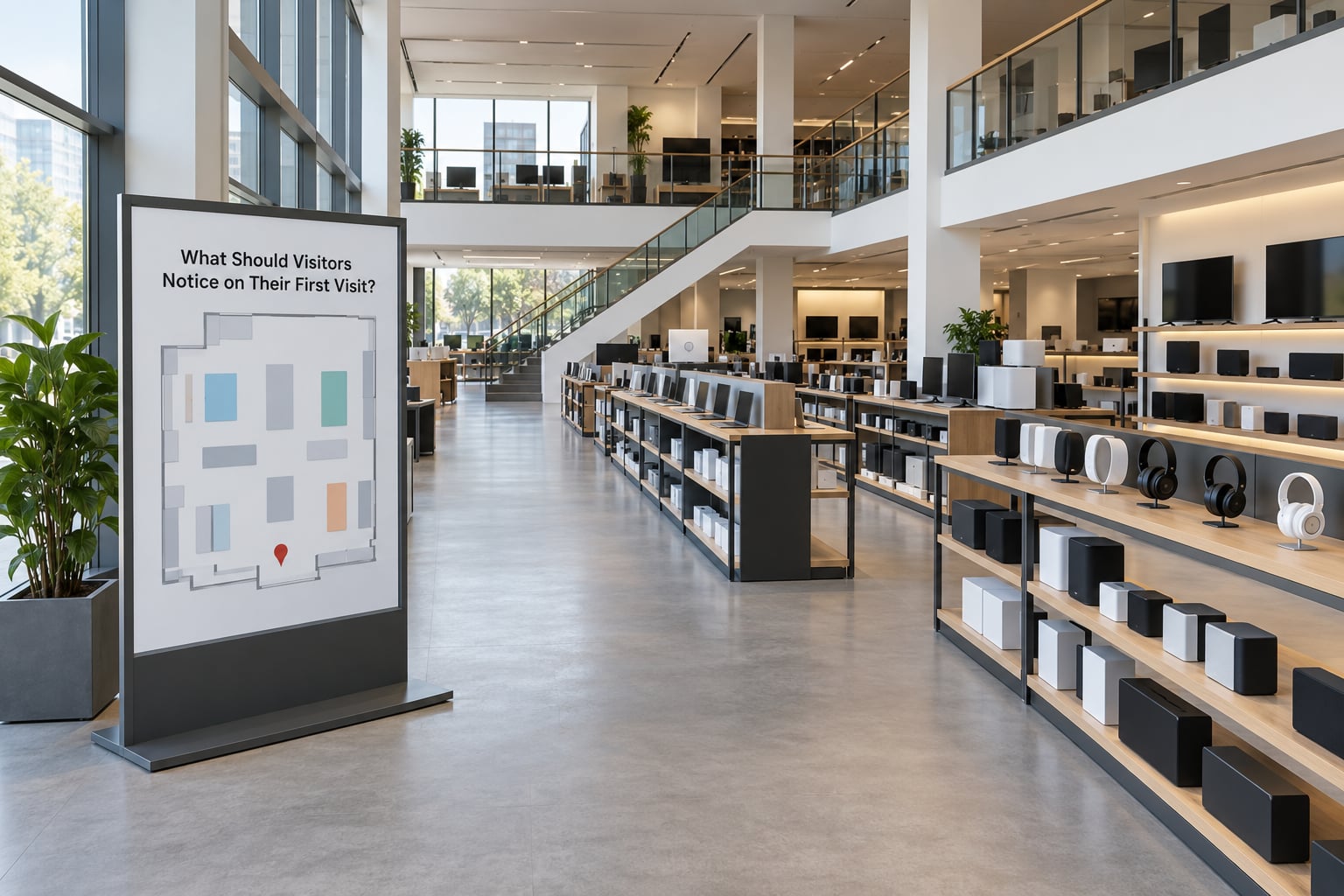
Look for the floor map first. It sits near the entrance or the main lift bank and shows the category on each level, which saves you from walking every floor on your first trip.
Then read the price labels rather than skipping them. Model numbers are long, but the label shows the capacity, color and generation that distinguish one variant from the next, and those are exactly the differences the wall display is set up to show.
Find the demo units before you find the sales floor. Hands-on models sit away from the boxed stock, and comparing two of them for a few minutes answers more questions than a spec sheet will.
Note where the service desk is before you need it, since it is rarely on the ground floor. The same goes for the tax-free counter and the points desk, which are usually at the front but not always on the same side.
Finally, decide which kind of store you actually want. A general superstore near the station wins on range, language support, delivery and service. An Akihabara specialist shop wins on depth in one category, on staff who use the products, and on parts and used equipment you will not find in the big box.
Frequently Asked Questions
Are electronics stores in Japan cheaper than online shops?
Not usually, and that is the point. Japanese retail pricing stays fairly flat across chains and online listings for the same item, so walking into a flagship rarely costs you more or saves you dramatically. What the store offers instead is the range you can see in the building, hands-on units, staff advice, immediate warranty registration and repairs handled at a counter. Some categories, such as bundles, points promotions and older or refurbished gear, can favour one route over the other, so compare before assuming either side wins.
Can English-speaking visitors buy electronics without speaking Japanese?
Yes, in most cases. The large chains run staffed service and payment counters, and product staff at the big flagships handle international visitors regularly. Printed or on-screen guidance, price labels showing numbers clearly, and translation apps on a phone cover most of the process. The hardest moments are specialist consultations and the tax-free paperwork, where staff often explain the steps in Japanese. Ask for an English-speaking colleague at the counter and be ready to show your passport for the tax-free process.
Do large Japanese electronics stores really provide repair and installation services?
They do, and the counters take up a full floor in most flagships. Repairs, data transfer, setup, installation, extended warranty sales and consultations are handled on site or routed through the store’s own service network. This is one of the clearest reasons the buildings are so large, because a service desk needs staff, a queue and waiting space, none of which can be delivered from a website. Bringing the product and proof of purchase to the relevant counter is normally all it takes.
Why do product model numbers look so complicated?
Because Japanese makers use long alphanumeric codes that encode the series, the generation, the capacity and often the regional variant. Two models that look nearly identical on a shelf may differ in region, tuner support, language set or bundled accessories, and those differences do not always appear in the marketing name. On the shelf, the printed label carries the details worth reading, and staff can explain which version you are holding. Regional variants are also the reason a model you found online may not be the one in the shop.
Should tourists visit a general electronics superstore or an Akihabara specialist shop?
Go to the superstore if you want one trip that covers cameras, laptops, consoles, appliances and accessories, with delivery, warranty support and tax-free counters in the same building. Go to a specialist shop if you want depth in one category, staff who use what they sell, or parts and used equipment that the chains do not carry. First-time visitors often do best at a flagship near a station, then return to a specialist shop for the specific purchase they now understand better.
Conclusion
Japanese electronics stores are huge because choice, service and geography all point the same way. Dense cities leave big parcels only near stations, shoppers make one long trip rather than several short ones, and repairs, warranty work and tax-free paperwork need floors of their own rather than a help page.
Start by naming two things before you go: the product category you actually need, and whether you want a general superstore or a specialist shop. Those two answers remove most of the confusion people feel on their first visit, and the rest is just reading the labels on the wall.