Most of the work in a Japanese product meeting happens before anyone sits down. The formal session exists to confirm a direction that has already been shaped in smaller conversations, one stakeholder at a time, so the last hour in the room is about removing the last objections rather than inventing the decision. Getting that wrong is why so many foreign product managers arrive with a polished deck and leave with nothing but polite nods.
Here is the sequence I have watched hold up inside Japanese product teams, written for people who have to run one. Budget about two to three hours of preparation for every hour in the room, and expect the first month in a new team to be all preparation and no decisions.
One caveat up front: none of this is a single national template. Practices differ sharply between a Tokyo headquarters and a regional office, between a 40-year-old manufacturer and a venture-backed startup, and between a team that leans on consensus and one that has decided, deliberately, to stop.
Table of Contents
- 1What You Need
- 2Step-by-Step
- 31. Fix the purpose and the decision before the invite goes out
- 42. Share context before the meeting
- 53. Set roles and norms out loud
- 64. Review the evidence, facts separated from interpretation
- 75. Work through the options systematically
- 86. Decide, assign and follow up
- 9Common Mistakes
- 10Frequently Asked Questions
- 11How do Japanese companies run product meetings?
- 12How do I present in a Japanese company meeting?
- 13Is it rude to disagree with a Japanese manager in a meeting?
- 14Why do Japanese product teams avoid deciding in the meeting?
- 15Do Japanese startups still follow this meeting style?
- 16How should an international team adapt this process?
- 17Conclusion
What You Need
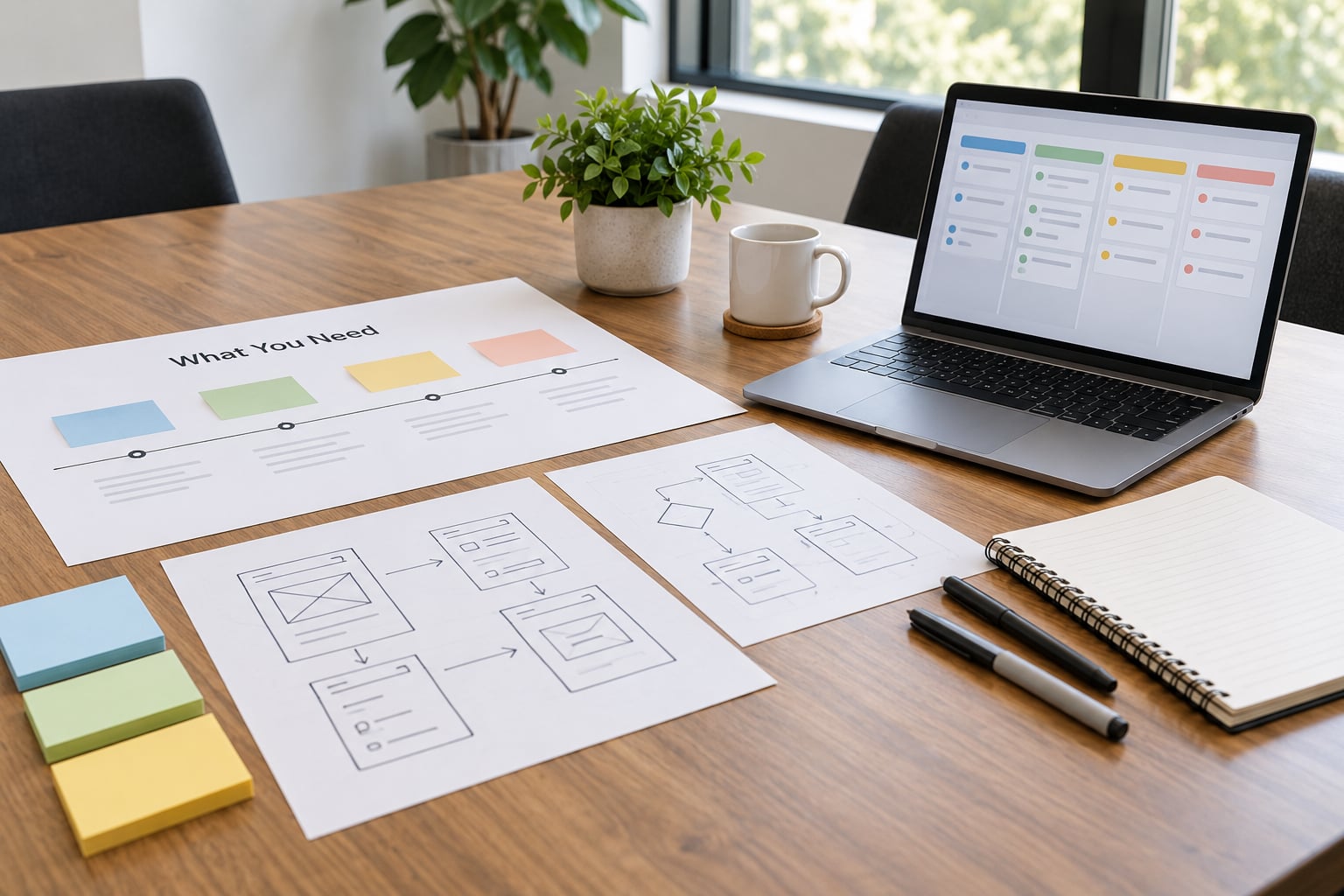
Four things need to exist before you send a single calendar invitation, and if any one of them is missing the meeting will drift.
The decision itself. Write down what is being decided, in one sentence, and what is explicitly not up for discussion. A meeting described as a sync usually ends as a status report with no outcome.
The evidence. User research, product analytics, support volume, technical constraints, competitive notes. Raw material beats a finished story, because colleagues will test the story and you cannot argue with a chart.
The people. A facilitator, a decision owner, a note-taker, and only the stakeholders who can change or block the outcome. Everyone else gets the record afterward.
The cultural read. Enough context on how this particular team handles disagreement, who is trusted on product questions, and how the last similar decision went. Ask a colleague for the precedent rather than assuming; a company that has shipped fast twice this year will not behave like one that has missed a launch deadline.
Add the mechanics that support those conversations. Nemawashi (根回し) is the pre-meeting canvassing that gets each affected party talking individually before a group session. Ringi (稟議) is the written proposal that travels up the hierarchy for approval, sealed with a hanko (判子), the physical approval stamp. Most product decisions in a Japanese company end with one or both, and the sooner you learn who stamps what, the sooner you can plan the calendar honestly.
Step-by-Step
Six steps, in the order they actually run. Each one has an output you can check, because in a culture of soft signals the paper is the only reliable evidence.
1. Fix the purpose and the decision before the invite goes out
State in the invitation whether this is for information, feedback, alignment, or a decision, and name the person who owns the call. One owner. If you write “the team will decide”, nothing will be decided.
Output: a one-sentence objective in the calendar description. How you know it worked: attendees can repeat the decision back to you in their own words before the meeting.
2. Share context before the meeting
Send a short pre-read two or three days ahead: the problem, the evidence, the constraints, your proposed direction, the open questions, and a line naming what feedback you need from each person. Six slides or two pages is plenty. Longer documents get read by nobody.
Output: a pre-read with an explicit ask per attendee. How you know it worked: two or more people reply before the session with a substantive point rather than a thumbs-up.
3. Set roles and norms out loud
In Japanese product teams the facilitator, decision owner, note-taker and timekeeper are usually distinct, and the decision owner is often not the most senior person in the room. Say who does what in the first two minutes, and state the norms: evidence over assertion, disagreement raised here or lost, agenda items off-topic go to the parking list.
Output: named roles and three norms stated in the room. How you know it worked: when someone challenges the plan, the owner responds instead of the facilitator.
4. Review the evidence, facts separated from interpretation
Walk the research and data first, and label clearly what is measured and what is inferred. Japanese product discussions tend to move quickly from a chart to a generalisation, so naming which is which keeps the conversation honest. Gijusho (議事録), the written minutes, is usually expected as the deliverable of this stage.
Output: minutes separating observed facts, interpretations and open questions. How you know it worked: when someone pushes back, they attack the interpretation, not the data.
5. Work through the options systematically
This is the core of how Japanese companies run product meetings: compare at least two realistic options against the same criteria, invite the strongest objection to each, and write the trade-offs down rather than steering toward consensus early. Trade-off documents are the artifact senior reviewers actually read, and they are usually more valuable than the slide deck.
Output: an option table with named costs for each choice. How you know it worked: the trade-offs are recorded somewhere other people can read them later.
6. Decide, assign and follow up
Close by restating the decision, or by naming the next experiment if there is not one yet. Every action gets an owner and a date, and unresolved risks are written down as unresolved rather than smoothed over. Send the short record the same day.
Output: a decision line, an action list with dates, and a circulated record. How you know it worked: two weeks later nobody is still asking what the meeting decided.
Common Mistakes
Reading silence as agreement. The most expensive misread in the room. Silence often means a senior manager is formulating a serious objection, or that someone will raise it privately afterwards. Fix it by asking directly and by name: Tanaka-san, you have not spoken. What is your concern? Silence is not a veto, but it is not consent either.
Skipping the pre-read and presenting cold. Without shared context, the session becomes a presentation, and Japanese colleagues will not challenge a proposal in front of the room the way they will in a one-on-one beforehand. Send the document early and treat replies as your real meeting.
Treating consensus as consent. Agreement in the room is not the same as authorisation to proceed, because the group harmony principle, wa (和), pushes people toward a shared surface answer. Confirm authority separately: who stamps the ringi, and when does it travel?
Letting hierarchy close the question list. If the most senior person speaks first, everyone after them narrows what they are willing to say. Round-robin the junior and mid-level attendees before the senior voice lands, and consider sending questions in advance so rank does not filter them.
Ending with a decision nobody owns. A meeting can be warm, harmonious and completely useless. If the record has no owner, no date and no signature path, the work goes back into the pre-meeting phase, where it costs two or three times more.
One more worth naming: pushing too hard on speed. A product decision that circulates with seals can take weeks, and some teams stretch it to months. That is a feature of coordination across departments that do not report to each other, not a defect to argue away in the meeting.
Frequently Asked Questions
How do Japanese companies run product meetings?
Japanese product decisions are usually settled before the formal session. Stakeholders are canvassed individually, a written proposal is circulated for stamped approval, and the meeting itself confirms the direction and clears the last objections. Treat the room as a ratification step, and put your energy into the preparation stage instead of the presentation.
How do I present in a Japanese company meeting?
Lead with the problem and the evidence, state your recommendation plainly, and leave real time for objections. Sit at the seat your host indicates, bring printed material even when a deck is on screen, and treat the questions after your talk as the substantive part of the session. Closing the slide deck early and staying available is usually where the useful information comes out.
Is it rude to disagree with a Japanese manager in a meeting?
No, but direct contradiction is unusual and it forces the room to pick sides. Package the objection as a concern about the evidence or the constraint, address the person by title and surname, and offer to follow up after the session. Disagreement raised privately beforehand is far more likely to change the outcome than the same point delivered in front of the group.
Why do Japanese product teams avoid deciding in the meeting?
Because a decision made in the room can be reopened the moment a department affected by it raises an objection later. The group avoids that by gathering agreement in advance, so the meeting can ratify something rather than negotiate it. The tradeoff is time: several weeks to a few months from first draft to stamped approval is normal for anything crossing departmental boundaries.
Do Japanese startups still follow this meeting style?
Often not. Venture-backed startups tend to run shorter, flatter, decision-heavy sessions with a single founder or product lead owning the call, and many have replaced paper circulation with shared documents and chat threads for approval. The same underlying habits often persist in how politely disagreement gets raised, even when the signature step disappears, so ask about the culture rather than assuming either way.
How should an international team adapt this process?
Keep the parts that carry weight and drop the ceremony. A written pre-read, a named decision owner, an options table with honest trade-offs and a same-day record survive translation well. Cultural extras such as seating order or the after-meeting meal do not. For remote teams, send materials far enough ahead that people in other time zones can actually read them, and put questions in writing.
Conclusion
The principle behind how Japanese companies run product meetings is simple: no one should meet a decision cold. Everything else, the canvassing, the written proposal, the stamps, the long pauses, exists to make sure a decision nobody will quietly reopen has already been reached by the time people are sitting around the table.
Start small. Pick the next real decision, write the one-sentence objective, send a focused pre-read three days ahead, and confirm who facilitates, who decides and who writes the record before you book the room. Run it once that way and the difference in the meeting shows up within a month.