Japan’s kei cars exist because the country drew a legal box around them in 1949 and then tied cheaper vehicle tax, cheaper expressway tolls and lighter insurance to staying inside it. Any road-legal car, van or mini-truck that fits within 3.40 m long, 1.48 m wide and 2.00 m tall, with a combustion engine capped at 660 cc, qualifies.
That is the whole reason why Japanese kei cars exist, and almost nothing else. It was a deliberate industrial-policy decision in a country short on steel, short on cash and full of narrow streets, and roughly four decades of rule revisions turned it into the product category the world now recognises.
What follows is the causal story: who created the class, what the numbers actually are, how the rules shaped the way these cars look, and why the whole thing stayed in Japan.
Table of Contents
- 1Why Japanese Kei Cars Exist: The Quick Answer
- 2The key numbers behind the kei class
- 3What Is a Japanese Kei Car?
- 4Why Japanese Kei Cars Exist: History and Policy
- 5Why Japanese kei cars exist as a policy tool, not a product idea
- 6The class limits kept moving
- 7The 1990 power fight and the Big Kei era
- 8How the Kei Car Size Rules Shaped Their Design
- 9Why kei cars are tall and boxy
- 10The 660 cc cap is the constraint that decides everything
- 11How the kei envelope compares to small cars elsewhere
- 12Why Japanese Kei Cars Are So Popular in Cities
- 13Where the numbers are actually biggest
- 14What Are the Main Advantages and Disadvantages?
- 15Where they win
- 16The honest objections
- 17How Kei Cars Compare With Other Japanese Vehicle Classes
- 18Popular models and the badge behind them
- 19Why the Class Barely Left Japan
- 20Are Kei Cars Still Relevant Today?
- 21Frequently Asked Questions
- 22Are kei cars only designed for elderly drivers?
- 23Can a kei car carry four adults and luggage?
- 24Are Japanese kei cars safe for highway driving?
- 25Why are kei cars cheaper than regular compact cars?
- 26Can foreigners buy and drive a kei car in Japan?
- 27Are electric kei cars available in Japan?
- 28The Short Version
Why Japanese Kei Cars Exist: The Quick Answer
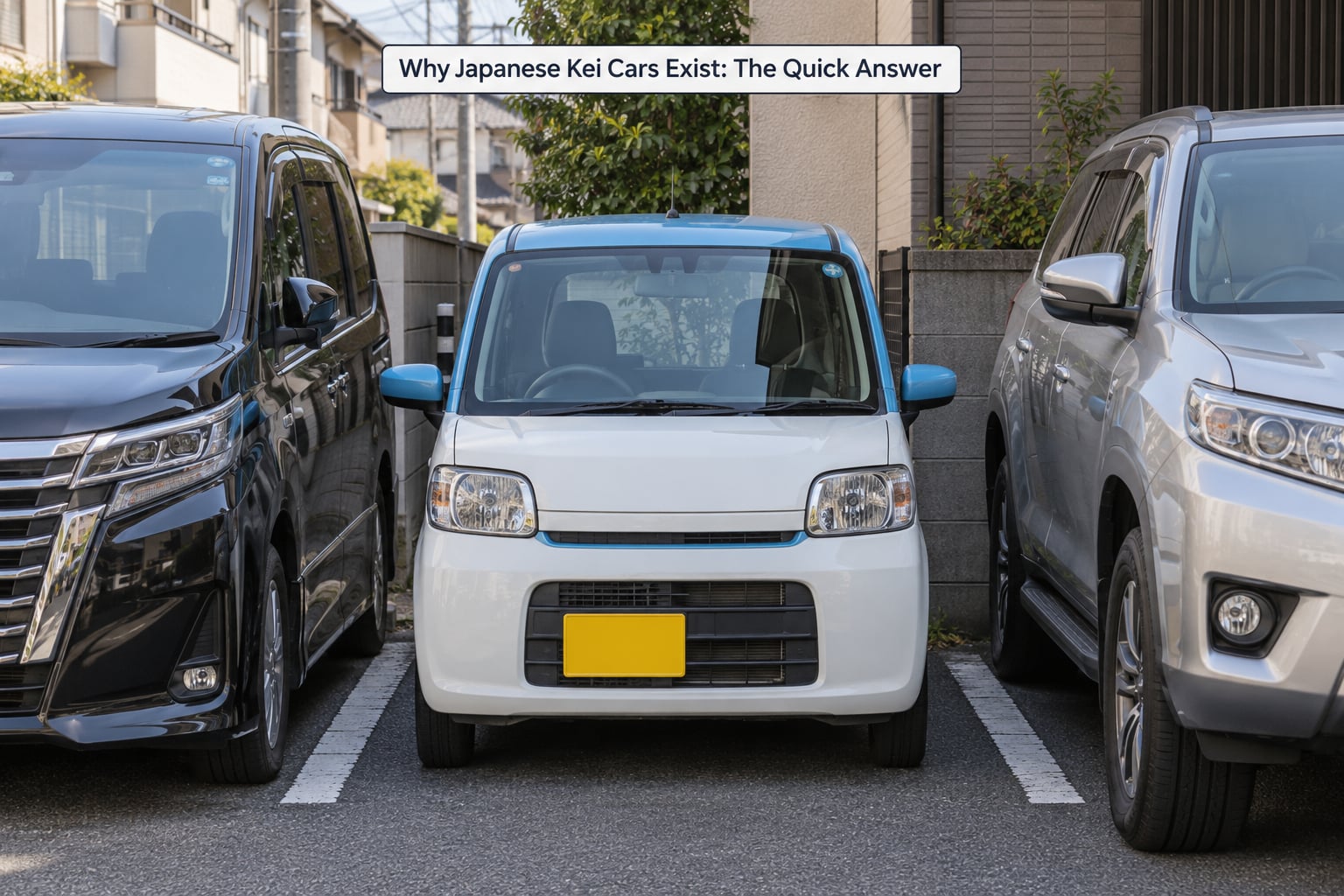
Kei cars exist because Japan created a legal light-motor-vehicle class, keijidōsha (軽自動車), in 1949, then progressively enlarged its limits and rewarded anyone who stayed inside with cheaper taxes, a separate expressway toll class and lighter insurance. That gave every manufacturer the same engineering target for half a century. Today about 40% of all vehicles registered in Japan sit inside it.
The key numbers behind the kei class
- Maximum footprint: 3.40 m long, 1.48 m wide, 2.00 m tall
- Engine cap: 660 cc for combustion, 63 bhp (47 kW) for petrol engines
- Vehicles in the class: 31.9 million, out of 46.7 million registered nationwide as of March 31 2025, an MLIT count
- Share of the fleet: 40.6%, of which 73.2% are passenger vehicles and 26.8% goods vehicles
- Regional extremes: 104.5 kei cars per 100 households in Nagano against 12.2 in Tokyo, December 2025 figures
- Created: July 1949, with the current footprint arriving in October 1998
Read those numbers together and the shape of the category becomes obvious. The fleet is dominated by passenger cars, but more than a quarter of it is commercial: vans and mini-trucks that would be pointless anywhere the roads are wider.
What Is a Japanese Kei Car?
A kei car is a legal classification, not a styling trend. The English word comes from Japanese: kei (軽) means light, and jidōsha (自動車) means motor vehicle, giving keijidōsha, the official term still used in Japanese law. Legally the word also covers certain motorcycles, which trips up people translating it.
A vehicle qualifies when it fits inside the envelope above and, if it has a combustion engine, displaces no more than 660 cc. Battery-electric kei cars are judged on weight and power instead, not displacement. Above 660 cc and below the small-car ceiling, a car is classified as a small car (keishakusha), which is a different tax and insurance bracket entirely.
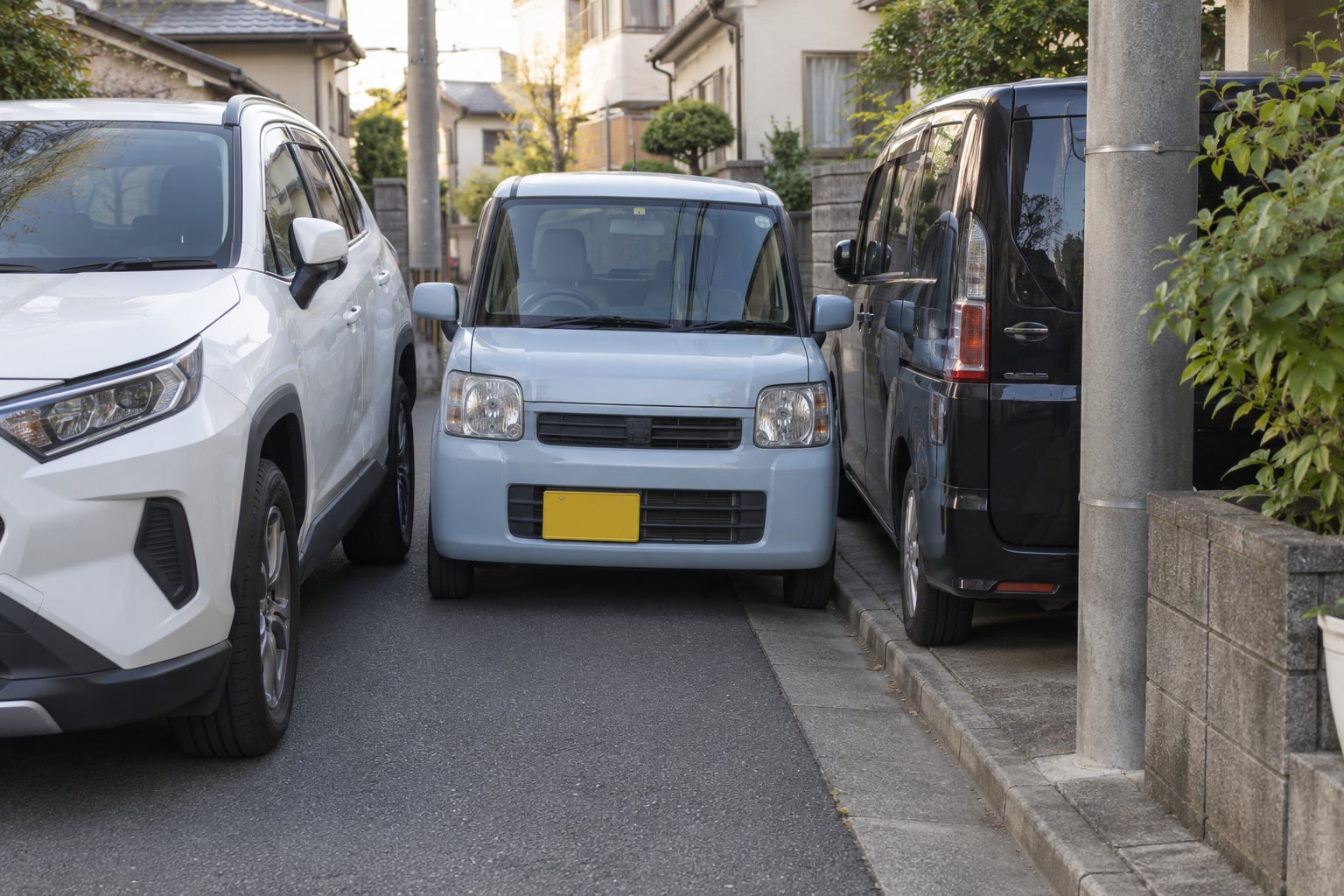
Two things identify a kei car on the road. The first is the yellow number plate, issued under the light-motor-vehicle system, which you will also see on kei vans and mini-trucks. Plate colour is a strong signal, but it is not proof: the NPA classification follows the specification, not the paint.
The second is the inspection cycle. Kei vehicles run on the Light Motor Vehicle Inspection Organization’s own scheme rather than the standard Shaken system, with inspection required at three years and then every two years. Owners also need to declare an off-road storage place for the vehicle, and that requirement applies to kei cars exactly as it does to any other car.
The important part is what the class is not. It is not a body style, because the same envelope contains tall hatchbacks, one-box vans, cab-over pickups and flat-floor cargo vans. It is not an engine configuration either. And it is not a safety rating.
Why Japanese Kei Cars Exist: History and Policy
Why Japanese kei cars exist as a policy tool, not a product idea
In the late 1940s Japan’s domestic car industry was young, its companies were undercapitalised, and the country’s roads, parking and household budgets were all tight. Rather than compete head-on with large American and European makers, the Ministry of Transport drew a line under the smallest useful vehicle and defined a category for it.
The July 1949 standard created a light automobile class, and a 1950 revision split it into two-, three- and four-wheeled groupings. Those early limits were deliberately modest. The 1951 revision set the engine cap at 360 cc, which stayed in place for a quarter of a century.
The strategy is easy to read in hindsight. A small class means cheap tooling, small engines, short supply chains and a price that a factory worker or a small shop could pay. It also gives a manufacturer an obvious second product line to build while the company is still learning how to make cars at all.
The class limits kept moving
| Year | Engine cap | Max length | Max width | What changed |
|---|---|---|---|---|
| 1949 | Not set by capacity | Defined | Defined | The first light automobile standard creates the class |
| 1950 | Not set by capacity | Defined | Defined | Two-, three- and four-wheeled groupings formalised |
| 1951 | 360 cc | 3.00 m | 1.40 m | First hard displacement cap |
| 1976 | 550 cc | 3.20 m | 1.40 m | Oil crisis pushes fuel economy and size up the agenda |
| 1990 | 660 cc | 3.30 m | 1.40 m | Power capped at 63 bhp; the Big Kei era begins |
| 1998 | 660 cc | 3.40 m | 1.48 m | Current length and width in force from October; height cap of 2.00 m added |
Every revision followed the same logic. Producers successfully argued for more room when the economy could take it, and the state granted it because a slightly larger kei car meant cheaper real transport without abandoning the tax break that made the class popular.
The 1990 power fight and the Big Kei era
The 1990 revision was the interesting one, because it capped not only displacement but power, at 63 bhp or 47 kW. Manufacturers hit that wall at different times, and the answer was turbocharging, which multiplies the output of a small engine without increasing its displacement. Honda led the move with the S660 and the mid-engined Beat.
A short, loud wave of enthusiast cars followed: Suzuki’s Cappuccino, the Mazda-badged Autozam AZ-1, the Mitsuoka MC1, Daihatsu’s Copen and the Mid Engine S-Type from Suzuki and Mazda. They were expensive, heavy for their size and slow to sell, and by the early 1990s the manufacturers dropped most of them.
The episode still matters because it settled how a kei engine makes power today. Naturally aspirated units give up around 50 bhp; the ones that reach 63 bhp are turbocharged, and the same 660 cc pair now drives small front-drive kei cars and the flat four-wheel-drive variants.
How the Kei Car Size Rules Shaped Their Design
Why kei cars are tall and boxy
The width limit of 1.48 m is the constraint that drives every other styling decision. With the width fixed and the length capped at 3.40 m, the only direction left for adding usable space is up, so kei cars are tall, upright and boxy. A tall wagon maximises interior height inside a footprint that barely exceeds three and a half metres.
Short overhangs follow from the same maths. Every centimetre of nose and tail is length you cannot use for the cabin, so front-drive kei cars pack the wheels close to the corners, which also helps them slip into tight parking bays.
Sliding doors are close to standard on passenger kei cars and effectively universal on kei vans, because a sliding door needs no swing radius in a street where the parking space on either side may belong to someone else. One-box van packaging then does the rest: short bonnet, flat floor, and a load bay behind or under the seats.
The 660 cc cap is the constraint that decides everything
Displacement limits power, and power limits how you drive the thing. A 660 cc engine in a kei car has the performance of a small family hatchback from the 1980s, which is entirely adequate for city speeds and entirely marginal at highway speed.
That is why kei cars almost universally use CVTs rather than manuals, why the engines are tuned for mid-range torque rather than top-end rush, and why turbocharging exists inside the class at all. It is also why the fastest kei vans and wagons borrow a kei-car version of a larger hybrid system rather than trying to out-drag a normal car.
How the kei envelope compares to small cars elsewhere
| Vehicle | Length | Width | Height | Inside kei limits? |
|---|---|---|---|---|
| Kei class maximum | 3.40 m | 1.48 m | 2.00 m | Yes, by definition |
| Fiat 500 (approximate) | 3.55 m | 1.63 m | 1.48 m | No, longer and much wider |
| Toyota Aygo (approximate) | 3.53 m | 1.64 m | 1.50 m | No, longer and much wider |
| Smart Fortwo (approximate) | 2.70 m | 1.63 m | 1.61 m | Shorter, but too wide |
The width column is the interesting one. The Smart Fortwo is famously tiny and still fails on width, which tells you how narrow the kei box really is.
Why Japanese Kei Cars Are So Popular in Cities
The urban case is the strongest one and the least interesting, because it is mostly geometry. Japanese streets in dense neighbourhoods are narrow, apartment parking bays are small, and the alternative to a kei car is often not a bigger Japanese car but no car at all, since many households live where a vehicle needs an off-road parking space that does not exist.
On top of the geometry sits the money. Staying in the class means paying the light-vehicle tax rather than the standard private vehicle tax, using the kei category on NEXCO expressways, and generally insuring for less. Osaka City’s published schedule puts the standard annual light-vehicle tax for a private passenger kei first inspected on or after April 1 2015 at 10,800 yen, with different rates for older, commercial and low-emission cases.
Kei is not automatically the cheap option, though. Larger kei vans, kei trucks and older vehicles sit in different brackets, insurance still depends on where you live and how you drive, and the used market for popular models like the N-Box can cost more than a small Japanese hatchback.
Where the numbers are actually biggest
The image of Japan as a nation of kei drivers is wrong, and the regional data shows it. Rural prefectures with weak rail coverage dominate the count; the largest city does not.
| Prefecture | Kei cars per 100 households |
|---|---|
| Nagano | 104.5 |
| Tottori | 102.3 |
| Shimane | 102.1 |
| Osaka | 28.1 |
| Kanagawa | 24.0 |
| Tokyo | 12.2 |
These are December 2025 household figures. In Nagano, households outnumber kei cars, meaning many families run more than one. In Tokyo, where rail reaches everywhere and parking is brutally expensive, a kei car is a niche choice for people who need a car occasionally rather than daily.
So the real reason kei cars are common is not that Japan is crowded. It is that a large part of Japan is rural, hilly or mountainous, has no useful rail service, has narrow roads and small delivery businesses that need to move goods cheaply.
What Are the Main Advantages and Disadvantages?
Where they win
- Running costs: light-vehicle tax, a separate NEXCO toll class, cheaper insurance categories and low fuel use add up to a genuinely lower monthly figure than a normal small car
- Parking: the footprint fits bays that a normal car cannot enter, and the requirement to have an off-road storage place is easier to satisfy with a car this size
- Roads: narrow residential lanes, mountain roads and farm tracks that stop a normal car
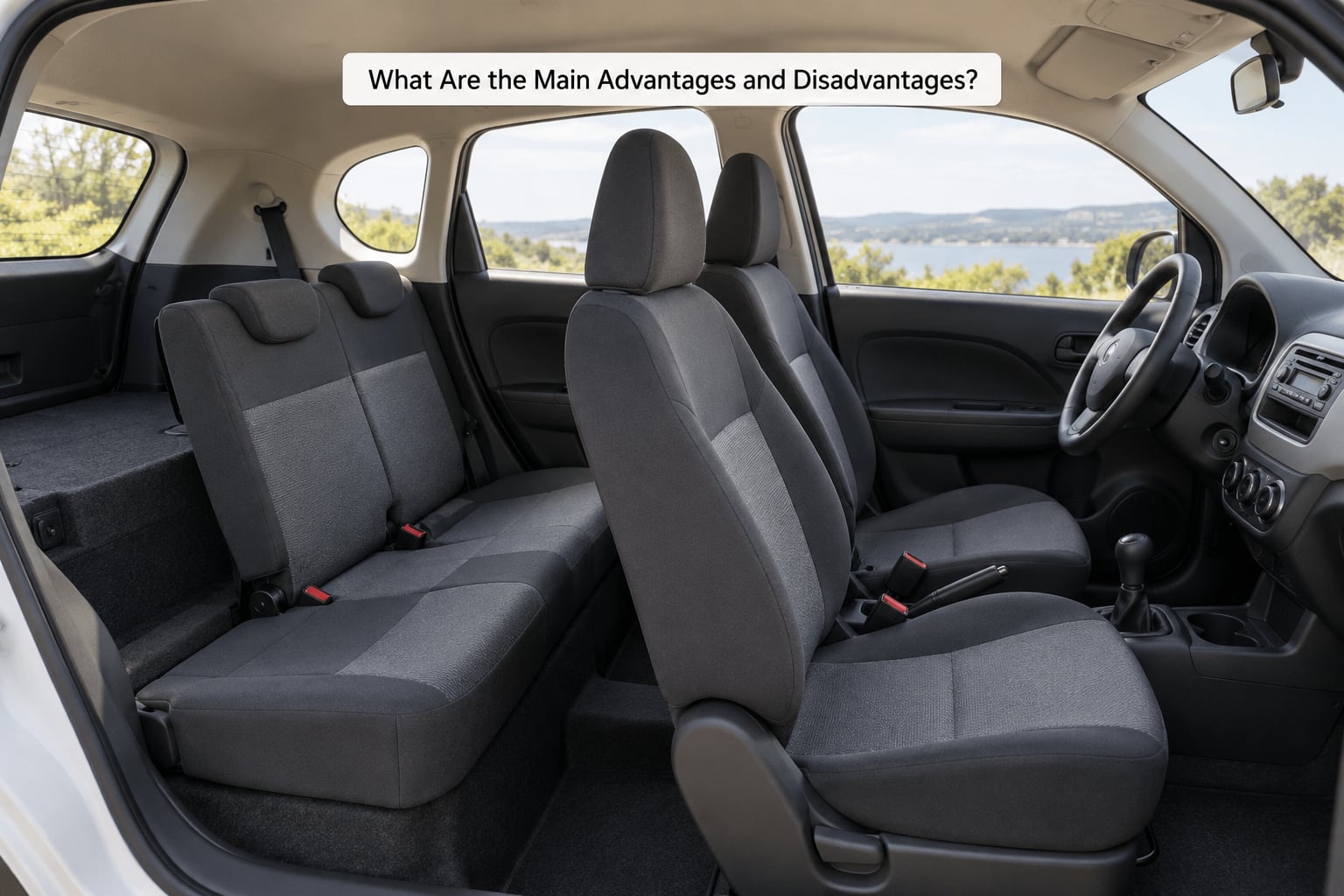
- Packaging: the tall one-box body gives more interior height than most European superminis of similar length
- Equipment: modern kei cars carry automatic emergency braking, rear cameras and 360-degree view systems that were optional on larger cars not long ago
- Maintenance: simple mechanicals, widely available parts and a service network that exists in even small towns
The honest objections
None of this makes a kei car a good motorway car. The 63 bhp ceiling means merging at speed needs planning, and long climbs at motorway speed are where the class shows its limits. An owner on a kei truck forum compared one to an older Land Rover Defender: bumpy, lots of shifting, needing a lot of throttle to keep up. That is the fairest summary of the highway experience.
Cargo capacity is the second limit. A kei van can carry remarkably little once the seats are up, and the roof height that creates interior space also creates a high centre of gravity that some drivers dislike.
The safety argument is the one most often misused. Kei is a size and tax category, not a crash verdict. JNCAP results vary by model and year, and small and light cars are structurally disadvantaged in a high-speed collision with something much larger. A common forum claim that Japan’s low accident rate comes from small cars is wrong; the standard roads and low speed limits do more work than the vehicles do.
So why Japanese kei cars exist is a good question, but the honest answer is that they were built for a specific set of Japanese conditions, and outside those conditions they are a compromise rather than a bargain.
How Kei Cars Compare With Other Japanese Vehicle Classes
| Class | Typical size | Main job | Main trade-off |
|---|---|---|---|
| Kei passenger car | 3.40 x 1.48 x 2.00 m, up to 660 cc | City commuting, second car, short trips | Poor at motorway speed, small boot |
| Kei van (one-box) | Same envelope, flat floor and tall load bay | Delivery, small business, family transport | Noisy, limited payload when seats are up |
| Kei truck (cab-over pickup) | Same envelope, flat load bed | Farming, construction, landscaping, municipal work | Not road legal for heavy haulage beyond the bed rating |
| Small car (keishakusha) | Up to about 3.7 m long and 1.60 m tall | General family use, longer trips | Higher tax, insurance and toll class |
| Mini-van and compact MPV | Larger in every dimension | Seven seats, long-distance comfort | Harder to park, much higher running costs |
Popular models and the badge behind them
Part of what confuses newcomers is that the same kei car often appears under several names. Subaru, Toyota, Mazda and Nissan all sell rebadged versions of Daihatsu and Suzuki hardware, and importers outside Japan often list them as separate cars.
| Model | Body type | Built by | Also sold as | Typical use |
|---|---|---|---|---|
| Suzuki Alto | Tall wagon | Suzuki | Toyota Pixis | Budget city car |
| Suzuki Lapin | Tall wagon | Suzuki | Suzuki Alto Lapin in some markets | Retro styling, city use |
| Honda N-Box | Tall one-box | Honda | N-Box Custom and N-Box Slash variants | Space-first city car |
| Daihatsu Mira | Tall wagon | Daihatsu | Subaru Stella, Toyota Miraj | City commuting |
| Daihatsu Tanto | One-box | Daihatsu | Mazda e-Sola | Tall load space, city parking |
| Suzuki Every | One-box van | Suzuki | Toyota TownAce, Daihatsu Wagon R | Delivery and family transport |
| Suzuki Carry | Cab-over truck | Suzuki | Suzuki Every Truck | Trade and farm work |
| Daihatsu Hijet | Cab-over truck | Daihatsu | Subaru Sambar, Mazda Boxer, Nissan Vanette | The best-known kei truck |
| Nissan Sakura | Tall one-box | Nissan | Shared hardware with Daihatsu and Suzuki vans | City electric kei |
| Honda Acty | Cab-over truck | Honda | Honda Acty Truck | Light commercial work |
Why the Class Barely Left Japan
The kei class is close to invisible in North America and Europe, and the reasons line up neatly. Outside Japan there is no tax bracket attached to 3.40 m of length, so the entire financial advantage disappears.
Then there is certification. Importing a kei car into the United States means meeting Federal Motor Vehicle Safety Standards and getting the vehicle certified, which manufacturers rarely bother with for a model they never intended to sell there. The US Department of Transportation treats crashworthiness certification for imported vehicles as a formal process, not a formality.
Demand is the third wall, and it is the hardest one. When Smart withdrew from the US market in 2019, it made the case that small cars did not sell. Later figures supported that: roughly 13,000 Mirages sold in a full year, and about 1,076 Fiat 500e units through October of a single year. American buyers had already been pushed toward crossovers and trucks.
Europe has a version of the same problem. A long-running thread on r/Autos asking why Europe rejected Japan’s smallest cars drew the answer repeatedly: European roads are wider, motorway speeds are higher, and importing means dealing with insurance classes that punish small, slow cars. A UK owner reported a 6-month wait to register a Honda N-Box, and another reported insurance on a Honda Beat at 1,400 pounds a year against 500 for a much larger 1988 Toyota MR2, which ended the ownership.
Kei cars have found a real niche outside Japan, just not a commercial one. There are N-Box Slash clubs in Russia, kei truck groups in Canada and the United States, and a steady trickle of imports for people who want the character more than the performance. Some US owners are actively lobbying to keep imported kei trucks legal against state-level bans.
Are Kei Cars Still Relevant Today?
The case for the class has narrowed but not disappeared. Urban Japan is still short of parking, short of narrow-road access and increasingly short of drivers, since the population is old and licence holders are ageing fast. A kei car remains the cheapest way for an elderly driver to keep a car rather than give it up.
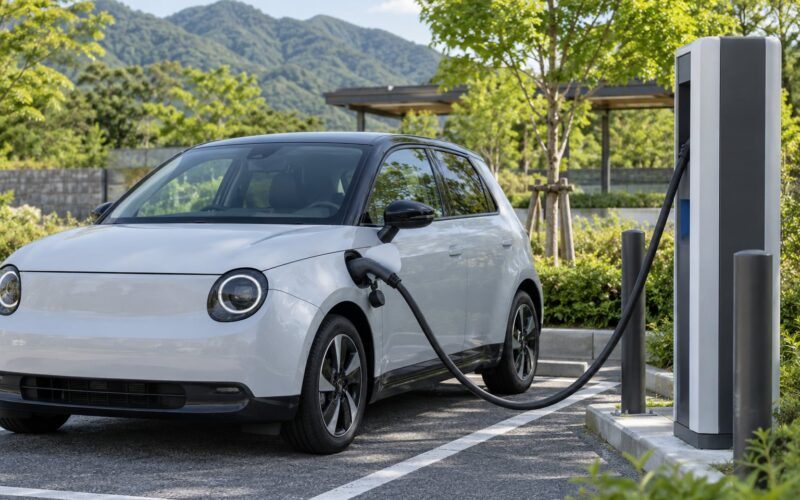
Electrification helps the class more than it helps bigger cars, because the tax break still applies to electric kei models and the battery packs fit inside the same flat-floor envelope. Several manufacturers now sell electric or mild-hybrid kei vans and wagons, and the packaging advantage of the one-box body makes the floor space useful.
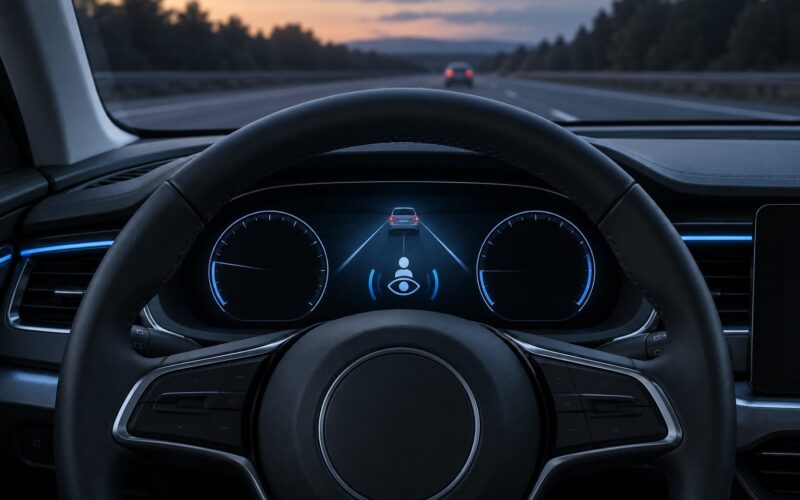
Driver assistance is closing the gap that used to make small cars feel outclassed. Automatic emergency braking, adaptive cruise and 360-degree cameras are now standard on mainstream kei cars, which directly addresses the safety criticism the class carried for years.
Development work is pointing the same way. Small autonomous delivery vehicles that operate inside the kei envelope are a natural fit for Japanese logistics, and the same constraint that limits a kei engine’s power does nothing to limit a battery’s packaging. Whether that becomes a consumer category or stays a commercial experiment is the open question.
Where kei cars are weakest is anything involving distance. A country with high-speed roads and long rural journeys has no reason to regulate a class of small car, and that is a fair summary of why Japanese kei cars exist and why they stay at home.
Frequently Asked Questions
Are kei cars only designed for elderly drivers?
No. Elderly drivers and second-car households are a big share of kei ownership, especially in rural prefectures, but the class was created to serve post-war households who could not afford anything larger. Today the core users also include city commuters, small delivery businesses and farmers who need a vehicle narrower than a normal car on a mountain road. The common feature is the environment, not the driver’s age.
Can a kei car carry four adults and luggage?
Four adults will fit in most passenger kei cars, but only just. The flat floor and tall roof buy back some of what the footprint takes away, so headroom is better than in a normal small car of the same length. Luggage space is the weak point. A tall wagon with the rear seats up carries very little, so kei owners who travel usually fold or slide the rear seats and lose passenger capacity instead.
Are Japanese kei cars safe for highway driving?
Safety and speed are separate questions. Kei is a size and tax class, not a crash rating, and JNCAP results differ between models and years, with small and light cars structurally disadvantaged against much larger vehicles in a high-speed impact. Highway driving is legal and common, but the 63 bhp power cap means merging and long climbs need planning. Frequent expressway use is the one use case the class was never designed around.
Why are kei cars cheaper than regular compact cars?
Because staying inside the legal envelope earns several separate discounts at once. You pay the light-vehicle tax instead of the standard private vehicle tax, use the kei category on NEXCO expressways, and normally insure for less. Makers also save on development and tooling, which keeps purchase prices down. It is not automatic, though: commercial kei vehicles, older cars and larger kei vans sit in different tax brackets.
Can foreigners buy and drive a kei car in Japan?
Yes. Buying and registering a kei car in Japan follows the same process as any other vehicle, and an International Driving Permit with the right country grouping is the most common route for visitors. A Japanese licence is not required. Foreign buyers should know that an off-road parking place must be declared for registration, that kei vehicles follow the three-year light motor vehicle inspection rather than the standard Shaken, and that resale values in Japan are higher than abroad.
Are electric kei cars available in Japan?
Yes, and the share is growing. Electric kei models qualify for the same tax treatment as combustion kei cars, and the one-box body gives a flat floor that suits a battery pack well. Nissan, Honda, Daihatsu and Suzuki all sell or have sold electric kei vans and wagons. Mild-hybrid petrol kei cars are also widely available, which many buyers prefer for the smaller battery and the lack of charging dependence.
The Short Version
Kei cars exist because a government decided that the cheapest useful car should have its own legal category, then made that category worth staying in through taxes, tolls and insurance. The size rules came later, and every one of them was a compromise between what people wanted and what the road would take.
If you want to understand the class properly, start with the tax table rather than the styling. Once you see that the reward is financial rather than aesthetic, the tall one-box shapes, the sliding doors, the 660 cc engines and the mini-truck fleets all stop being quirks and start being answers to a very specific set of Japanese conditions.