Japanese ticketing apps prevent scalping with a layered system, not one trick. Demand is spread across a lottery instead of a first-come queue, each ticket is issued in a buyer’s real name to one registered account, the digital ticket is tied to a specific phone and shows a QR code that refreshes instead of a static screenshot, and staff check photo ID against the name on the ticket at the door. A law that makes unauthorized resale a punishable offence backs all of it up.
The interesting part is where the layers leak. Japan’s rules are strict enough that a legitimately bought ticket often cannot even be given to a friend, and coverage of the crackdown still describes an active grey market. Here is how each safeguard works, what it actually stops, and where it breaks.
Table of Contents
- 1How do Japanese ticketing apps reduce scalping?
- 2Which Japanese ticketing systems are most vulnerable?
- 3How lotteries and timed access keep ticket queues fair
- 4Why a lottery beats a morning scramble
- 5How identity checks and purchase limits block bulk buyers
- 6How ticket transfers and resale rules limit second-market abuse
- 7Why QR codes, mobile tickets, and dynamic displays complicate scalping
- 8What can still defeat anti-scalping systems in Japan?
- 9Frequently Asked Questions
- 10Do Japanese ticket lotteries guarantee you a ticket?
- 11Can I use a screenshot of a Japanese digital ticket?
- 12Are Japanese concert tickets non-transferable?
- 13Is scalping illegal in Japan, and what is the penalty?
- 14What photo ID do Japanese venues accept, and can foreigners use it?
- 15Why was my Japanese playguide application rejected?
- 16Conclusion
How do Japanese ticketing apps reduce scalping?
Eight mechanisms do most of the work. They appear together on most major events, and individual organizers pick and choose from them.
- Lottery allocation (抽選, chusen) replaces the first-come queue, so speed at the checkout no longer decides who wins.
- Named issuance puts the buyer’s legal name on the ticket and on the account, which kills anonymous resale.
- Real-name ID checks (本人確認, honnin kakunin) at the door compare a photo ID against the name printed on the ticket.
- Face-photo registration completes before entry, so the person who applied is the person who arrives.
- Non-transferable digital tickets bound to one account and, often, one SIM card or device.
- Per-person purchase caps and one-application-per-person rules block bulk buying.
- Official fixed-price trade lets an unused ticket be resold at face value through the organizer’s own platform, with an admission guarantee.
- Server-side traffic controls such as duplicate-login blocking, bot filtering and blacklists, which sit behind the app rather than in it.
Here is the same set of safeguards against the problem each one targets, and where each one stops working.
| Safeguard | Scalping problem it targets | Main limitation |
|---|---|---|
| Lottery allocation | Bots buying in the first second | A chance at a ticket, not a promise of one |
| Named issuance | Anonymous buying and casual resale | Permanent: no refunds or name changes after payment |
| Photo ID check at the door | Resellers passing the ticket to someone else | Depends on the door queue; overruns get lax |
| Face-photo registration | Proxy attendance and duplicate use | Needs a compatible phone camera |
| SIM or device lock | Screenshots and forwarded tickets | Walls out overseas buyers who lack a Japanese mobile line |
| Per-person caps | Bulk buying with multiple accounts | Only effective when paired with identity checks |
| Official fixed-price trade | Black market premium pricing | Usually needs a Japanese bank account to list a ticket |
| Bot and traffic filtering | Automated bulk purchasing | Constantly retested and worked around |
Which Japanese ticketing systems are most vulnerable?
Capacity decides it. Anything fixed and small creates a queue worth attacking: stadium concerts, arena dates with a hard venue limit, music-theatre and musicals with a few hundred seats, and timed exhibition entries such as the Ghibli Museum or Nintendo Museum. Long-running theatre shows sell out over months, which spreads demand rather than concentrating it.
Not every resale is abuse. A fan who cannot attend and returns a ticket at face value through the official platform has done nothing wrong. A fan who bought two and wanted one, or who entered a draw they saw on a fan forum, is grey at worst.
The abuse worth naming is narrower: automated bulk buying, account farming, insiders buying blocks at the organizer, people running several tickets through one device or one identity, and listings on unauthorized marketplaces that strip the terms attached to the ticket.
How lotteries and timed access keep ticket queues fair
Why a lottery beats a morning scramble
First-come-first-served sales reward preparation, tooling and luck with the network. A lottery (抽選, chusen) replaces that with a draw. Everyone who applied is in the same pool, bots lose their edge, and results are usually published at a fixed time rather than decided by whoever refreshed fastest.
Timed access does the rest. Fan club presales (先行予約, senkou yoyaku) open before the general sale (一般販売, ippan hanbai), each with its own queue, and waiting rooms release people in controlled batches so the app absorbs load instead of collapsing. Seat details are often withheld until close to the doors, which removes the map-reading advantage.
Worth being blunt about: entering the draw does not mean getting a ticket. Demand routinely exceeds venue capacity by a wide margin, so a lottery shifts the odds rather than ending the shortage.
How identity checks and purchase limits block bulk buyers
Real-name ticketing is the load-bearing wall. Your legal name is tied to the account and printed on the ticket, then checked at the door against a photo ID. The ZEROBASEONE fan concert policy page is a clear English example: it lists eleven accepted photo ID types, requires facial photo registration before entry, and states that names cannot be changed. If resale is detected, both the exhibitor and the applicant can be refused entry, and the identity of the seat holder may be checked.
Purchase limits close the obvious loophole. Many events cap a single verified account at one or two tickets, sometimes one application per person across all presale stages. That rule does almost nothing on its own, because anyone can register ten accounts, which is why it only bites alongside the identity layer.
Account creation itself is hardened. Playguides (プレイガイド) require phone verification, and two-factor registration on major services is aimed squarely at mass fake accounts. Forum users consistently credit those controls, not the purchase caps, as the reason bulk buying is hard.
The trade-off is real and users say so. Registering a katakana version of a foreign name that does not match a passport is a routine source of rejected entries, and names cannot be corrected after payment. Some venue rules also print a consecutive entry number (整理番号, seiri bangou) on the ticket and reconcile it against the count on the door.
How ticket transfers and resale rules limit second-market abuse
The legal backbone is the Act on Ensuring the Proper Distribution of Show and Event Tickets. English sources disagree on its dates: it was enacted in May 2018, parts of it applied from 2019, and the main resale prohibitions have applied since the 2024 amendment of the Cabinet Order. The penalty is up to one year in prison or a fine of up to 1 million yen. That legal backing is what lets a platform refuse entry to anyone but the registered buyer without the buyer having any recourse.
The practical route out of an unwanted ticket is official trade. Tixplus and organizer-run services such as Ticket Platrade list an unused ticket at face value, with an admission guarantee attached, so the second sale cannot quietly become a premium sale. Transfer windows are restricted: trade usually closes at a fixed point before the event rather than staying open until showtime.
Those platforms are strict about the seller. Listing generally requires identity verification, an address confirmed by postal mail, and payment is released after the buyer confirms entry worked. That escrow model is unusual for resale and it is a decent trust signal, though it also narrows who can take part: a Japanese bank account is typically needed to receive funds, which shuts out most overseas buyers.
Everything outside that channel is prohibited, and the prohibitions reach further than people expect. Users on r/japanlife describe 同行募集 listings on ticket.co.jp as a grey-market workaround dressed up as a companion search. That is resale in substance.
Why QR codes, mobile tickets, and dynamic displays complicate scalping
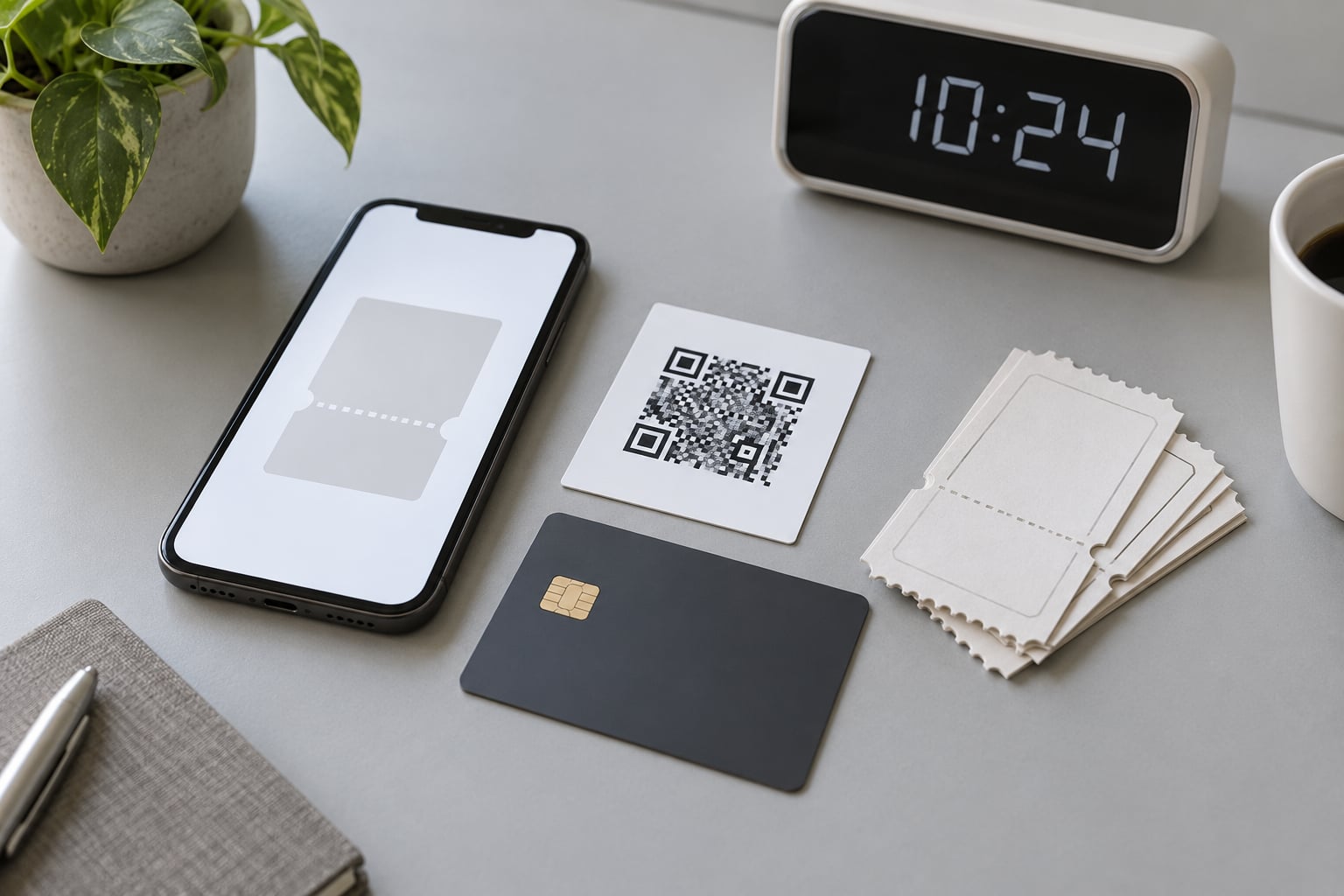
A screenshot is the oldest trick in the book, and it is the one Japanese digital tickets are built to break. Many tickets are issued to one account and rendered inside an app rather than emailed, some are bound to the SIM card of the mobile line that bought them, and the QR code refreshes on a timer so a captured image expires within seconds. A screenshot may look convincing and still be useless at the gate.
Before paying anyone outside an official platform, check four things: whether the ticket is app-bound rather than a PDF, whether the display refreshes, whether the seat and event match what you were told, and whether the account name is the name on your ID. A seller who asks to borrow your phone, take a copy of your ID, or log in on your device is not selling you a ticket.
What can still defeat anti-scalping systems in Japan?
None of this makes scalping disappear. Bots adapt to every timed queue and traffic filter, and vendors report that automated software still handles a large share of online ticket bookings, with more than four in ten automated on some entertainment sites. Those figures come from bot-management research and age fast, but the direction has held for years.
Insider buying is the quieter route. Staff and agency contacts can allocate blocks before a public draw and sell the surplus, and no amount of server-side filtering touches that. Account farming works too: verified accounts built over months, then used once and abandoned, defeat caps that are per-account rather than per-person.
Unauthorised resale adapts socially rather than technically. Listings on Japanese resale marketplaces, fan-to-fan offers on social media, and proxy buying services for overseas fans all operate outside the trade platforms, and Japanese coverage of the crackdown still describes a working grey market rather than a solved problem. International demand adds pressure, since overseas buyers who cannot get through official channels become the easiest customers to find.
So the fair summary is this: safeguards reduce abuse, they do not end the secondary market. They shift the odds and raise the cost, which is why most regular attendees say the trade-off is worth it.
Frequently Asked Questions
Do Japanese ticket lotteries guarantee you a ticket?
No. A lottery (chusen) gives you an equal shot, not a confirmed seat. When demand exceeds venue capacity, most applicants lose, and winners are drawn randomly and notified at a published time. Losing a draw is a normal outcome, not a sign that the system worked against you. The advantage over a first-come queue is that entry speed, tooling and luck with the network stop deciding the outcome.
Can I use a screenshot of a Japanese digital ticket?
Usually not, and it is worth checking before you rely on one. Many Japanese digital tickets are issued inside an app tied to one account, and some are bound to the SIM card of the mobile line that made the purchase. The QR code refreshes on a timer, so a captured image expires within seconds and will fail a gate scan. A PDF or screenshot that looks right is the single most common sign of a fake or a ticket that has already been used.
Are Japanese concert tickets non-transferable?
For most high-demand events, yes. Your legal name is printed on the ticket and checked against photo ID at the door, so handing it to a friend does not work. If you cannot attend, the sanctioned route is official fixed-price trade such as Tixplus or an organizer-run trade service, where the ticket is resold at face value with an admission guarantee. Transfer windows usually close well before the event, and names cannot be changed after payment.
Is scalping illegal in Japan, and what is the penalty?
Unauthorized resale is prohibited under the Act on Ensuring the Proper Distribution of Show and Event Tickets, enacted in May 2018, with parts applying from 2019 and the main resale prohibitions applied since a 2024 Cabinet Order amendment. The stated penalty is up to one year in prison or a fine of up to 1 million yen, or both. This legal backing is what allows platforms to refuse entry to anyone who is not the registered buyer.
What photo ID do Japanese venues accept, and can foreigners use it?
Organizers publish their own accepted list, commonly eleven document types including passports, residence cards and My Number Cards. Foreign passports are generally on that list, so overseas buyers are not excluded by the document itself. What causes trouble is name matching: a katakana entry that does not match the passport spelling can lead to a refusal at the door, and names cannot be corrected after payment. Check the organizer page before you apply.
Why was my Japanese playguide application rejected?
The usual causes are a phone number the platform will not accept, a name that does not match your ID, a duplicate application across presale stages, or missing the window entirely. Many playguides want a Japanese 070, 080 or 090 mobile number, and some fan club registration links stop accepting overseas sign-ups outside Japanese daytime hours, which users on r/sakanaction have flagged as a recurring barrier. Register early and match your name exactly to your document.
Conclusion
Start on the official platform and nothing else. Register the account and the phone number well before the sale, enter every presale window that applies to you, get the name on the account exactly right, and keep the payment method working. If you cannot go, use official fixed-price trade. Avoid unofficial links, guaranteed-seat claims and any seller who wants your ID, your login or your phone.