Because a coin balance lets an app sell reading a piece at a time without charging real money for every episode. That balance absorbs the app store’s cut, absorbs card processing fees, can be priced differently in each country, and quietly separates the small amount you spend from the money in your bank account.
The model came out of Japan, where phone billing for strangers was rare, then spread across Asia and into English-language services. Today almost every large manga app runs on it, including WEBTOON, Mangamo, Lezhin, Tapas, Tappytoon, INKR and Manta. Each one names its own token and sets its own rules, so the same word covers several different systems.
Here is what those coins are, what they buy, and why publishers keep reaching for them instead of a flat monthly fee.
Table of Contents
- 1What Are Coin Systems in Manga Apps?
- 2Why Manga Apps Use Coin Systems
- 3Why Manga Apps Use Coin Systems for Flexible Spending
- 4What Can Readers Buy With Manga App Coins?
- 5How Do Coins Differ From Gift Cards, Subscription Tokens, and Store Credit?
- 6Are Manga App Coins the Same Across Countries and Platforms?
- 7Are Manga App Coins Worth It?
- 8Frequently Asked Questions
- 9Can I use manga app coins on any manga service?
- 10Do manga app coins expire?
- 11Can I buy manga chapters without paying for app coins?
- 12Are manga app coins the same as Apple or Google credit?
- 13Why are coins cheaper or more expensive in Japan?
- 14Can I get a refund for unused manga app coins?
- 15Conclusion: What to Check Before Buying Coins
What Are Coin Systems in Manga Apps?
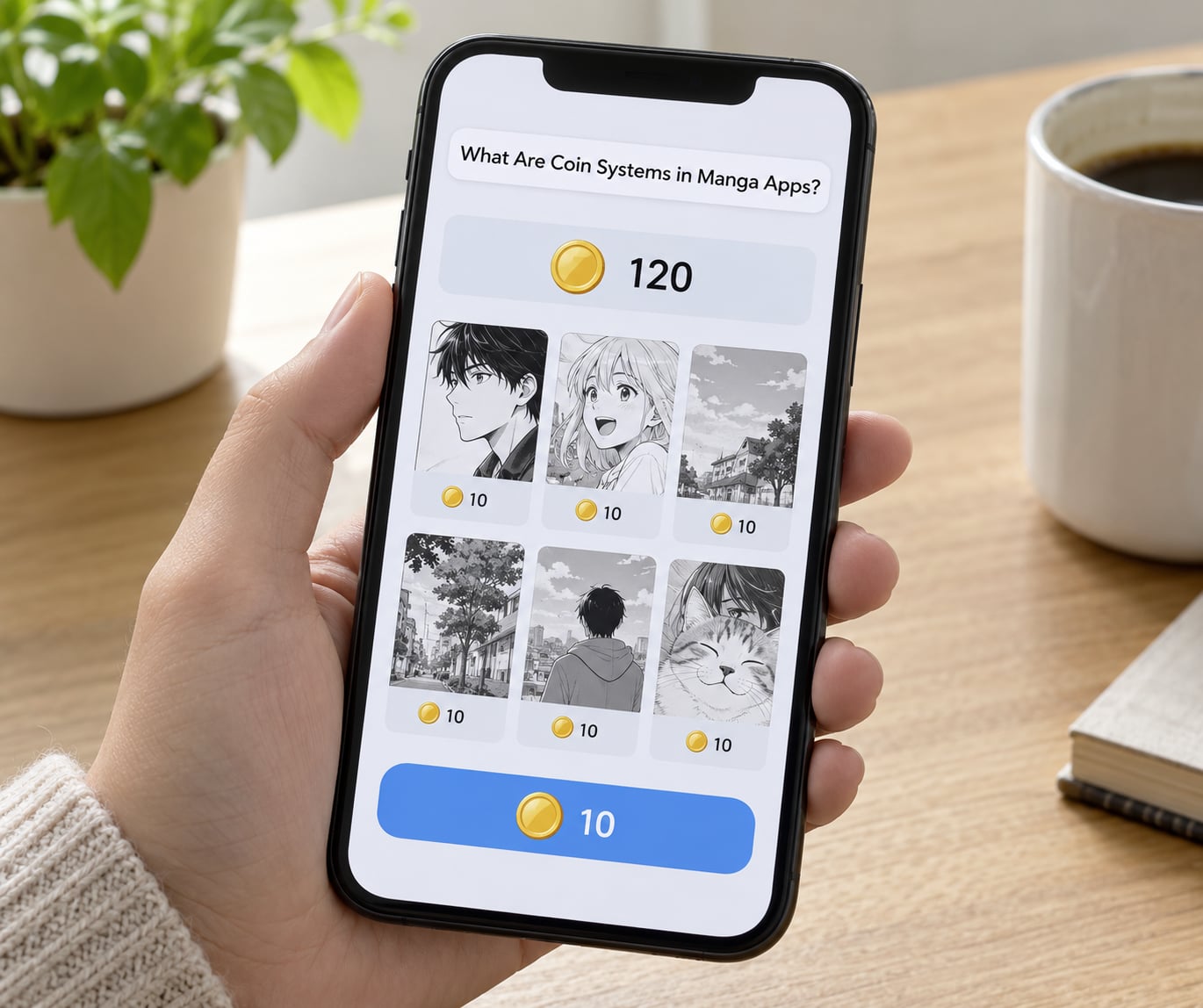
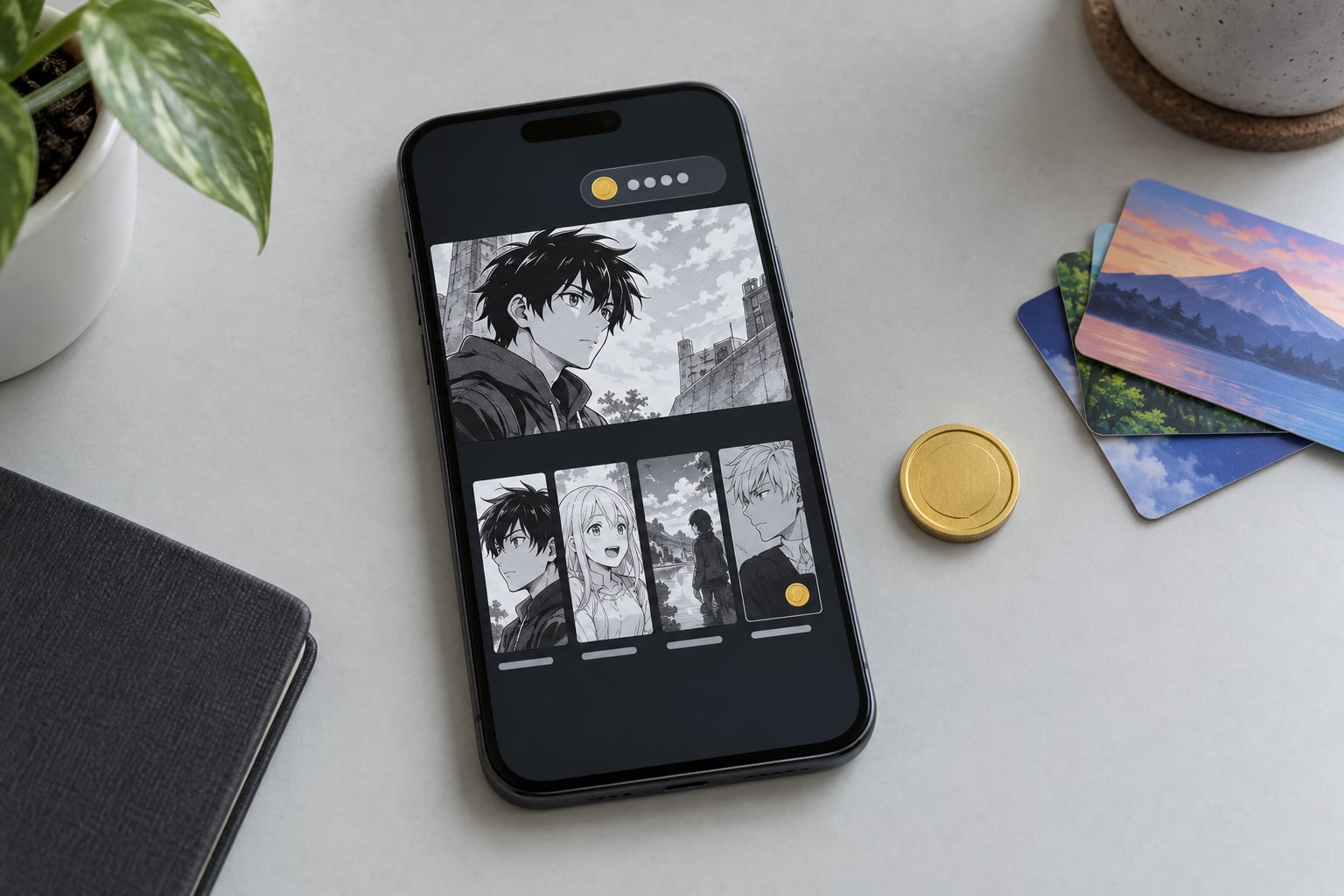
A coin system is an app-specific balance. You buy a bundle of tokens through the app store, and the app credits them to your account. From then on, every premium episode, volume or feature you unlock is paid for by spending tokens rather than by handing over money again.
What makes this different from just charging per chapter is that the balance sits between you and the purchase. An episode costs a set number of coins. Buying coins costs money. Those are two separate events, and the app controls both.
Most services keep the balance inside the app and tied to a specific account. WEBTOON’s help documentation separates coins by language, so a balance held in one language cannot be spent on another. Mangamo’s support pages describe coins as the way to redeem chapters and volumes, and they point out that anything you redeem stays with you after a subscription ends.
The important thing to hold onto: these are not credits, not points you can exchange for anything outside the app, and not money. They are a closed-loop unit that only means something inside one service.
Why Manga Apps Use Coin Systems
There are five reasons behind the model, and they compound. Remove any one of them and a subscription looks more attractive to the publisher.
1. Microtransaction economics. A premium episode costs a reader very little, which makes it a poor candidate for a card transaction. Card networks charge a percentage plus a fixed fee per purchase, and that fixed fee does not shrink when the purchase does. A half-dollar transaction loses money before the publisher shares a cent of it with an artist. Coins solve this: the reader pays once for a large block of value, and every later unlock is a bookkeeping entry that costs nothing to process.
2. App store billing rules. Digital goods sold inside an iOS or Android app are generally billed through the store, which takes its own commission. The store also decides what payment methods are allowed. Japanese readers have historically been reluctant to hand card details to unfamiliar apps, and card penetration among younger readers is limited. Routing payment through a familiar store and its stored balance solves a payment problem as much as a pricing one.
3. Regional price discrimination. A single token price lets one app serve dozens of markets. The same reader’s fifty coins cost one figure in Tokyo and another in a lower-income market, without maintaining separate catalogs, buttons or checkout flows. Nobody has to be told they are on a regional plan, because the currency itself is the regional switch.
4. Psychological distance from real money. Spending tokens feels different from spending money. Coins do not look like currency, do not appear on a bank statement as a charge, and turn a purchase into a small decision instead of a considered one. The same readers who abandon a checkout over a subscription will tap a confirmation for a single episode. A few publishers pair this with a bonus, so a larger pack quietly delivers more tokens than the buyer paid for.
5. Hybrid flexibility. Coins sit alongside subscriptions rather than replacing them. Mangamo runs both: a Plus membership that includes a coin grant each cycle, plus coin purchases for individual chapters and volumes. One system serves the reader who reads a few episodes a month and the reader who buys a whole series.
Why Manga Apps Use Coin Systems for Flexible Spending
One balance can pay for many different things, which is what makes coins more useful than a single-purpose ticket. A reader might spend a few tokens on a weekly chapter, then save up for a volume purchase that costs many more, then use a subscription grant without touching the balance at all.
That flexibility matters because reading habits vary enormously. Some series update weekly and reward the patient reader who waits. Others are completed series that people binge in a single weekend. A single subscription price fits the first reader badly and the second reader reasonably well; a token balance lets both pay a sensible amount.
It also gives apps room to run promotions. Bonus tokens on larger packs, discounted volume bundles, and free grants for members all adjust the effective price without changing the sticker number next to any episode.
What Can Readers Buy With Manga App Coins?
The exact list depends on the service, but the categories repeat across apps.
- Individual premium episodes. The core use. One chapter, one set number of tokens, permanent access to that chapter.
- Early access to ongoing series. WEBTOON calls this Fast Pass. You see new episodes ahead of free readers, and the unlock sticks.
- Daily access to free episodes. WEBTOON’s Daily Pass gives free readers one advanced episode a day, with coins available when you want more without waiting.
- Volumes and series bundles. Mangamo lets you redeem whole volumes and Kodansha series with coins, which works out cheaper per chapter than buying episodes one by one.
- Ad-free or enhanced reading. Some apps spend tokens on removing advertising rather than on content.
- Member grants. Mangamo credits Plus subscribers with coins on top of the subscription, so a paid member gets both flat access and token spending power.
Two categories that read like coin features are really not. Promotional codes and event rewards do add tokens, but the amount is set by the app rather than the reader. And tokens cannot be transferred between services, so a balance built up on one app does nothing on another.
How Do Coins Differ From Gift Cards, Subscription Tokens, and Store Credit?
These get confused constantly, and the differences matter when something goes wrong. A manga app coin is the narrowest of the group.
| Type | Where it works | Expiry | Refunds |
|---|---|---|---|
| Manga app coins | One app, one account, often one language | Varies by publisher; some set a limit, some do not | Usually treated as spent value once credited |
| Manga gift card | The service it names, sometimes as a subscription code | Often set by the retailer | Depends on the retailer |
| Subscription access | The catalog, while the membership runs | Ends with the billing period | Handled as a recurring service, not a balance |
| App store credit | Any app from that store, plus some subscriptions | Some balances expire, some do not | Generally non-refundable |
The practical difference shows up when you cancel. End a subscription and you lose access, except for chapters or volumes you already redeemed with coins. End store credit and it is usually still there for your next app. That is why Mangamo makes a point of saying redeemed content stays yours.
Are Manga App Coins the Same Across Countries and Platforms?
No, and this causes more frustration than the model deserves. The same app can behave like two different services depending on where you are.
Separate wallets by platform. Coins bought on iOS and coins bought on Android frequently sit in different balances. This exists because the two stores take different commissions and set different rules about who can be the seller of record.
Separate wallets by language. WEBTOON documents that coins are tied to the language of the service you registered in. Buy tokens on an English-language account and they will not unlock content on a Japanese-language one, even when it is the same series and the same studio.
Guest login is the trap. Reading without signing in is convenient and it is the single biggest way people lose a balance. A guest account has no durable link to the device. If you log out, reinstall or switch phones, the coins may not come back. Forum threads about losing balances almost always trace back to guest access or a device change.
Regional pricing and tax differ. Token packs are priced per market, and in some countries the displayed total includes consumption tax that other markets do not show. Bundle sizes also vary, so the same pack in two markets may not deliver the same token count.
The catalog differs too. Licensing is regional. A series available in one market may be absent from another, which means a bigger balance is not always a better deal.
Are Manga App Coins Worth It?
There is no honest universal answer, so here is a framework instead of a verdict.
Count your weekly episodes first. If you read three or four premium episodes a week, work out the annual token cost of that habit and compare it against an annual subscription. Subscriptions usually win for steady readers. Coins win for the occasional reader.
Compare the per-chapter rate, not the pack. Read the small print on volume purchases. A bundled volume that works out well below the single-episode rate is the clearest saving, and Mangamo’s volume redemption is built around that idea.
Count bonuses as partial payment. Bonus tokens on larger packs lower the real unit cost. They do not make the entry pack a bargain, so do not read a bonus as a reason to buy more than you planned.
Check for overlap. If a subscription already includes a coin grant, buying a pack on top of it is the most common way readers waste tokens. Decide which system you are using before you top up.
Check expiry and platform rules. If a publisher sets a limit on how long unused tokens stay valid, treat them as a budget rather than a savings account. And if you ever read as a guest, fix that first.
Look at free routes before paying. Daily Pass unlocking, free episodes on a rotation, and event campaigns all exist to reduce the number of people who need to pay at all. They are slower, but they cost nothing.
Frequently Asked Questions
Can I use manga app coins on any manga service?
No. Coins are closed-loop currency tied to one app and usually one account. A balance on WEBTOON does nothing on Mangamo, Lezhin, Tapas or any other service. Some apps also separate wallets by platform and by language, so coins bought on iOS may not be usable on Android. Only spend coins inside the service that issued them.
Do manga app coins expire?
It depends on the publisher. Some services set a validity window on purchased tokens, which means an unused balance eventually stops working. Others treat coins as permanent. Check the app’s help pages or terms before topping up, especially if you buy a large pack and plan to read slowly. Treat coins you do not plan to spend soon as money you have already committed.
Can I buy manga chapters without paying for app coins?
Yes, in three ways. Free episodes unlock on a rotation, and services like WEBTOON offer a daily free unlock that lets casual readers advance one episode a day without paying. Ads and event campaigns also hand out tokens. Most readers who finish a long completed series on free access alone combine the daily unlock with occasional coin purchases for the chapters they want immediately.
Are manga app coins the same as Apple or Google credit?
They behave differently. App store credit applies across any app from that store and may cover subscriptions. Manga app coins apply only inside the service that issued them and cannot be spent anywhere else. Store credit is also generally non-refundable and sometimes expires. Coins credited to an app account are usually treated as spent value the moment they land there.
Why are coins cheaper or more expensive in Japan?
Because token packs are priced per market rather than globally. Japanese services often add local consumption tax to the displayed total, while some other markets show a tax-inclusive figure already. Bundle sizes also differ, so the same number of coins may not appear in every country. The result is that the effective cost per chapter varies by market, and readers travelling or using VPNs can end up in a wallet that does not match their region.
Can I get a refund for unused manga app coins?
Usually not. Once coins are credited to an app account, most services treat them as consumed value, and app store rules limit refunds on digital content that has been delivered. Refund rights in your country may override this, and consumer protection laws differ. Your best protection is to buy small at first, sign in properly before purchasing, and check the refund terms shown in the store before you confirm.
Conclusion: What to Check Before Buying Coins
Manga apps use coin systems because they make small purchases workable: one payment covers many unlocks, the app store takes its cut from a transaction that is worth taking it from, and a token price can be set for each market without rebuilding the app. The side effect is psychological distance, which publishers benefit from and readers sometimes wish they did not.
Before you top up, check four things. Confirm you are signed into a real account, not a guest session. Read the validity window on unused coins. Work out the per-chapter rate on a volume purchase rather than the pack headline. And see whether a subscription already includes a coin grant, because buying both is the most common way readers end up with a balance they never needed.