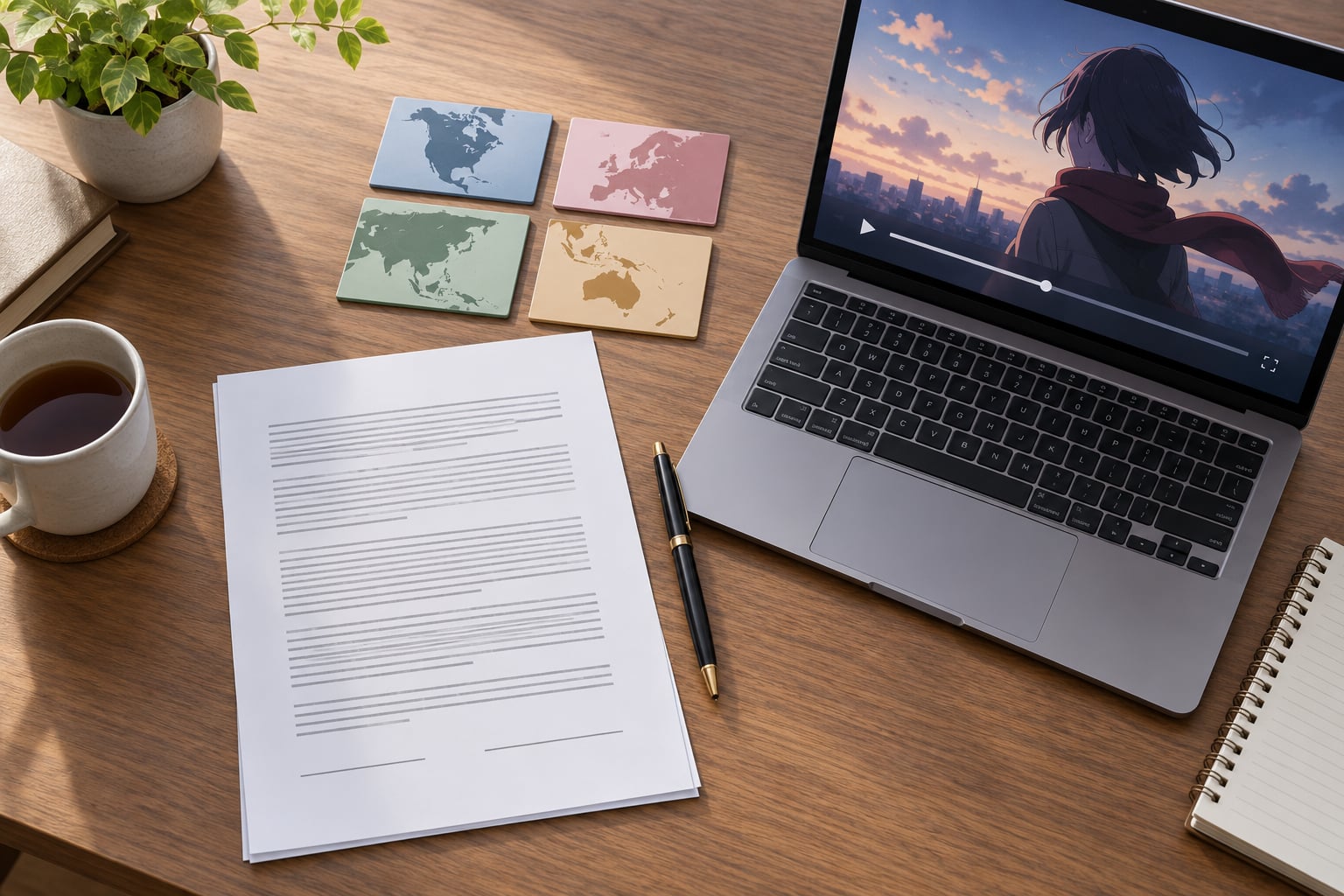
Anime streaming rights are permission to show a series in a particular country, language and time window. They are sold by the show’s rights-holder in Japan one territory and one window at a time, which is why the same anime sits on different services in different countries and disappears when its licence runs out.
If you have ever lost access to a show mid-marathon, this is the reason. Nobody cancelled your subscription and nobody decided you should not watch that sequel. A contract reached its end.
Table of Contents
- 1What Are Japanese Anime Streaming Rights?
- 2Who Controls the Rights?
- 3How Japanese Anime Streaming Rights Move
- 4How Regional and Platform Licenses Differ
- 5What Do Streaming Platforms Pay?
- 6Why an Anime Appears on One Service but Not Another
- 7How Simulcasts, Crunchyroll, and Region Releases Work
- 8What Rights May Be Bundled or Sold Separately?
- 9How Rights Affect Availability, Revenue, and the Viewer
- 10Frequently Asked Questions
- 11Does a streaming service own an anime if it uploads the episodes?
- 12Why did an anime disappear from a streaming service?
- 13Can an anime be legally available in one country but not another?
- 14Does an anime streaming license include the manga or light novel?
- 15Conclusion
What Are Japanese Anime Streaming Rights?
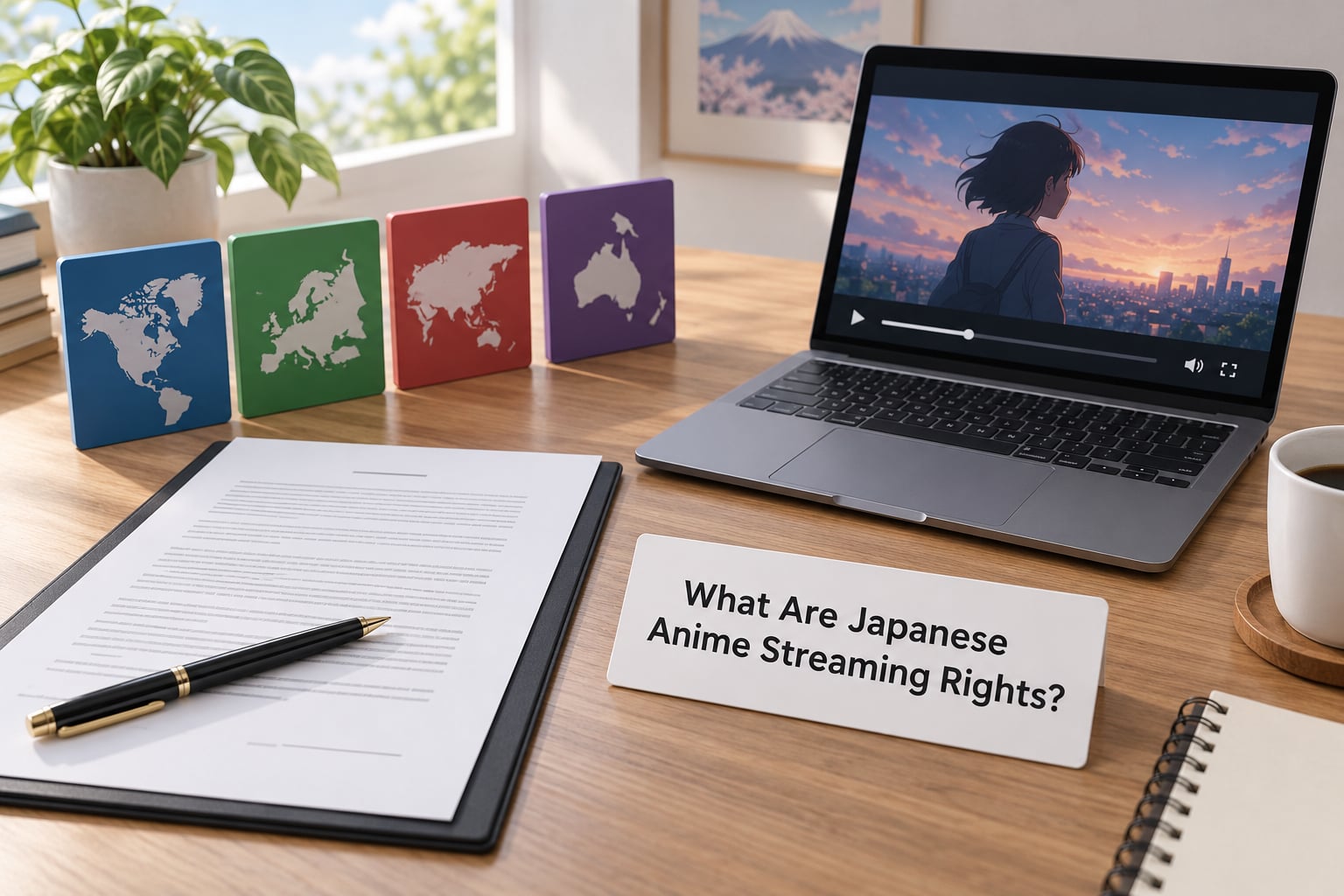
Streaming rights are a licence, not ownership. They describe who may show an anime, where, in what language, on which devices, and for how long. Everything else in the industry follows from that distinction.
It helps to separate four things people tend to blur together:
- Production means someone paid for the animation. Usually a studio such as ufotable, MAPPA or Wit Studio does the work, but the studio rarely owns what it made.
- Distribution means getting the finished show in front of an audience, whether that is a Japanese TV slot, a cinema chain or a streaming app.
- Broadcast rights let a network air episodes on television in one country.
- Streaming rights let a service put episodes on its own platform, and they are licensed separately, territory by territory.
Because those licences are granted separately, the same title can legally stream in Japan, be on one service in North America, a different one in the UK, and be unavailable in Brazil. Nobody is breaking a rule. Each service simply holds a different piece of paper.
Who Controls the Rights?
The rights are usually controlled by a production committee, written in Japanese as seisaku iinkai (制作委員会). A committee is a small group of companies that jointly funded the season and, in exchange, holds the rights to it.
A typical committee has somewhere between four and a dozen members, and the mix tells you a lot about the show:
- The publisher of the source manga or light novel, such as Shueisha, Kodansha, Kadokawa or Shogakukan, is usually in it because the adaptation depends on their property.
- A record label or music company like Lantis, King Records or Pony Canyon joins because the anime is a promotion vehicle for the soundtracks and the artist.
- A TV station, often from a regional network, is often involved because broadcast commitments come with the financing.
- An animation business such as Aniplex or Bandai Namco Filmworks is frequently present, and sometimes a toy or game company.
That structure is why a studio cannot simply sell a streaming licence. MAPPA or ufotable made the episodes, but the committee owns the finished season, so the studio does not get to decide who streams it.
Committee members share the risk. If a show underperforms, several companies take a small loss rather than one taking a large one. It is a conservative, quiet system, and it explains a lot about how the business behaves.
How Japanese Anime Streaming Rights Move
The chain from printed page to your screen has about five links, and each link changes who can act next.
- Source material. A manga or light novel publisher holds the story and licenses the adaptation. Without that permission, nothing gets animated.
- The production committee forms. Several companies pool money to fund the season, and they collect the rights to it in return.
- Japanese release. The show airs on Japanese television, then usually lands on domestic services and on Blu-ray and digital home video.
- International licensing. The committee’s sales agent approaches overseas distributors and platforms, territory by territory, and sells windowed licences.
- The streaming service. A platform holds the licence for a defined region and period, localizes the audio and subtitles, and puts the episodes on its app.
Sales usually begin long before the first episode airs, sometimes a year out, because a service needs time to plan its seasonal slate and sign dub and subtitle talent. Deals are usually signed a couple of months before broadcast.
How Regional and Platform Licenses Differ
Every clause in the contract narrows what a licensee can do. Territory says where. Language says which dub or subtitle track. Platform says whether it can appear on phones as well as a living-room television. Exclusivity says no one else in that territory may show it during the term.
Here is how regional and platform licenses differ in practice. A territory carve-out is common: North America, sometimes further split into Latin America, UK and Ireland, Western Europe, Southeast Asia, Australia and New Zealand are often sold as distinct blocks.
A service may hold a simulcast licence, which lets it run episodes within hours of the Japanese broadcast, or a delayed broadcast licence that only starts after the Japanese TV run finishes. It may hold catch-up rights, meaning episodes appear after airing rather than weekly.
The timing choice changes everything a viewer notices. A simulcast licence means episode twelve exists the same night it airs in Japan. A delayed licence means the whole season drops at once, three months later. Same show, same platform, completely different experience.
Some clauses also hold back availability. A broadcast licence might block streaming for a set number of weeks after airing, and a theatrical agreement can stop any home viewing while a film is in cinemas.
What Do Streaming Platforms Pay?
The headline numbers are almost never published. Committee finances are private, and platforms do not disclose what they pay per title. What follows are the standard structures in the industry, not leaked figures.
- Minimum guarantee. A fixed payment up front, regardless of how many people watch. This is the most common structure for exclusive licences.
- Advance against a revenue share. A smaller guaranteed payment, then a percentage of subscription or rental revenue after some threshold.
- Flat licence fee per window. Common for older catalogue titles and for home video.
- Per-title or per-episode pricing for transactional viewing. The viewer pays to keep access permanently.
- Co-production funding. The platform puts money into making the show, which changes the ownership picture entirely rather than being a simple licence.
One thing surprises fans: for many productions, streaming is not the biggest revenue line. Merchandise, home video, theatrical release, games and broadcast licensing often carry more weight. Streaming sales matter most for the long tail, where a title earns quietly for years after it stops being new.
Why an Anime Appears on One Service but Not Another
Four different things cause this, and telling them apart saves a lot of guessing.
It was never licensed where you live. Not every series is picked up for every market. Committee members decide case by case whether a title is worth the cost of localization and promotion, and some decide no. Such titles are sometimes described by fans as stuck in Japan.
Your region was carved out. The licence exists, just somewhere else. A show licensed for the UK and Ireland may be absent in the US because a different company holds the North American rights.
It is only licensed for a limited window. Home video, broadcast or a competitor’s catalogue licence can block streaming temporarily. It may arrive later, or it may already be on the service that holds the blocking right.
The licence ran out. The term ended and the rights went back to the committee, which may license them to a competitor, renew quietly with the same service, or not release them at all.
That last one is the pattern people notice least, because there is usually no announcement. You click play, get an error, and discover it months later.
Catalogue deals are often signed years in advance, so a licence written in 2026 can still be counting toward a term that began long before you subscribed. Nothing about your account changes the arithmetic.
How Simulcasts, Crunchyroll, and Region Releases Work
A simulcast means the same episode reaches an overseas platform within a short window of the Japanese broadcast, often the same night, with subtitles prepared in advance. Crunchyroll built its reputation on doing this consistently, and the expectation it set is why fans get annoyed when a title waits three months.
Making that possible is a logistics problem as much as a rights problem. Broadcast material has to travel out of Japan, be transcribed, translated and quality-checked, then formatted and published for every territory under a different agreement, all inside a few hours. A platform that holds simulcast rights has already budgeted and staffed for that sprint before the season starts.
Delayed releases exist because they are worth more. A platform that does not have to compete on speed can wait, drop the full season at once, and often negotiate a better deal for the privilege. Faster access costs the buyer, and that cost shows up in the contract.
Worth keeping separate: a streaming licence does not include television broadcast rights, cinema rights or the rights to sell physical media. A show can leave your streaming service and still arrive on home video, or on broadcast in a country where it was never streamed.
What Rights May Be Bundled or Sold Separately?
Rights get divided into buckets, and each bucket can go to a different buyer.
- Subscription streaming, which sits inside a monthly service.
- Free ad-supported streaming, where watching is funded by ads.
- Transactional streaming, where you rent or buy the title and keep it.
- Broadcast, for terrestrial or satellite television.
- Theatrical, for films shown in cinemas, usually with a holdback on home viewing.
- Physical and digital home video, which is Blu-ray and disc or download sales.
One long-running series might stream weekly in one country, air on television in another, release each episode on Blu-ray in a third, and appear ad-supported years later in a fourth. Same production, four audience routes, four contracts.
Rights to the underlying books are a separate matter again. Publishing rights belong to the manga or novel publisher and are not transferred just because an adaptation streams somewhere.
How Rights Affect Availability, Revenue, and the Viewer
Contract terms show up in your everyday experience. A simulcast licence means weekly episodes with subtitles that are good enough but not perfect, because a dub would need months. A delayed licence means a polished dub and subtitles available from day one.
Ad-supported licences mean a free tier exists for that title, sometimes exclusively on one service. Transactional rights mean you can pay once and keep it, which is the closest thing to permanence in streaming.
Then there is the window closing. When a licence ends, the episodes come out of the catalogue, often without warning, and no amount of having paid for a subscription guarantees otherwise. The people who planned for that end up in physical media, where ownership is real.
The honest summary is that streaming access is temporary and regional by design. Once you see the contract behind it, the frustration makes more sense even if it does not feel better.
Frequently Asked Questions
Does a streaming service own an anime if it uploads the episodes?
No. Uploading proves access, not ownership. A platform usually holds a time-limited licence for one territory, language set and platform, granted by the production committee that owns the series. The episodes are licensed assets on loan, and the committee can move them to another service when the term ends. The exception is a co-production, where the platform funded the show and shares ownership.
Why did an anime disappear from a streaming service?
Most often the licence expired and was not renewed on the same terms. Other causes include the service rotating its catalogue to make room for new titles, rights shifting to a different distributor, a region-specific window closing, or a home video or broadcast agreement that has now lapsed. A removal is a contract event, not a judgement about the show, and the same title can reappear elsewhere later.
Can an anime be legally available in one country but not another?
Yes, and it is normal. Licences are sold by territory, often split into blocks such as North America, UK and Ireland, Western Europe, Southeast Asia and Latin America. A service may hold rights in some of them and none in others. Language and platform terms narrow things further, so the same service can offer a title in one market and block it in another without any inconsistency.
Does an anime streaming license include the manga or light novel?
Usually not. Video streaming rights cover the animated adaptation only. Publishing rights for the manga or novel belong to the original publisher and are negotiated separately, which is why a service may sell the anime while sending you elsewhere for the books. Some platforms bundle related titles in their store for convenience, but that is a retail arrangement rather than a single license covering both.
Conclusion
Anime streaming rights are temporary, regional permission sold by a production committee in Japan, usually one window and one territory at a time. Availability is a result of contracts with expiry dates, not a permanent property of a show.
Before you conclude that a title is impossible to watch, check four things: which platform holds the licence where you live, whether the release is simulcast or delayed, whether a broadcast or home video agreement is blocking streaming, and whether the licence simply lapsed. Any one of those explains the gap.
And if you care about a series enough to rewatch it, buying the home video is the only version that stays yours.