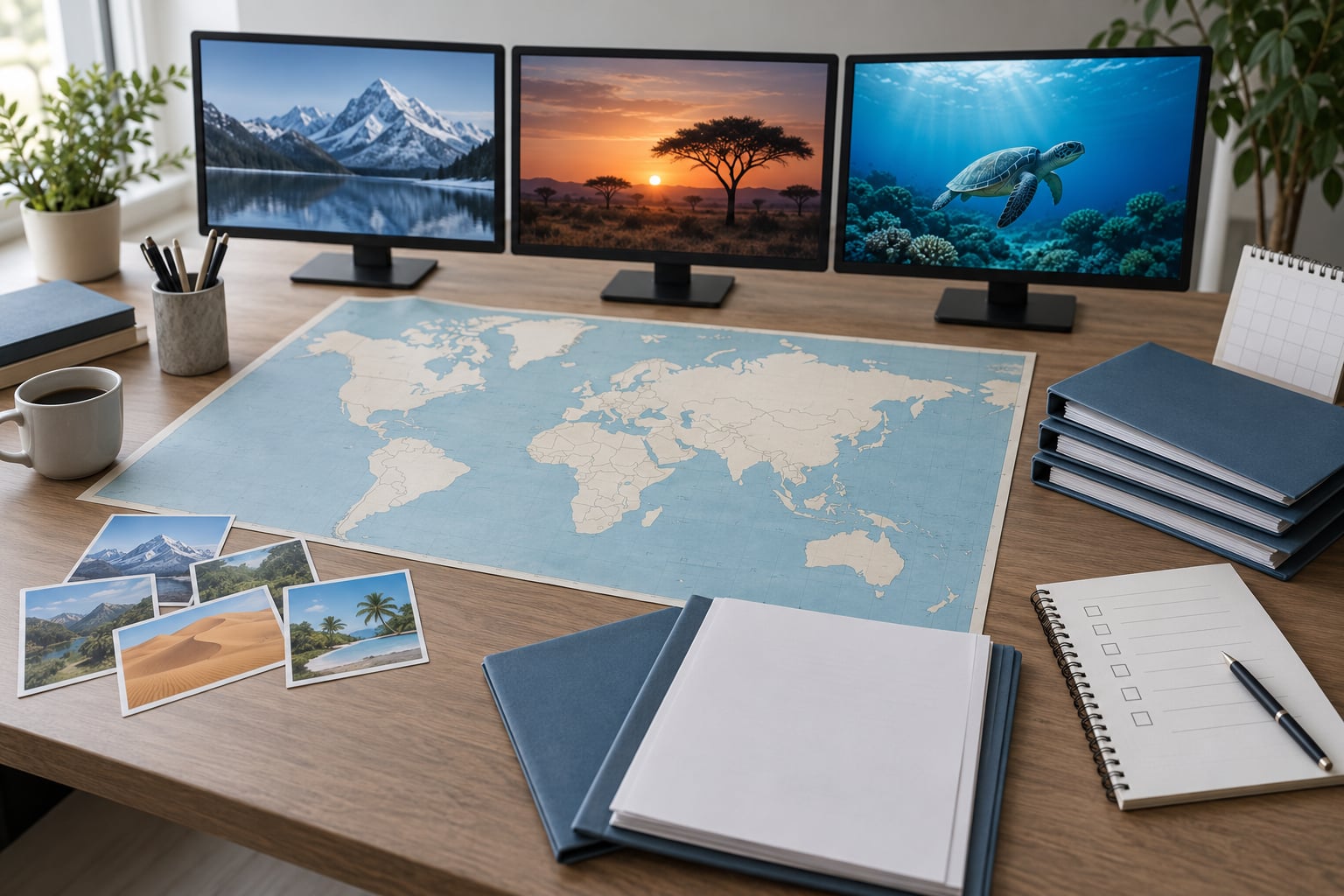
Japanese streaming catalogs differ because content rights are licensed territory by territory. A service buys the right to show a film, drama or anime in named countries for a set period, so the same subscription can look completely different in Tokyo and in Toronto. Rights expire, get resold to a rival, or are simply never bought for your region in the first place.
That is the whole mechanism. Everything else people blame — VPN tricks, account settings, a mysterious “Japan” toggle — is a side effect of it.
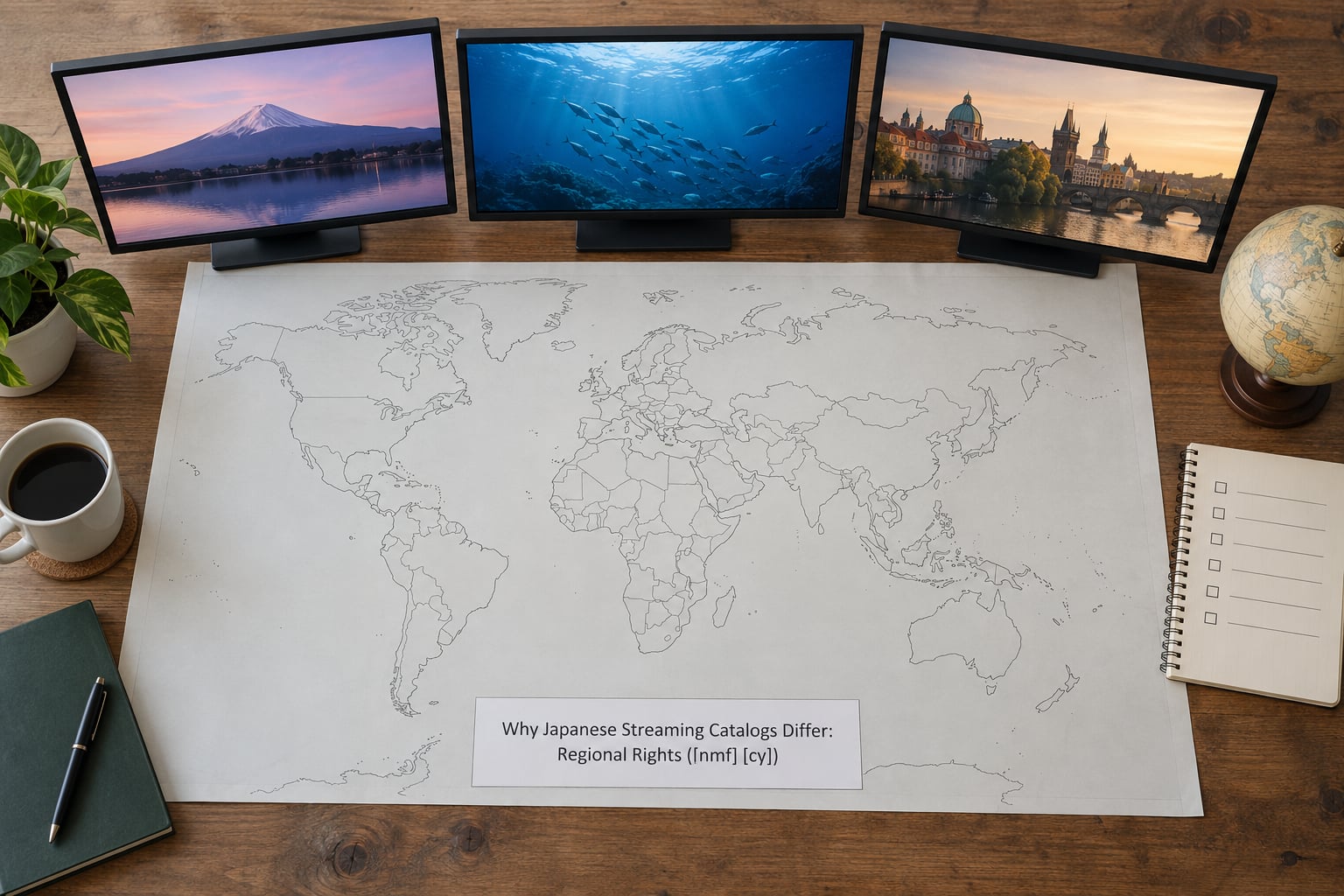
Table of Contents
- 1What Does It Mean for a Streaming Catalog to Differ by Region?
- 2Why Japanese Streaming Catalogs Differ by Region
- 3Territorial licensing: what the term actually means
- 4Why Japan’s production committees complicate everything
- 5What Japan is worth as a market
- 6Language, dubbing and localisation requirements
- 7Regulation and local release schedules
- 8What Rights Control a Japanese Streaming Release?
- 9Why Do Japan and International Versions Have Different Episodes or Seasons?
- 10Which Differences Come From Language and Subtitles?
- 11Why Are Anime, Movies, and Live Sports Unavailable at Different Times?
- 12Why Do Some Japanese Streaming Apps Disappear Outside Japan?
- 13Can a VPN Make the Same Catalog Appear?
- 14How to Check Whether a Title Is Legally Available to You
- 151. Search the title instead of browsing
- 162. Read the official title page, not a listing
- 173. Check the language and audio labels
- 184. Check other legitimate services in your country
- 195. Wait out the window
- 20Frequently Asked Questions
- 21Does Japan always have more streaming content than other countries?
- 22Why can I see a movie on a Japanese streaming site but not on an international version?
- 23Can I watch Japanese live sports with an overseas streaming account?
- 24Does using a VPN legally unlock every Japan-only streaming catalog?
- 25Why does an anime title appear in one region but have no English subtitles there?
- 26Conclusion
What Does It Mean for a Streaming Catalog to Differ by Region?
A regional catalog is the list of titles a service shows for a specific country. Two accounts on the same platform in two countries will see different titles, different seasons, different audio and subtitle options, and different release dates, because each deal was negotiated separately.
Catalogs can diverge in six distinct ways, and it helps to keep them apart:
- Titles — some films and series are licensed to Japan and never to your country.
- Seasons and episodes — a show may be carried for one season in a market, or carried with broadcast-edited cuts.
- Languages — original audio, dubbed audio and subtitles are licensed separately.
- Timing — a title can appear weeks or months after its home market debut.
- Playback features — some markets get downloads, higher resolutions or extra simultaneous streams.
- Availability over time — titles routinely leave after a licence term ends.
That last one catches people out constantly. Marking a show to watch later and finding it gone a week later is not a bug on your side, and it is not evidence that Japan has it permanently. Japanese catalogues have high turnover too.
Why Japanese Streaming Catalogs Differ by Region
Six forces do most of the work. They overlap, and which one dominates depends on the title.
Territorial licensing: what the term actually means
Territorial licensing is a contract clause, not a technical trick. A rights holder grants a distributor the right to exploit a work in a defined territory, and outside that territory the work stays reserved.
So the question “why is this not on my service” usually has an unremarkable answer: nobody bought it for your country. Rights are sold per country, sometimes per language, sometimes per window, and a service will happily take a title in a cheap market while passing on an expensive one.
Why Japan’s production committees complicate everything
Japan has an industry structure most countries do not. Anime, manga and many adaptations are funded by a production committee — a group of publishers, record labels, toy makers, broadcasters and retailers who pool money and split the revenue.
For a streaming service, this means it is not negotiating with a single film studio. It may need separate agreements with several committee members, each of whom can veto or delay. International streaming has partly been shaped by committees licensing more cautiously overseas, because they value domestic merchandising deeply and have little appetite for cheap foreign distribution.
What Japan is worth as a market
Japan is one of the largest and most content-hungry paying markets in the world, so domestic pricing power is high. That cuts both ways: a service will invest heavily in Japanese availability, and a Japanese-only title can easily justify a local price while failing to justify an overseas licence.
You will also see small catalogues in markets with low subscriber numbers, because fixed localisation, dubbing and delivery costs do not shrink for a small audience. A title that makes sense in a market of millions can be uneconomic in a market of tens of thousands.
Language, dubbing and localisation requirements
Subtitles and dubs are not free. They need translation, timing, quality control and often a second review pass, and each version has its own cost and its own licence.
This is why a Japanese service may carry a title with no English subtitles at all, while an international service carries the same title fully localised. It is also why Japanese viewers report a catalog that is deep but heavily Japanese-language, with English subtitles present on a minority of titles.
Regulation and local release schedules
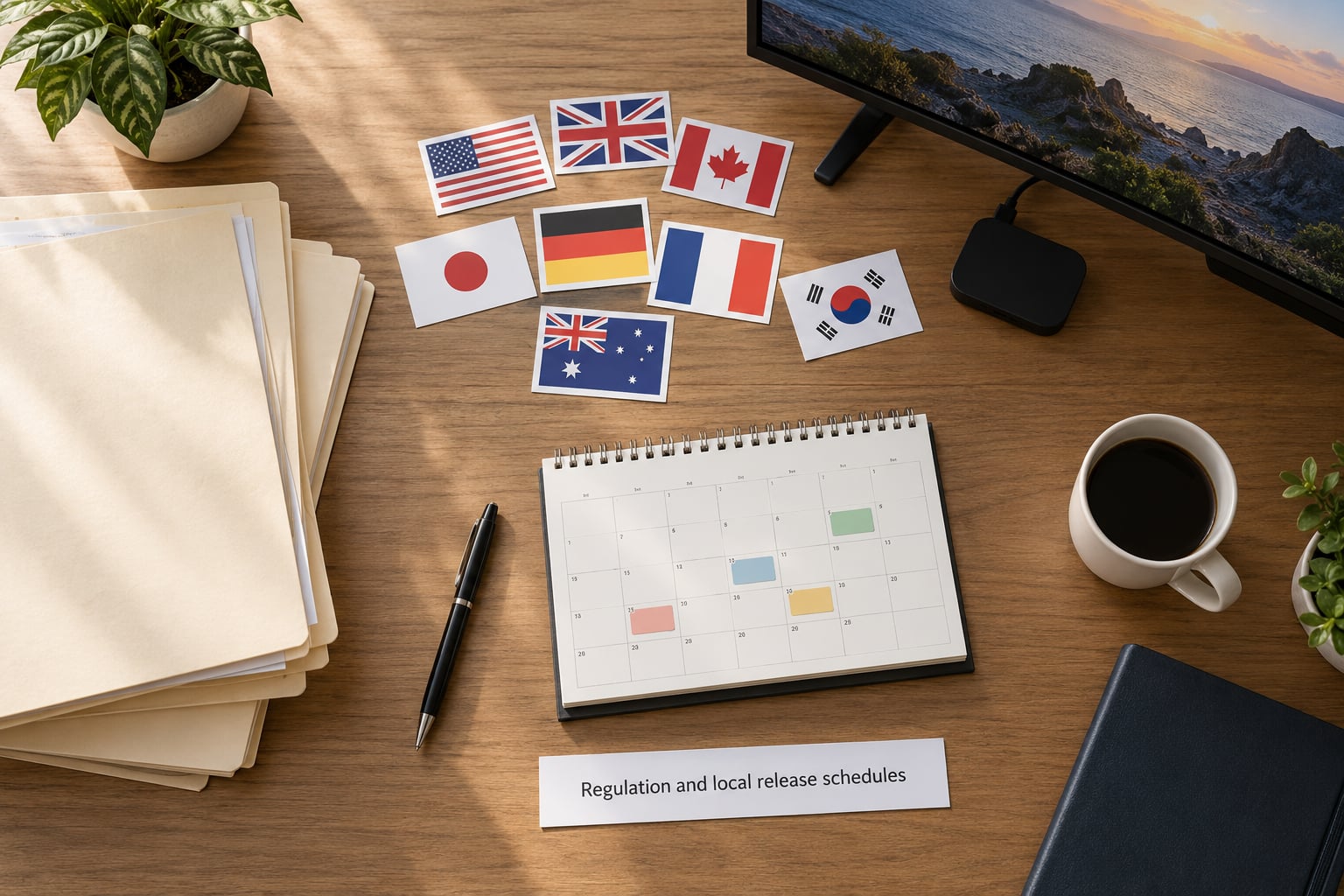
Japan’s broadcast rules shape what TV platforms can carry and how quickly. Broadcasters and catch-up services face different distribution rules from on-demand SVOD, so a show that airs on national television in Japan may reach a streaming service in another country first.
Local release schedules also differ. Japanese television runs seasonal “cours” with defined broadcast blocks, and international partners receive episodes on their own schedules, sometimes batched, sometimes later.
What Rights Control a Japanese Streaming Release?
A streaming right is rarely one big permission. Deals get sliced along several axes at once, and each slice can be sold to a different company or held back.
| What the rights holder can restrict | What that looks like to a viewer |
|---|---|
| Territory | The title is missing entirely outside the licensed countries. |
| Language and audio | The title plays but only in Japanese, with no usable subtitles. |
| Subtitles and dubbing | Original audio only, or subtitles on some devices but not others. |
| Time window | The title appears, then disappears when the term ends. |
| Device or platform | Mobile and TV apps differ, or a rival service carries it instead. |
| Subscription tier | It sits behind an add-on or higher plan rather than the standard one. |
| Exclusivity | A rival service has it in your country, so this one does not. |
Add a pay-per-rental layer and the picture gets messier. Some Japanese services are subscription plus rental, meaning a title can be in the catalogue and still cost extra. That is a pricing arrangement, not a licensing restriction, and it is the usual reason a viewer concludes a show is “not available” when it is really a separate charge.
Why Do Japan and International Versions Have Different Episodes or Seasons?
Different episode counts usually come from broadcast standards, not from licensing politics. A domestic TV airing can carry edited cuts where episodes are merged or material is trimmed for broadcast rules, and a streaming service outside Japan may carry the uncut version.
Staggered production is the other half. Because seasons are built around Japanese broadcast blocks, episodes can reach Japanese television weeks ahead of other regions, and some services receive them in batches rather than weekly. A title can also be renewed for a second season in one market and dropped in another when the numbers do not justify it.
Censorship standards differ across jurisdictions, so an edited version for one market and an unedited version for another is normal and contractual, not censorship breaking news.
Which Differences Come From Language and Subtitles?
Language is where catalog differences most often look like bugs. A title can be fully licensed and still be unusable for an English-only viewer.
Three things get licensed separately:
- Original audio — usually always included where the title is carried.
- Subtitles — per language, and often the most expensive part of a deal.
- Dubbing — per language, and rarer for anime than for kids’ and family content.
So when a title appears in your country with no English subtitles, the failure is usually subtitle licensing or an unfinished localisation, not territorial rights. If the title is missing from your country entirely, rights are the more likely cause.
Japanese-language learners often want the opposite of what most viewers want. Uncut Japanese audio with optional subtitles is the point for them, which is why a catalog that looks thin to an English speaker can look generous to someone studying.
Why Are Anime, Movies, and Live Sports Unavailable at Different Times?
Different content types run on different clocks.
Anime often reaches Japanese television first, because production committees broadcast on home soil before selling internationally, and streaming pickup follows broadcast in some markets and runs ahead of it in others.
Movies follow a window: theatrical release, then pay-per-view, then physical, then subscription. Each stage is licensed separately, and the subscription date in Japan may sit far from the subscription date elsewhere.
Live sports are the strictest category. Broadcasters bid for exclusive territory rights, and leagues impose blackout rules that block in-region streaming during live games regardless of whether you hold a subscription. A service can hold the Japanese rights, show the match in Japan, and have no rights at all for your country.
Take a hypothetical film that opens in Japanese cinemas on a Friday, lands on a Japanese rental service in four weeks, a subscription service in three months, and an international subscription service later still. Every one of those dates comes from a separate clause in the same chain of agreements.
Why Do Some Japanese Streaming Apps Disappear Outside Japan?
Not every Japan-only app is restricted by design. Some are limited by infrastructure, some by payment, some by carrier partnerships.
Payment is the big one. Japanese services often tie into domestic billing, carrier plans or physical gift cards sold through convenience stores. If a service has no card processor that issues to your country, there is no way for it to sell you a subscription, regardless of whether the content rights would allow it.
App store availability works the same way. Some Japanese apps are only distributed through domestic store channels, so they are simply not listed in your app store.
Account region enforcement is the third layer. Services tie accounts to a country, and payment addresses have to match that country. A Japanese payment method often needs a Japanese address, which is the practical blocker most overseas viewers hit first.
Carrier bundles are the fourth. Services distributed through mobile carrier partnerships in Japan can be hard or impossible to subscribe to independently from outside the country.
So a service can be Japan-only by policy, restricted only because of billing, or limited to Japan purely because of the rights it holds. Those three cases look identical from abroad and need different workarounds.
Can a VPN Make the Same Catalog Appear?
It can change what you see without giving you anything. A VPN usually changes which interface you load and which catalogue your account is served, but it does not create a licence.
Three practical consequences:
- Verification. Services detect mismatches between your stated country and your payment details, and can stop playback or ask you to confirm identity and address.
- Terms of service. Almost every service’s terms prohibit circumventing regional restrictions. Account closure is a real consequence even where nothing else is.
- Legality varies. Rules differ by country. In some places using a VPN is restricted for certain content, and the legal question is separate from the contract question.
For the legality question specifically, there is growing regulatory pressure on geo-blocking in several markets, with consumer-protection and digital-market rules being tightened. That pressure targets platforms, not individual viewers, so it does not change your side of the contract.
Forum users generally treat region switching as a grey area that is widely discussed and rarely enforced. Worth keeping in mind that “rarely enforced” is not the same as “permitted”.
How to Check Whether a Title Is Legally Available to You
Five steps, in order:
1. Search the title instead of browsing
Search engines index regional title pages. If a title page carries your country code, the rights exist there.
2. Read the official title page, not a listing
Third-party tracking sites and add-on catalogs can lag behind real rights by weeks. The service’s own page is the authority.
3. Check the language and audio labels
If English subtitles are missing but the title plays, the issue is localisation, not rights. Look for a subtitle or audio selector on the page before you assume the title is gone.
4. Check other legitimate services in your country
Exclusivity moves. A title licensed to a rival last month can be licensed back or carried by a different service this month.
5. Wait out the window
If a title has aired or opened in Japan but not in your country, it is usually a window, not a refusal. Catalogue numbers for any given service change constantly, so treat any specific count you read as out of date almost immediately.
One last piece of honest advice from people who live there: a larger catalogue is not automatically a better one. Viewers in Japan and abroad repeatedly make the same point on forums — more titles means more variety, not more quality, and the depth in one genre usually comes with depth missing from another.
Frequently Asked Questions
Does Japan always have more streaming content than other countries?
No. Japan is one of the largest paying markets, so services invest heavily there, but catalog size changes constantly and depends on the service. A title licensed in Japan is not licensed everywhere, and a market with more titles in anime may have far fewer documentaries. Compare the genres you actually watch rather than a total count.
Why can I see a movie on a Japanese streaming site but not on an international version?
Because the rights are held in different territories. A service that operates in Japan may hold Japanese streaming rights without ever buying rights for your country, or may have sold those rights to a rival. The movie existing in the Japanese catalogue tells you the licence exists for Japan only, and nothing about your region.
Can I watch Japanese live sports with an overseas streaming account?
Rarely. Broadcasters buy live sport territory by territory, and leagues add blackout rules that block in-region streaming while a game is on. An overseas account does not carry Japanese broadcast rights. Some services offer highlights or radio commentary instead, and highlights usually carry far looser restrictions than the live feed.
Does using a VPN legally unlock every Japan-only streaming catalog?
No. A VPN changes the interface you see but creates no licence, and most services treat circumventing regional restrictions as a breach of their terms, which can mean losing the account. Whether VPN use itself is legal depends on your country. It is also unreliable: payment and address verification catch mismatches, and Japanese billing methods still block many signups.
Why does an anime title appear in one region but have no English subtitles there?
Subtitles are licensed separately from the title itself, and they are one of the more expensive parts of any deal. A service can hold streaming rights for a country without holding subtitle rights for English in that country. The same separation applies to dubs, which are licensed per language and are less common for anime than for family content.
Conclusion
Japanese streaming catalogs differ for one reason: rights are licensed territory by territory, and every licence has an end date. Production committees, market value, subtitle costs and broadcast schedules all feed into those decisions, which is why two people on the same plan can see completely different libraries.
Start with the official title page. Confirm the service, the language options and your viewing region before you subscribe, and if a title is missing, check whether it is a rights gap, a subtitle gap or simply a window that has not opened yet.