Japan’s fiscal year runs from April 1 to March 31, and companies name it for the year it ends. That single detail explains why Japanese product launches pile up between January and March, why early April is strangely quiet, and why a budget resets on April 1 rather than January 1. Here is how Japanese fiscal years affect product releases in practice.
Table of Contents
- 1Japanese fiscal year calendar at a glance
- 2What is Japan’s fiscal year?
- 3How Japanese fiscal years affect product releases
- 4The April 1 budget reset changes what buyers can approve
- 5Five reasons launches compress into January to March
- 6How the April-to-March cycle changes launch behavior
- 7April and May: the blackout and the reset
- 8June to August: summer launches and the mid-year earnings pause
- 9September to December: the volume quarter
- 10January to March: the Q4 compression window
- 11Which tech products are most affected?
- 12Consumer electronics
- 13Mobile devices and gaming
- 14Software and online services
- 15Startups and event-driven launches
- 16What does the fiscal year tell you about a release date?
- 17How can readers anticipate Japan’s product cycle?
- 18Frequently Asked Questions
- 19When does Japan’s fiscal year start and end?
- 20Does the fiscal year determine when tech products launch?
- 21Why are many Japanese companies focused on the March 31 deadline?
- 22Are product releases in Japan usually different from releases elsewhere?
- 23Can a company announce a product during a different fiscal period from when it ships?
- 24How should a reader interpret a Japanese company’s quarterly product news?
- 25Conclusion
Japanese fiscal year calendar at a glance
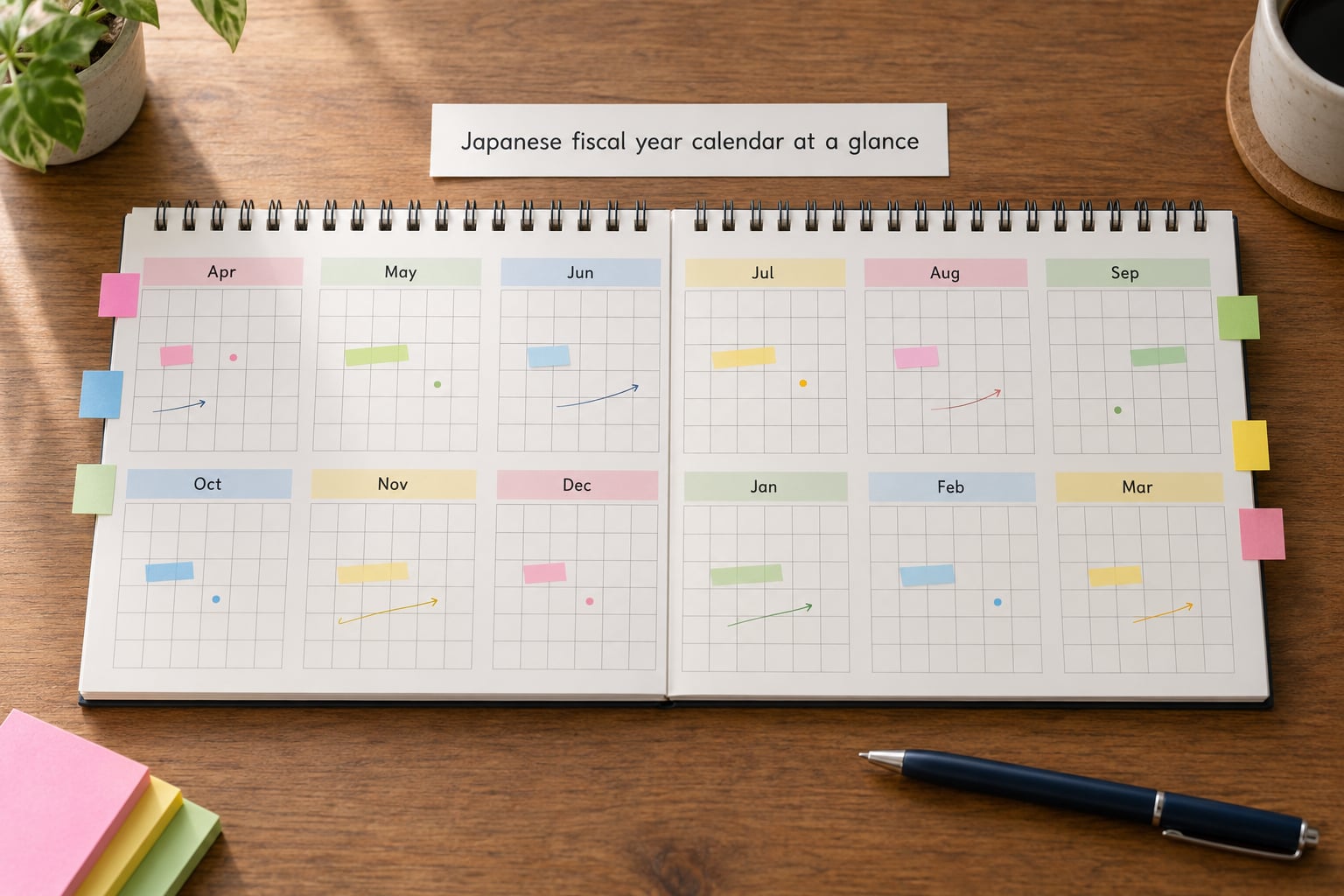
Japanese businesses treat the year as four quarters that run counter to most Western calendars. For anyone tracking launches, this table is the whole map.
| Quarter | Months | Launch activity | Why |
|---|---|---|---|
| Q1 | April to June | Low | Budgets are still being allocated and Golden Week eats the first week |
| Q2 | July to September | Moderate | Summer demand plus the mid-year Ochugen gifting season |
| Q3 | October to December | High | Oseibo gifting, year-end bonuses and pre-settlement orders |
| Q4 | January to March | Highest | Revenue must land inside the current fiscal year, plus it is the last chance to hit the annual target |
The pattern holds across categories, though no company follows it mechanically. Think of Q4 as the loud quarter, not a rule.
What is Japan’s fiscal year?
The Japanese fiscal year runs from April 1 to March 31. It is named for the calendar year in which it ends, so the period beginning April 1, 2026 and closing the following March 31 is called fiscal year 2026, or FY2026. Most Japanese companies and the national government use this April-to-March cycle instead of the January-to-December calendar year.
That labelling convention causes most of the confusion outsiders hit. A document dated FY2026 and read in January 2026 refers to money that will not close until the following March.
| Fiscal year label | Covers |
|---|---|
| The year closing this March | April 1 of the previous calendar year through March 31, 2026 |
| The year starting this April | April 1, 2026 through March 31 of the next calendar year |
| The one after that | The same twelve-month pattern, shifted forward one year |
Japan also writes dates year-first, in a year.month.day format, and often pairs them with the Reiwa era date. The era count ticks up by one every April, so a document can carry two numbers for the same moment. Read a Japanese date from the left.
One caveat worth keeping: individual companies can register any twelve-month accounting period they like. The April-to-March convention dominates Japanese corporate reporting and public institutions, but it is a convention rather than a law that binds every business.
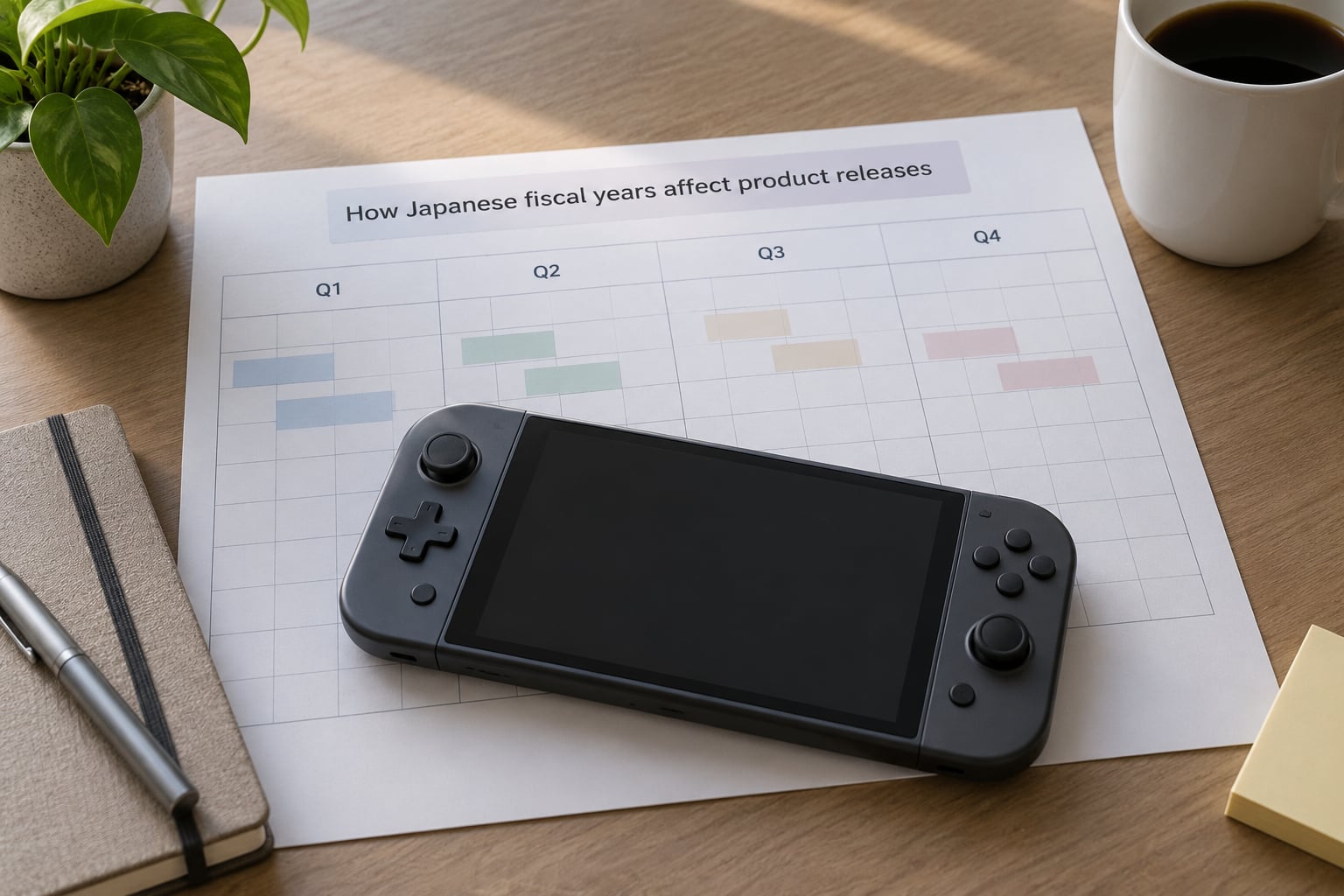
How Japanese fiscal years affect product releases
Release timing is a budget decision before it is a marketing one. Japanese companies answer the same question every time they pick a launch date: will this product earn revenue inside the current fiscal year?
The April 1 budget reset changes what buyers can approve
On April 1, every department in a large Japanese company and every agency in government receives a new budget. Money that was unspent expires rather than rolling over.
That makes April 1 the single most important procurement date of the year in Japan. A purchasing manager cannot commit funds in February, and a vendor cannot land a large enterprise deal without knowing which fiscal year will pay for it. For business-to-business and business-to-government products, this pushes meaningful commercial impact into the weeks after the reset, which is the opposite of the consumer electronics pattern.
Five reasons launches compress into January to March
- Revenue recognition. A product announced in March can sell for a full season. The same product announced in April starts from zero and needs twelve months to match it.
- Target pressure. Sales teams carry annual numbers that were set at the previous April reset. March is when those numbers are decided.
- Depreciation and asset write-offs. Capitalized development and equipment sit on the balance sheet until year-end. Launching before the books close converts project spend into a sale.
- Approval speed. Ringi, the Japanese consensus sign-off process, is slow in new-project mode but fast once a budget line already exists. Q4 budgets are already written.
- Channel readiness. Distributors plan their allocation around the year-end and new-year period, so a March launch has staff and shelf space behind it.
None of this is secret inside Japanese corporate planning. It is simply how the accounting calendar rewards behavior, and product teams optimize for it.
How the April-to-March cycle changes launch behavior
Walk the year the way a Japanese product team experiences it, and the shape of the release calendar becomes obvious.
April and May: the blackout and the reset
The first days of April are the worst possible launch window. Golden Week, a cluster of public holidays running from late April into early May, means offices empty out and retailers take holidays. Products announced in that window often get very little coverage.
By late May, companies are publishing their new business plans, usually alongside their full-year results, and R&D budgets for the year are being allocated. Products approved in this window are built for a mid-to-late summer arrival.
June to August: summer launches and the mid-year earnings pause
Consumer electronics that target summer selling periods appear here, alongside Ochugen gifting in July. Enterprise software tends to pause because Japanese companies close their books for the first quarter around that time and few sign large contracts mid-verification.
September to December: the volume quarter
Q3 carries three overlapping pressures. Oseibo gifting from December pulls corporate buyers toward year-end purchases, the October to December bonus season puts money in consumers’ hands, and settlement work means internal teams are heads-down on numbers rather than launches.
The October to December window is also the period people misread as a fiscal-year start. It is not. It is the start of Q3 and the busiest run-up to year-end for any company that reports quarterly.
January to March: the Q4 compression window
This is where the year pays off. Announcements from January through March can bank roughly a full season of revenue before the March 31 close, and misses at this point hit the annual target rather than a single quarter.
The last weeks also get crowded for a mechanical reason. Public companies file their annual securities report, the yukashoken hokokusho, with the Kanto Local Finance Bureau within three months of year-end, which means by June 30. Between the close and that filing sits the earnings announcement, the kessan tanshin, usually in February.
So January and February carry new product news, results previews and channel announcements in the same weeks. If you only read one stretch of the year, read those two months.
Which tech products are most affected?
Degree matters more than category. The products most exposed to the fiscal calendar are the ones where a Japanese company owns both the R&D budget and the sales target.
Consumer electronics
This is the clearest case. A Japanese electronics brand pays for development out of the current fiscal year and wants the same product generating revenue before March 31. That produces a predictable January to March announcement cluster, with a smaller summer wave for products tied to holiday and travel seasons.
Mobile devices and gaming
Handset and console launches follow a different rhythm because they are tied to carrier and retail calendars, and many of them are designed for global timing rather than a Japanese fiscal deadline. Still, supply, distribution and any Japan-exclusive model or color tend to follow the fiscal calendar more closely than the global date does.
Software and online services
Subscription products are the least affected in timing and the most affected in pricing. A service can launch any day and still earn within the same fiscal year, so release dates cluster around commercial events instead. Budget renewal for Japanese enterprise contracts is where the April 1 cycle bites hardest.
Startups and event-driven launches
Fundraising follows the same April reset, which shapes when seed and Series A rounds close and therefore when a startup can afford to launch. Event calendars layer on top: Tokyo Game Show and CEATEC sit in the second half of the year, and exhibitors plan product news around their slots.
What does the fiscal year tell you about a release date?
The calendar is a useful signal, not a schedule. These are the clues worth reading in any Japanese announcement.
- FY labels in corporate material. If a document sets a target for the current fiscal year during a January briefing, that target closes the following March 31. Budgets and targets follow the label, not the calendar year.
- Announcement versus shipping. Companies routinely announce in one month and ship in another. The announcement date carries the fiscal logic; the shipping date carries the supply chain.
- Preorder windows. A preorder period that runs weeks past March 31 suggests a product built before the fiscal close and sold after it, which is a deliberate and common pattern.
- Results timing. A launch in the same stretch as a quarterly results announcement is often a company spending news capital it does not have much of.
- Japanese date formatting. A year-first date such as one ending in 03.31 means March 31, not December 31. Reading it US-style flips the year by twelve months and quietly breaks every inference above.
What the calendar cannot tell you: whether a product is any good, whether it will be available at volume, or whether a company outside Japan will launch on the same date. Domestic launch timing says very little about a global release schedule.
How can readers anticipate Japan’s product cycle?
Tracking a Japanese release calendar is mostly a matter of watching a few predictable windows rather than reacting to individual announcements.
- Mark the year-end cluster. January through March is when most consumer electronics news lands. If you cover Japanese hardware, that is the stretch to staff up for.
- Watch results dates, not just launch dates. Quarterly results announcements and the February annual report tell you how much budget pressure a company is under.
- Use primary announcements. Company newsrooms and product pages give dates before aggregator sites do, and Japanese-language announcements carry detail that English coverage drops.
- Track the annual business plan. Published around late April, it signals what each company intends to prioritize and fund for the coming year.
- Check the date format before you check anything else. A single misread Japanese date turns a March launch into a December one.
- Separate consumer seasonality from fiscal logic. July gifting and December year-end gifting drive demand. They do not always drive launch dates, and treating them as the same signal leads to predictable mistakes.
Readers outside Japan working on market entry should add one more: confirm your fiscal year label with a local accountant or adviser before you commit to a launch window. A twelve-month mismatch with Japanese buyers’ budget cycles is expensive and entirely avoidable.
Frequently Asked Questions
When does Japan’s fiscal year start and end?
Japan’s fiscal year starts on April 1 and ends on March 31. It is named for the calendar year in which it ends, so the period from April 1, 2026 to the following March 31 is Fiscal Year 2026. Most Japanese companies and the national government use this cycle, though individual businesses may register a different twelve-month accounting period.
Does the fiscal year determine when tech products launch?
It influences timing heavily but does not determine it. Because Japanese companies measure revenue and R and D spending from April to March, products launched between January and March can earn a full season inside the same fiscal year, so announcements cluster there. Global brands and software services often follow worldwide schedules instead, so the calendar is a strong signal rather than a rule.
Why are many Japanese companies focused on the March 31 deadline?
March 31 closes the books for the year, so any revenue booked before it counts toward the annual target set the previous April. Launches in the final quarter can still generate a season of sales, while the same launch in April begins from zero. Corporate reporting deadlines follow too, with the annual securities report filed by June 30.
Are product releases in Japan usually different from releases elsewhere?
Often, yes, for consumer electronics and anything sold through Japanese retail channels. Japan-specific models, colors and bundles commonly ship on different dates from a global launch, and domestic availability tends to lag. Products tied to carrier networks, gift seasons or regional events diverge further. Software and global hardware launches usually stay on a single worldwide schedule.
Can a company announce a product during a different fiscal period from when it ships?
Yes, and it is routine. Companies routinely announce a product in one fiscal period and ship it in the next, especially when a March announcement captures press attention while preorders open a few weeks later, straddling the March 31 close. Enterprise software often follows the reverse pattern, announcing well ahead of the fiscal year in which the contract revenue actually lands.
How should a reader interpret a Japanese company’s quarterly product news?
Read it against the quarter’s position in the April-to-March year rather than the calendar month. January to March is the company’s Q4 and its most commercially motivated window, October to December is Q3 with year-end gifting and bonuses, and April to June is Q1 with budgets still being allocated. A launch in a company’s Q1 usually reflects a product already funded the previous year.
Conclusion
Japan’s April-to-March fiscal year makes the fourth quarter commercially urgent and the first quarter commercially slow, which is why product news piles up between January and March and thins out around the April reset.
If you are tracking launches, watch three things first: the January-to-March announcement cluster, the FY label on any corporate document, and the results dates that tell you how much pressure a company is under. Get those three right and most release patterns explain themselves.