Japanese esports differs from Western esports mostly in structure, not skill. The scene grew out of arcades and a console-first player base rather than PC cafés, it is anchored in mobile and fighting games rather than MOBAs and battle royales, most teams are owned by corporations with unrelated businesses, and prize money runs through a legally constrained sponsorship model instead of the classic Western prize pool. Talent from Japan keeps winning abroad even while domestic rosters stay thin. That paradox sits at the centre of this comparison, and the figures below are updated as of October 2026.
By total players and industry size, Japan is one of the world’s biggest gaming markets on earth. By professional rosters and prize pools, it has historically sat well behind South Korea, China and the United States. Niko Partners put the Japanese market at roughly USD 69.4 million in 2021 and USD 77 million in 2022, a figure that sounds enormous until you put it next to the value of the Western leagues.
I have read the research, the legal commentary and the forum threads on this topic, and the biggest problem I found is stale framing. A lot of the loudest explanations still say Japan’s esports scene is crippled by anti-gambling law. That was largely true before 2019. It is a poor explanation now, and this article is where I correct it.
Table of Contents
- 1How Japanese Esports Differs From the West at a Glance
- 2Different Gaming Cultures and Player Expectations
- 3How Japan’s Major Games Differ from Western Competitive Games
- 4Fighting games
- 5Rhythm and arcade-derived titles
- 6Mobile and free-to-play titles
- 7MOBAs, shooters and battle royales
- 8Japan’s Taste for Precision and Technical Execution
- 9Tournament Structure, Leagues, and Publisher Control
- 10Mobile Gaming and the Global Competition for Players
- 11Streaming, Commentary, and Fan Communities
- 12Business Models, Teams, and Professional Players
- 13Why the Two Esports Markets Are Hard to Compare Directly
- 14Which Esports Style Is Better for Different Players?
- 15Frequently Asked Questions
- 16Why does Japan have so few professional esports players?
- 17Is esports legal in Japan?
- 18What games are popular in Japanese esports?
- 19How can I watch Japanese esports tournaments from outside Japan?
- 20Is esports recognised as a sport in Japan?
- 21How is Japanese esports different from Korean or Chinese esports?
- 22Conclusion
How Japanese Esports Differs From the West at a Glance
The table below is the shortest honest answer to the question. Every row is a difference that shows up in how the two scenes are organised, funded and watched.
| Factor | Japan | North America and Europe |
|---|---|---|
| Legal framework | Prize pools funded by sponsors, not entry fees; players licensed as professionals under JeSU | Standard entry-fee prize pools; standard contractor status for players |
| Team ownership | Corporate parents with unrelated businesses (retail, telecom, media) | Player- or founder-owned orgs, venture funded, franchise slots |
| Biggest audience titles | Mobile games, fighting games, arcade-derived titles | League of Legends, CS2, Valorant, Dota 2, Fortnite |
| Where players play | Console and mobile first; PC bangs fill a social role rather than a training one | PC first, with consoles a growing second |
| Pro career paths | Thin. Small player pools, licensing hurdles, content work often more reliable than winnings | Deep. Academy systems, bootcamps, salary plus prize share |
| Spectator behaviour | Large share watch without playing, often on phones and on streaming platforms | Viewership concentrates around titles the audience also plays on PC |
| Streaming culture | NicoNico Douga alongside Twitch and YouTube | Twitch and YouTube, with Discord as the community hub |
| Main money | Sponsorship, corporate backing, merchandising, content partnerships | Sponsorship, media rights, prize money, publisher revenue share |
| Venues | Esports parks, arcade-adjacent spaces, big Tokyo event halls | Arenas, purpose-built esports stadiums, university halls |
| Publisher power | Extremely high. Riot, Tencent and others often run their own Japanese leagues | High but shared with league operators and independent organisers |
Nine things follow from that table, and they are the list most people are actually looking for.
- Teams belong to companies, not to players. A Japanese team is usually a subsidiary or a brand project of a retailer, a telecom firm or a media group.
- Mobile games carry more weight. Japan’s strongest competitive scenes sit on phones, where the West is PC-first.
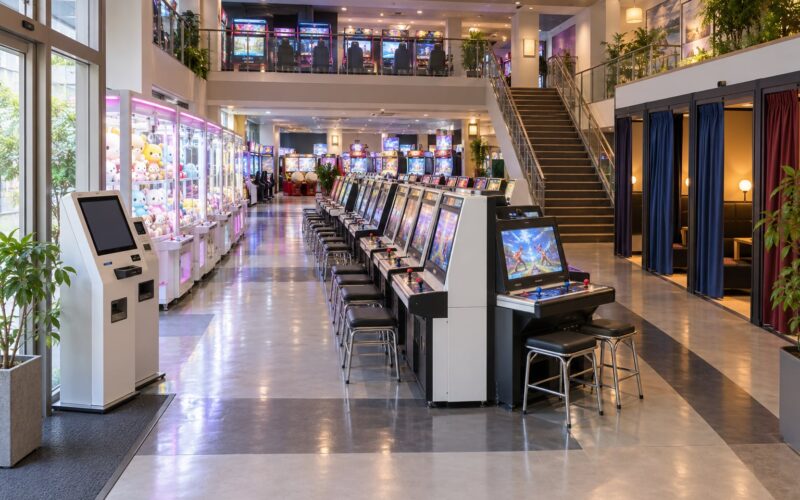
- Arcades still matter culturally. Long-running Japanese arcade circuits and their dedicated players predate the entire esports industry.
- Prize money has a different plumbing. Sponsor-funded pools and professional licensing replaced the old caps.
- Fighting games remain central. They carry more prestige in Japan than in most of the West.
- Many viewers watch without playing. Japanese esports has a big passive audience that the Western scene largely does not.
- Content is a career, not a side hustle. Streaming and video sit on official rosters in Japan more often than in the West.
- Merchandise carries real weight. Team identity is sold as lifestyle branding, often with anime-style icons and mascots.
- Publisher-run leagues dominate. Riot and other developers operate much of the Japanese competitive structure directly.
Different Gaming Cultures and Player Expectations
The root cause sits in how Japan plays, not in how Japan competes. Japan was the one major market where console play, not PC, dominated for years. Reuters reported on this in April 2022, quoting Kantan Games founder Serkan Toto: “It’s still Donkey Kong country.” Nintendo’s handheld and console reach meant the competitive pipeline formed around couch play, handhelds and arcades rather than around gaming cafés.
A PC bang, the Korean-originated internet café where players pay by the hour, exists in Japan too. But it never became the primary route into competition the way it did in South Korea. That single fact explains a huge share of what follows: fewer hours logged in dedicated competitive rooms, fewer ladder grinders, a thinner pool of players who treat the game as a job.
Expectations differ too. Japanese competitive communities tend to treat practice as a discipline of its own, with hardware, training routines and matchup knowledge treated as craft. Western scenes tend to reward team identity, personality and broadcast-friendly entertainment alongside skill. Both styles produce elite players. They produce different scenes around them.
The result is a specific kind of asymmetry. Japan repeatedly produces individual or small-team talent that tops regional or global rankings in a single title, while domestic rosters stay small and short-lived. Niko Partners described exactly this gap in its February 2023 report on five Japanese teams to watch.
How Japan’s Major Games Differ from Western Competitive Games
The clearest cultural marker is the game list. Japan’s competitive identity does not overlap Western esports as much as people assume.
Fighting games
Street Fighter and related series sit at the centre of Japanese competition, with long history, dedicated venues and players who train in specific arcs. On r/Fighters, a recurring thread is that Western viewers still do not treat esports as true sport while the Japanese esports market is bigger for them. The same thread jokes that Japan keeps esports free rather than treating it as a revenue engine.
Rhythm and arcade-derived titles
Rhythm games, arcade racers and arcade fighting formats are treated in Japan as legitimate competitive categories with ranking systems and venue play. Almost none of that exists in the West, where the same cabinets sit unused in bars.
Mobile and free-to-play titles
Knives Out, Brawl Stars and Identity V appear repeatedly in Japanese competitive reporting, alongside mobile shooters and battle royales. These have real organised competition in Japan and almost no equivalent in Western esports.
MOBAs, shooters and battle royales
These are where the two scenes actually meet. League of Legends Japan runs through the LJL and its successor structure, VALORANT runs through the VCT Pacific region, and Rainbow Six Siege and Apex Legends appear in Japanese team rosters. The difference here is organisational, not cultural: the same games, run by publisher-operated regional leagues.
There is a term for the wider pattern. Niko Partners used “Galapagos syndrome” for a market that develops its own game ecosystem and drifts out of step with the rest of the world. For Japanese esports it describes titles that succeed at home and barely register abroad.
Japan’s Taste for Precision and Technical Execution
Japanese competitive gaming has a well-earned reputation for precision and technical depth. Fighting game players track frame data and matchup specifics at a level that surprises newcomers. Rhythm game players talk about timing windows and note charts the way Western players talk about aim and utility. That reputation is not propaganda; it shows up in results, but it also hides a weakness.
Precision cultures are expensive to enter. Dedicated hardware, cabinet access, travel to venues and hours of frame-by-frame practice all sit between a beginner and competition. That raises the barrier to entry, and a thin competitive ladder is the direct result.
The West’s model optimises the opposite variable. Accessibility, personality, team branding and broadcast entertainment widen the funnel. That produces bigger rosters and bigger audiences, and it produces a scene where an individual player’s private skill matters less to the product than the team’s marketability.
Both cultures produce results. They just optimise different things, and comparing them on a single axis is the most common mistake readers make.
Tournament Structure, Leagues, and Publisher Control
Japanese tournament structure is the clearest difference of all. In the West, independent organisers and league operators run most sanctioned competition, with publishers supplying rules and money. In Japan, the publisher frequently runs the league itself.
League of Legends Japan was rebuilt into LJL Next with a permanent franchise structure and stricter licensing requirements. VALORANT’s Japanese competition sits inside the VCT Pacific region rather than under a Japanese governing body. The PUBG Mobile Japan League and similar competitions are built around mobile titles that barely exist in the Western competitive calendar. JeSU, the Japan eSports Union, works as the closest thing to a national governing body, but its authority is narrower than its Western equivalents.
Arcade-era circuit culture still shapes everything above it. Japan has long-running ranked arcade circuits that predate esports and treat competition as a venue activity with a score ladder, not a broadcast product. Western esports skipped most of that layer entirely.
Consequences follow. Entry is gated more tightly. Rosters are smaller. There is less grassroots tournament infrastructure for a player who is good but not elite, which is exactly the population that builds healthy scenes in North America and Europe.
Mobile Gaming and the Global Competition for Players
Mobile esports is the one area where Japan’s difference from the West is an advantage rather than a gap. Japan is one of the world’s largest mobile gaming markets, and it has the audience to fill a mobile tournament venue. Those competitions are watched by people who will never install a MOBA.
The lineage runs through the arcade. Japanese arcade operators adapted cabinets into phones, learned to design for short touch-first sessions, and built an audience comfortable with competitive play on a five-inch screen. Western mobile esports arrived later and with a much smaller native audience.
That has a second-order effect. Mobile titles draw players the West’s PC-first ladder never would, so the talent pool is bigger in a segment where Japan competes on equal footing globally. It also puts Japan into the global competition for players and audiences rather than purely on the receiving end of Western titles.
The trade-off is legitimacy. In much of the West, mobile games are still dismissed as not serious competition. In Japan they fill arenas. Neither reaction is entirely wrong, and readers should treat both with a little suspicion.
Streaming, Commentary, and Fan Communities
Streaming platforms differ, and so does who streams. NicoNico Douga has a large Japanese user base and a long history with gaming video; Twitch and YouTube carry the international audience. Japanese creators often move between personal channels, official team channels and platform-native streams rather than living on one channel like many Western creators.
Commentary culture is the other split. Western casts build a personality around the desk, with personal brands that outlive any one team. Japanese broadcasting leans more on formal play-by-play and analysis, and the language barrier is a real wall for overseas viewers. Japanese pro players are often quieter on camera than Western players with comparable followings.
The genuinely Japan-specific behaviour is watching without playing. A large share of the Japanese esports audience follows tournaments without owning the games, consuming them on phones, on mobile streams or through short clips. Niko Partners flagged passive viewing as one of the structural differences in its 2023 report. Western audiences skew heavily toward games the viewer plays.
Fan communities follow from that. Japanese fandom skews younger and responds strongly to team identity, merchandise and anime-style iconography. Western fandom skews toward results, meta and personalities. Buying a team jersey means something different in each.
Business Models, Teams, and Professional Players
Japanese teams are corporate projects. GAMEWITH, XENOZ under J.Front Retailing, and UUUM are all cited in research as parent organisations running esports brands alongside other businesses. The corporate owner supplies capital, staff, retail space and content infrastructure. In exchange, the team is partly an advertising vehicle.
That produces sponsorship streams that do not exist in the same form in the West. Japanese esports teams regularly run sponsored content partnerships, carry non-endemic brand sponsorships such as food and drink brands, and operate their own stores in Tokyo retail districts. Merchandise is a primary revenue line rather than a bonus.
Players sit differently in that structure. A Japanese pro is often treated as a talent who represents a brand, appears in promotional work and streams to a sponsor’s benefit, with competition as one obligation among several. Western pros are more often presented as athletes with a team around them.
Professional licensing exists through JeSU. It is not a flattering picture: research on the Japanese scene has historically counted only a small number of players able to live purely on fighting game winnings, with an old JESPA estimate putting it near a dozen. The exact number has never been large, and the licensing layer has been a reason careers are hard to build.
Why the Two Esports Markets Are Hard to Compare Directly
National comparisons break down for predictable reasons, and it is worth being clear about them before drawing conclusions.
Game popularity is not esports organisation. Japan can have a huge mobile audience and a thin professional ladder at the same time. Those are different measurements.
Audience size and competitive depth are independent. A large viewership built on watching without playing supports broadcasters and sponsors very differently from a deep ladder of players who grind ranked.
Regional taste is not weakness. The Western scene reads Japan’s mobile and arcade preferences as a gap. From inside Japan those preferences are a functioning competitive culture with its own audience.
History matters too. The claim that Japan is around five years behind esports was widely repeated in 2022. The US and Europe were also behind China and South Korea a decade earlier, and they caught up as publishers matured, leagues stabilised and broadcast habits changed. Japan is running that same sequence now.
And finally, pro competition is not grassroots play. A country can have a strong amateur culture and few professionals. That is the normal state of esports everywhere.
Which Esports Style Is Better for Different Players?
There is no better style in the abstract, so match the scene to what you actually want.
If you want to compete in a fighting game and care about matchup depth and long practice arcs, the Japanese scene gives you more to work with. The venues, the ranked ladders and the community knowledge are all deeper.
If you want to watch tournaments without ever installing a game, Japanese broadcasts and mobile competitions are built for that. Casual viewers will find more accessible entry points than in the Western scene.
If you want team strategy, shot-calling and a long competitive season, the Western ecosystem has more of it. More rosters means more roles, more substitutions and more tactical variety.
If you are a newcomer looking for a ladder to climb, the West is the easier place to start. Grassroots tournaments and open qualifiers are a normal part of the structure there.
If you are a spectator who wants the crossover, watch how the same players behave in both ecosystems. Japanese rosters entering Western leagues get judged harshly early, which frustrates players and fans on both sides. The interesting story is the adaptation over a season or two.
Frequently Asked Questions
Why does Japan have so few professional esports players?
Because the competitive ladder is thin at every level beneath the very top. Japan is console and mobile first rather than PC first, so fewer players grind ranked ladders in dedicated venues. Publishers run most Japanese leagues directly, which means fewer open grassroots tournaments for a strong amateur to find. Prize money has also always been paid through sponsors and professional licensing rather than open entry-fee pools, so career maths is harder. The result is elite single-title talent in thin domestic rosters.
Is esports legal in Japan?
Yes, and it has been since a 2019 reform that legalised large-prize events. The condition is that prize money cannot be funded by entry fees collected from players, because the Penal Code would treat that as gambling. Organisers fund pools from sponsors and treat entry fees as operational costs. Since December 2025, lawyers at Nishimura u0026amp; Asahi have argued publicly that these rules pose no real threat to esports growth in Japan.
What games are popular in Japanese esports?
Fighting games, arcade-derived titles, rhythm games and mobile games lead Japanese competition. Knives Out, Brawl Stars and Identity V have all featured in organised Japanese tournaments. The Western-facing titles matter too: League of Legends Japan, VALORANT through the VCT Pacific region, and Rainbow Six Siege all run structured Japanese competition. The difference is weighting rather than absence, since Japan competes hard in the Western titles but builds far more around games the West ignores.
How can I watch Japanese esports tournaments from outside Japan?
Start with the official regional channels. League of Legends Japan broadcasts through its own league channels, VALORANT coverage runs through the VCT Pacific broadcast feed, and mobile competitions such as the PUBG Mobile Japan League stream on their own channels. NicoNico Douga carries a large volume of Japanese gaming video and community streams alongside Twitch and YouTube. Expect Japanese-language commentary and no native English play-by-play on most domestic feeds.
Is esports recognised as a sport in Japan?
Not officially. Japan has never formally recognised esports as a sport the way several US states and European countries have, and there is no national sports authority governing it. JeSU, the Japan eSports Union, operates as a licensing and rules body rather than a government sport federation. That ambiguity shapes everything downstream, including prize classification, player status and the lack of a national policy framework.
How is Japanese esports different from Korean or Chinese esports?
South Korea built its scene on PC bangs and narrow, deep specialist ladders. China runs state-supported leagues across multiple titles with large rosters and high sponsor investment. Japan runs publisher-operated regional leagues, leans on corporate parents and mobile titles, and has a large watch-without-playing audience. Japan also remains outside formal legal recognition of esports as a sport, which changes how prize money and player contracts are structured.
Conclusion
Japanese esports differs from Western esports in structure: corporate-owned teams, publisher-run leagues, a mobile and fighting game identity, a console-first player base, a large audience that watches without playing, and prize money routed through sponsors and professional licensing instead of open prize pools. Skill is not the variable that explains the gap.
Start with a Japanese fighting game tournament if you want to see the precision culture at full volume. Start with a mobile league if you want to watch competition without owning a MOBA. And if you want the crossover story, follow a Japanese roster through a full season in a Western league — that adaptation is where both cultures are visible in the same match.