Japanese customer support differs mainly in three places: the channels it runs on, the language it uses, and how much of the problem-solving work it expects you to have done before it replies. Support in Japan leans on written records, formal politeness, and layered escalation rather than fast chat and quick refunds. None of that makes it slow or cold. It makes it structured.
That distinction matters whether you are troubleshooting a router from Tokyo, running a support line for a Japanese app, or writing to a Japanese online store from abroad. Below is how the channels, language, timing, documentation and escalation paths actually work.
Table of Contents
- 1How Japanese Customer Support Differs by Channel
- 2Language and Communication Styles
- 3Sample message patterns you will see
- 4Why customer service expectations vary across Japanese companies
- 5Phone, Email, Chat, and In-Person Support
- 6Business Hours, Queues, and Response Times
- 7Documentation, Troubleshooting, and Self-Service
- 8Escalation, Refunds, and Problem Ownership
- 9What Foreign Customers Should Do First
- 10Frequently Asked Questions
- 11Is customer support in Japan usually in English?
- 12Why does Japanese customer support often feel slower than Western support?
- 13Can I get customer help in person when using a Japanese tech product?
- 14What useful Japanese phrases should I know for customer support?
- 15What should I do if repeated messages to Japanese support do not solve my problem?
- 16Conclusion
How Japanese Customer Support Differs by Channel
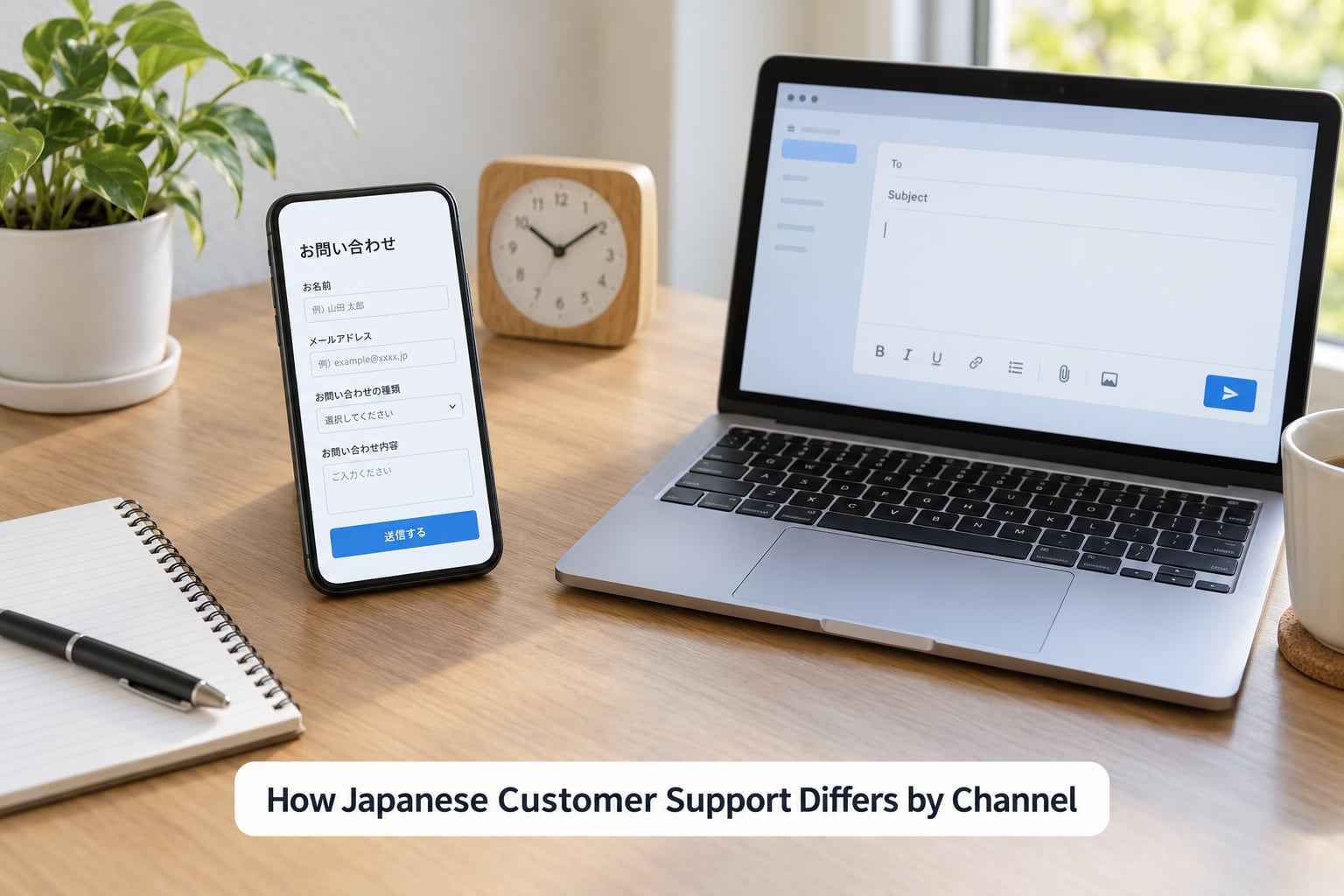
Most Japanese companies run support across email, phone, chat, in-store counters and increasingly messaging apps, but the weighting differs from Western companies. The table below is a general pattern, not a national standard. Every company, product and support team varies.
| Channel | Best for | Typical availability | Main language challenge |
|---|---|---|---|
| Phone (Victim hotline, tel) | Urgent connectivity, hardware faults, identity checks | Business hours, often 9:00 to 18:00 JST, weekday | Real-time listening with no written record; menu trees in Japanese only |
| Detailed cases with screenshots, invoices, serial numbers | Monitored through business hours; replies often same working day | Long formal messages; reading tone accurately in kanji | |
| In-app chat | Quick setup questions, billing queries, account changes | Often extended evening and weekend hours | Short polite sentences; automation sometimes answers first |
| In-person counters | Device inspection, document checks, ID verification | Store hours, usually 10:00 to 19:00 | Regional staff, paperwork, possible interpreter needed |
| Messaging apps | Reminders, simple confirmations, order updates | Asynchronous, often outside office hours | Register and formality in a short-window format |
Two things stand out. Phone support tends to have the narrowest window and the least written trail, which is why Japanese teams often ask you to follow up by email or in-app form. And in-person counters carry far more weight than in many Western markets, because identity checks and device inspections often cannot happen remotely.
Language and Communication Styles
Japanese support writing runs on keigo, polite honorific language, with several registers layered on top. The one you will meet most is sonkeigo, which lifts the customer up, and kenjougo, which lowers the speaker’s own status. Plain teineigo is everyday politeness. Add a layer of very humble kenjougo and you get the deep bow of apology phrasing you see when something has gone wrong.
A support reply usually opens with an acknowledgment, restates the problem back to you in the agent’s own words, gives the reasoning, and closes with the action and a courtesy line. Read the restatement first. If it does not match your issue, everything after it is probably solving the wrong problem.
Sample message patterns you will see
- Acknowledgment plus restatement: “Thank you for contacting us about the connection dropping. To confirm, the issue began on the evening of the 3rd and only on the 5GHz network.”
- Information gathering: a numbered list of what they need next, usually the model name, serial number, error text and the time the problem last appeared.
- Apology plus cause: an apology for the inconvenience, then the reason, usually phrased carefully so it does not assign blame to you.
- Request for patience: a case is referred to a specialist department and a target date for the next reply is given.
- Closing courtesy: a thanks for your cooperation, with an offer of further help and a phrase inviting you to reply if anything is unclear.
Indirect phrasing trips people up most. “It is a little difficult to judge” often means the agent cannot commit to a date yet. “We will consider it” often means no. And “we are sorry for the inconvenience” is not an admission of fault, so do not read one into it.
Politeness is also not agreement. People on r/AskAJapanese and r/japanlife describe customers who stay courteous through a long exchange and then quietly cancel the account rather than escalate. If a customer is still thanking you after you have offered a fix, do not assume they are satisfied.
When you write in, a few habits help. State the outcome you want before the background. Keep your own tone level rather than apologetic, since over-apologising reads as an admission you have not made. And avoid demanding phrasing, which can stall a Japanese team that is still building context internally.
Why customer service expectations vary across Japanese companies
How Japanese customer support differs depends heavily on the sector you are in. Consumer electronics companies assume you can follow a manual and will send photos and screenshots. Telecom carriers run tight account security rules and often require in-person ID checks before they will discuss billing. Online marketplaces lean heavily on written chat and fast first responses.
Banking and public services are slower and more procedural, with heavy identity verification and formal written records. SaaS platforms vary most, since some run Japanese-language support as a premium feature while others leave it entirely to email. Product complexity, account security rules, documentation traditions and company culture all shape the experience.
One encounter is not a national standard. A telecom bill dispute and a broken game console will feel like two different countries, and neither one tells you much about the company behind them.
Phone, Email, Chat, and In-Person Support
The channel you pick changes how the case is recorded. Phone is fast and human but leaves nothing behind, so write yourself a note the moment you hang up: who you spoke to, what they said, what they told you to do next. Japanese agents will often send a follow-up email summarising the call, which gives you a written record to point at later.
Email is the slowest channel and the most useful one. Screenshots, error codes, serial numbers, invoice numbers and a short timeline all travel in one message, and the reply can come back with a considered answer instead of “have you tried restarting”. This is the channel for anything you expect to need more than two exchanges.
Chat sits in the middle. It suits short setup questions and account changes because you get a transcript you can paste into an email later. Watch for bot-first routing, which is common on consumer accounts and which English speakers often meet before a human.
In-person counters are more capable than they look. Staff can read an error on the device, check your identity against documents, and process a repair or swap on the spot. For hardware faults and identity questions, this is often faster than anything remote. Bring the device, the charger, the purchase receipt and a photo ID.
Business Hours, Queues, and Response Times
Published hours are the floor, not the picture. A support line open 9:00 to 18:00 can still hold you for an hour at 10:00 on a Monday, and 15:00 on a Wednesday is usually calmer. Japanese business hours run roughly 9:00 to 18:00 JST on weekdays, with weekend coverage more common on chat than on phone.
Time zone quietly adds to the wait. A request sent from Europe in the afternoon reaches a Japanese inbox overnight. Maintenance windows and holiday periods stretch gaps further, and New Year week in particular is quiet on support. No company will promise you a resolution time, but most will commit to an acknowledgement, and that first reply is the number worth watching.
Scheduled follow-up is normal rather than exceptional. Teams often check back after resolution, sometimes within a day and again a week later, to confirm the fix held. Some will also send a maintenance notice before planned work, which is a good habit to expect.
| Situation | Reasonable next action |
|---|---|
| No acknowledgement after two full business days | Send a short follow-up quoting your original subject and case number |
| Answer in Japanese only, and you cannot read it | Reply politely asking for English or a machine-translated summary |
| Reply restates a different problem | Correct the restatement in your next message before anything else |
| Case referred to a specialist team | Ask for the reference number and the expected next contact date |
| Urgent outage, phone lines busy | Try chat or the in-app form, and attach the outage time and affected service |
| Same answer three times | Request escalation to a supervisor or a technical department, with the reference history attached |
| Fault needs hardware inspection | Ask what to bring to a counter and whether a reservation is needed |
Documentation, Troubleshooting, and Self-Service
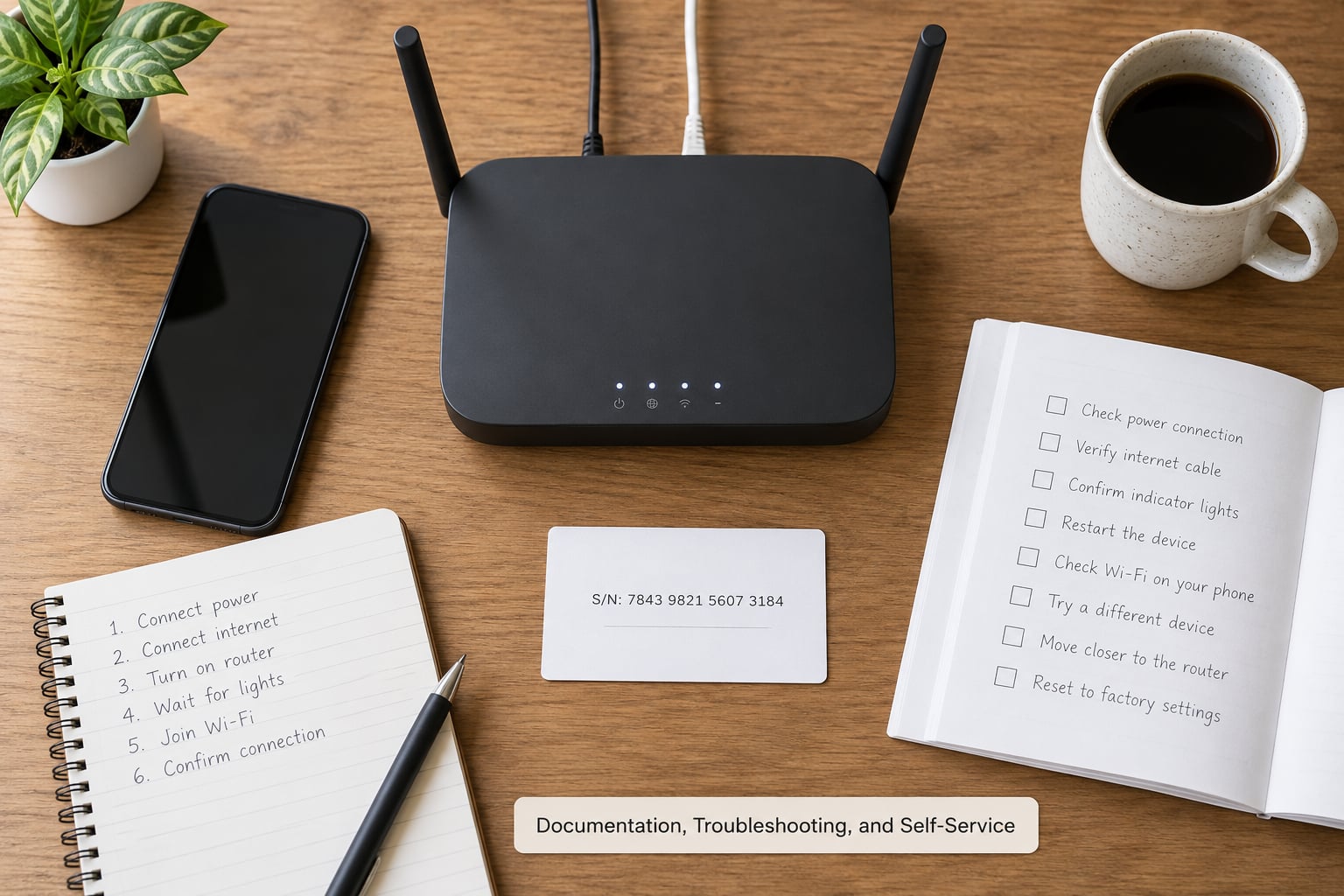
Japanese tech support leans hard on documentation. Manuals, setup notes, error screens and model numbers are treated as part of the conversation, not as background. That is a practical advantage: the manual usually contains the answer, and support will point you at the page.
Self-service portals, Japanese setup guides and printed quick-start cards are more developed than in many Western markets, partly because consumer electronics here often ships with region-specific setup and a domestic app rather than a global one. Read those first, since agents do.
Before opening a case, assemble this:
- Model name and serial number, photographed rather than retyped
- Photos or a screenshot of the error, including any code in the corner
- What changed before it broke, including updates, new apps or a moved router
- A short timeline with dates and times, in local time
- Steps you already tried and their results
- Your account or contract details, kept out of the public parts of the message
Translating technical details accurately matters more than translating politely. Copy error text verbatim instead of paraphrasing it, keep model numbers in their original format, and skip honorifics in machine-translated technical lines. A partly translated screenshot with the exact error text beats a clean paraphrase every time.
Escalation, Refunds, and Problem Ownership
Problems often move between hands. Frontline support takes the first message, a technical or specialist department takes anything involving hardware or engineering, a store counter or contractor handles physical inspection, and the manufacturer makes final calls on repairs and refunds.
Each hand-off resets the clock and can lose context, which is why a case reference number matters more than it seems. Ask for it early. Without it, a referral becomes you repeating yourself to a new agent.
It also helps to separate five things that get blurred together: acknowledgement, investigation, resolution, refund approval and restoration of service. A team can acknowledge your case, investigate for two weeks, resolve it, approve a refund, and still need the original issue fixed before service returns. Knowing which one you are waiting for tells you whether to push, wait or start a new thread.
On refunds, Japanese teams tend to explain policy and reasoning in detail before they release anything. A refund may arrive as store credit, a replacement, or a return to a bank account after a set processing period, and the explanation usually names which one and why. Asking which stage you are in, plainly, gets a clearer answer than asking for money.
What Foreign Customers Should Do First
Most stalled cases I have seen from overseas come down to a missing reference, a missing serial number, or an expectation that a quick chat reply would replace a written case. A short sequence fixes most of them.
- Find the official Japanese support route. Use the support page of the Japanese site or app, not a forum thread or a third-party listing. Look for the domestic contact form, the toll-free number, and any in-store counter options.
- Gather evidence before you write. Model number, serial number, error screenshot, dates, and the steps you already tried. Do this first, not after the second round of questions.
- Write a short timeline. Five or six lines, dated, with the outcome you want stated first. This is the single biggest time saver in a case.
- Ask for a case or reference number in your first message. It costs nothing now and saves a lot later.
- Request English or a machine-translated summary if you need it. Some companies offer it, some will not, but asking is normal and not rude.
- Escalate only when the case stops moving. If two full business days pass with no acknowledgement, or three replies repeat the same answer, ask for escalation to a supervisor or specialist department and attach your full history.
One more thing worth knowing: silence is not a signal. Japanese customers are described on expat forums as likely to leave quietly rather than complain, and support teams treat a polite message as a starting point for negotiation rather than a finished conversation. If you want a specific outcome, name it.
Frequently Asked Questions
Is customer support in Japan usually in English?
It depends on the company. Large consumer electronics firms, airlines and major payment providers usually run some English support, often through a separate portal or overseas call centre. Mid-size firms and in-store counters are more likely to work in Japanese only. English support tends to be thinner for billing, warranty and account security questions than for setup help, so check the Japanese page as well as the English one before you assume a route exists.
Why does Japanese customer support often feel slower than Western support?
Because the work happens in writing and moves through departments. A case may pass from frontline support to a technical team to a store counter, and each hand-off restarts the clock. Japanese teams also often gather full context before replying rather than sending a quick partial answer, so the first reply can be slower but more useful. Perception also skews the comparison: a Western chat reply in two minutes versus a considered email feels slower than it is.
Can I get customer help in person when using a Japanese tech product?
Often yes, and it can be faster than remote support. Consumer electronics brands, mobile carriers and banks run physical counters where staff can inspect a device, verify identity against documents and process a repair or swap on the spot. Bring the device, its charger, the purchase receipt and a photo ID. Some counters need a reservation, and some do not handle technical faults at all, so check the brand’s store page before travelling.
What useful Japanese phrases should I know for customer support?
A few cover most of it. Shitsurei shimasu is a general apology. Moushiwake gozaimasen means I am sorry for the trouble. Kento sasete itadakimasu asks permission to check something. Sumimasen catches the ear in a shop or on the phone, roughly excuse me. Owarimasu or arimasu closes a call politely. None of these replace a written case, but they make an in-person exchange much easier.
What should I do if repeated messages to Japanese support do not solve my problem?
Stop adding detail and escalate with a structure. Reply with the case reference number, a two-line summary of the problem, what you have already tried, and the specific outcome you want. Ask explicitly for escalation to a supervisor or specialist department, and copy the full message history so the new agent has context. If the case involves hardware, ask what a store counter could check that email cannot. If it stalls again, ask for written confirmation of the company’s position.
Conclusion
The honest summary is that Japanese customer support is not uniformly slower, colder or more formal than support elsewhere. What it is is more dependent on documentation, more layered in escalation, and more weighted toward channels you might not expect to matter, like a physical counter.
Start with one thing: write a short dated timeline with your serial number, screenshots and the outcome you want, then open the case through the official Japanese route and ask for a reference number. Everything after that gets easier.